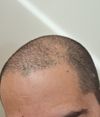
People are discussing hair loss treatments, including minoxidil, finasteride, and RU58841, to turn vellus hairs into terminal hairs. Some users also mention using antibiotics, oral minoxidil, dutasteride, DHT blockers, biotin, and natural remedies like onion juice and seeds to improve hair growth.
Dutasteride significantly reduces DHT levels in hair follicles, potentially more effectively than previously thought. The discussion highlights differences in DHT measurements and the impact on hair loss treatment.
GT20029 and CosmeRNA are both potential hair loss treatments; GT20029 breaks down the androgen receptor, while CosmeRNA prevents its production. Continuous use is needed, but less frequently than current treatments like Minoxidil and Finasteride.
A user tried the Rapid Minoxidil Response Test (TrichoGene) and found they don't respond to topical Minoxidil, so they added tretinoin. The test is available internationally, and another user is considering ordering it.
The user is considering a hair transplant to increase hair density after using finasteride and minoxidil for two years. They prefer a natural hairline and are unsure if a transplant is suitable for overall thinning.
RepliCel has purchased Trichoscience, and they have a video about hair multiplication. The conversation also mentions treatments like Minoxidil, finasteride, and RU58841.
Combining therapies like scyllo-inositol, alpha-ketoglutarate, and autophagy-inducing supplements may enhance hair growth and prevent hair loss. Reporting individual results can accelerate progress in hair loss treatments.
The user has been experiencing hair loss since the age of 16 and has tried various treatments including minoxidil, finasteride, RU58841, microneedling, and keto 2%. Despite these efforts, there has been little improvement in hair growth. The user is considering other options such as dutasteride, perilutimide, or a hair transplant in the future, but for now, they are accepting the shaved look and focusing on personal growth and school.
A woman with hair loss discovered she has thyroid cancer, which was found during an MRI and confirmed with an ultrasound. She advises others with symptoms to see a doctor and shares that her cancer was detected after her dog sniffed her neck and she experienced neck pain.
The hair transplant at Eugenix in New Delhi resulted in poor density and texture, with only about 2,500 grafts surviving out of 4,500. The user is considering holding the clinic accountable and exploring options like shaving, using hair fibers, or seeking another transplant.
Scube3, a potential hair loss treatment, is unlikely to be released because it was given to a startup company, Amplifica, which may go bankrupt and fail to bring the treatment to market. Amplifica is prioritizing other treatments over Scube3, which could lead to financial loss and the end of Scube3's development.
miR-205, a tiny RNA, can stimulate hair growth by softening aging hair follicle stem cells in mice. Future tests aim to see if this can work in humans.
A person with a full head of hair chose to laser it off, sparking disbelief and discussions about hair loss treatments like Minoxidil and Finasteride. Many users questioned the decision, suggesting it might be a troll post or an extreme reaction to balding concerns.
The conversation discusses an extensive hair loss treatment regimen including dutasteride, GT20029, RU58841, pyrilutamide, minoxidil, microneedling, ketoconazole shampoo, and experimental compounds. The user humorously describes their approach as a comprehensive strategy to combat hair loss while maintaining hair growth.
Tretinoin can cause non-telogen hair loss in some men by inducing catagen-like changes in hair follicles and through retinoid toxicity, especially when used with minoxidil. Some users report hair loss even when using retinoids on the face, while others experience benefits when combined with treatments like finasteride and minoxidil.
The user experienced hair shedding and follicle shrinkage when using retinoic acid, despite trying different concentrations and frequencies. The hair loss persisted for six months but regrew after stopping the treatment.
Hair loss involves more than just DHT, with genetic factors like TRPS affecting hair follicles. Treatments such as Amplifica's AMP-601 and AMP-303 target stem cells for potential hair growth solutions.
A 25-year-old MtF individual has been using oral finasteride, oral minoxidil, and MtF HRT to treat androgenic alopecia, resulting in significant hair regrowth. However, the regrown hairs remain thin and short, and they seek advice on how to make these hairs longer and thicker.
Dr. Tsuji's stem cell hair multiplication procedure may offer a future solution for hair loss, but it is initially expected to be very expensive, with prices potentially decreasing over time. In the meantime, users discuss using treatments like finasteride, despite side effects, to manage hair loss.
Amplifica is testing a compound called AMP-303 for hair loss, but it's not Scube3 or osteopontin. The timing for the results from the clinical trial is unknown.
A 35-year-old transgender woman experienced hair regrowth with feminizing HRT, adding dutasteride and bicalutamide, and plans a hair transplant for further improvement. Estrogen also improved skin appearance, and the user advises against cisgender men using feminizing HRT for hair regrowth.
The user is exploring alternatives to hair transplants due to a weak donor area and is currently using finasteride, minoxidil, dermapen, low-level laser therapy, Nizoral shampoo, and a high-protein diet. They plan to switch to dutasteride and consider adding RU58841, while rejecting hair systems and considering a buzz cut.
The user is experiencing hair loss and is using treatments like finasteride, minoxidil, and hormone replacement therapy (estradiol enanthate injections) to address it. They are advised to be patient with the treatments and consider using a dermapen for microneedling.
The conversation discusses using USB microscopes for scalp photos and provides a link to an overview of trichoscopy. Treatments mentioned include Minoxidil, finasteride, and RU58841.
A 28 year old using a hair loss prevention protocol to restore thinning hair, which includes finasteride, dutasteride, minoxidil, stemoxydine, alopecin, nizoral shampoo and microneedling; the user is now adding pyrilutamide solution to the regimen with the hope of improving their results. RU58841 was also ordered but not yet used.
The user is experiencing daily hair loss and is considering trimming their hair to manage scalp cleanliness due to excessive sweating. They are seeking advice on how much to cut, preferring a short style similar to a classic military haircut.
A user is considering an extensive hair loss treatment regimen including oral dutasteride, oral minoxidil, topical finasteride, tretinoin, microneedling, keto shampoo, laser comb, and PRP injections. Suggestions include simplifying the routine, possibly increasing minoxidil dosage, and considering alternatives like RU58841, while cautioning against using estrogen due to potential side effects.
The user reduced serum DHT by 60% using Advanced Trichology's natural DHT blocker but saw no improvement in hair loss. They are considering switching to finasteride due to its proven effectiveness in inhibiting scalp DHT.
Hair loss treatments like Minoxidil, finasteride, and potential mRNA therapies are discussed. There is skepticism about targeting specific genes due to the complex genetic nature of hair loss.