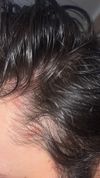
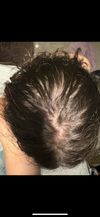
User shared progress pictures of hair regrowth on the crown/vertex after a transplant and using finasteride, Minoxidil foam, and a dermapen. They hope to fully regrow or increase density in the crown area.
The DHT itch is linked to hair loss and persists despite finasteride use; switching to dutasteride helped alleviate the itch and promoted regrowth. Some users suggest seborrheic dermatitis as a cause and recommend treatments like medicated shampoos, vitamin D, and minoxidil.
The user is experiencing new hair growth after using oral dutasteride, topical minoxidil, and microneedling, but is concerned about black dots on the hairline, which might be clogged pores or dormant follicles. The user previously used a topical minoxidil/finasteride spray and had good results, despite a shedding phase after switching treatments.
Chris's hair transplant looks better, but the hairline is criticized for being too straight and unnatural. Some recommend using finasteride and minoxidil for maintenance.
A 21-year-old experiencing itchy and burning scalp with hair loss was diagnosed with MPB and scalp inflammation. They were prescribed Ketoconazole, Prednisone, Clindamycin, and Finasteride, and are considering trying antihistamines, dietary changes, and "nopoo" to alleviate symptoms.
The user experienced significant hair thinning and scalp irritation after three months of using topical finasteride. Suggestions include that shedding is normal before regrowth and switching to oral finasteride or addressing scalp inflammation might help.
The conversation discusses potential causes of pigmentation around hair follicles, suggesting sebum buildup, autoimmune conditions, or dermatitis. Treatments mentioned include finasteride, dutasteride, and an anti-inflammatory diet, with a recommendation to consult a doctor for a proper diagnosis.
The conversation discusses struggles with diffuse thinning and hair loss treatments, including the use of dutasteride, minoxidil, and finasteride, with limited success. The original poster regrets having a hair transplant at 21 due to weak donor hair and ongoing thinning.
The user experienced hair thinning and was diagnosed with alopecia incognito and male pattern baldness. They are using minoxidil, finasteride, and dutasteride scalp injections, reporting gradual improvement with no side effects.
The user switched to oral dutasteride and minoxidil and is questioning the need for derma stamping, which is typically used with topical treatments. They are considering whether derma stamping is necessary with their current oral regimen.
The conversation is about the legitimacy and affordability of ordering a Minoxidil response test from TrichoGene, an India-based company, as an alternative to Daniel Alain. The user is seeking feedback on whether TrichoGene is a reliable option.
A woman with hair loss discovered she has thyroid cancer, which was found during an MRI and confirmed with an ultrasound. She advises others with symptoms to see a doctor and shares that her cancer was detected after her dog sniffed her neck and she experienced neck pain.
The user has been using finasteride and minoxidil with tretinoin for 5 months and is questioning if they see hair regrowth. Others share their experiences and challenges with hair loss treatments, particularly the availability of medications.
The user is unsatisfied with their hair transplant and is considering another transplant, PRP, exosomes, or stem cells. They currently use topical minoxidil, dutasteride, and tretinoin.
The user has been using RU58841 for 6 months without noticeable results and is considering dropping it while continuing oral minoxidil, daily dutasteride, and topical minoxidil. Another user suggests visiting a dermatologist to check for other conditions.
A user shared their 3-month progress using oral minoxidil, dutasteride, and topical minoxidil for hair regrowth. Replies suggest increasing dutasteride dosage and note visible progress likely due to minoxidil.
The user is experiencing scalp irritation and hair thinning, possibly due to stress, with red patches on the face and dry skin. They are considering seeing a dermatologist and have used tea tree and rosemary oil.
A 25-year-old male using Dutasteride, oral Minoxidil, and Ketoconazole shampoo is experiencing increased hair shedding and vellus hair growth along the hairline. Concerns are raised about whether this is a seasonal shed or a potential setback.
A 19-year-old male is experiencing accelerated hair recession after two months on oral Dutasteride, despite no noticeable shedding, while also using topical Minoxidil and Finasteride. He is unsure if the treatment is effective and is unable to access RU58841.
Feeding bacteria-free mice with Lactobacillus murinus worsened hair loss, but a regular diet with biotin stopped it. The conversation suggests gut bacteria and diet may influence hair loss, with some skepticism and discussion about other factors like DHT and genetics.
Oral minoxidil is considered unsafe due to severe side effects and requires close medical supervision, while oral finasteride is viewed as safe and effective. There is debate over the fear-mongering around finasteride and the downplaying of minoxidil's risks, with some users advocating for proper health screenings before use.
The user shared progress pictures over four months using topical finasteride, topical and oral minoxidil, topical RU58841 daily, and oral dutasteride once a week. The pictures are spaced about a month apart.
A 29-year-old man had a successful hair transplant at Dr. Ulusan Clinic in Izmir, Turkey, receiving over 4600 grafts and exosome injections. He started using finasteride and minoxidil daily a month after shaving his head, which improved his confidence and outlook on life.
The user is considering using topical finasteride for thinning hair around the middle part, vertex, and crown, and is unsure if the whole scalp is thinning. Another user suggests oral finasteride is more effective than topical, and recommends consulting a dermatologist for proper treatment.
The conversation is about personal experiences with Sonsuk Topical Finasteride, Minoxidil, and Tretinoin for hair loss. The original poster is seeking feedback after three weeks of use due to a lack of reviews.
The user experienced hair regrowth with oral minoxidil and finasteride but faced aggressive hair loss after developing IBS, questioning if the condition affects medication absorption. They are considering switching to topical treatments.
The user has been using oral finasteride, topical minoxidil, and tretinoin cream for hair loss, with positive progress noted after six months. They are advised to continue their current regimen and consider additional treatments like derma rolling, while being cautious about switching to dutasteride due to potential side effects.
A user is seeking recommendations for doctors who perform Dutasteride mesotherapy in NJ or PA, as they are having trouble finding one through Google. The conversation focuses on finding a suitable provider for this specific hair loss treatment.
The user visited a trichologist due to ineffective topical finasteride treatment for hair loss. The trichologist recommended a new regimen including a two-month course of locoidon (cortisone 0.1%), followed by a solution containing minoxidil, hydrocortisone butirrate, estrone, progesterone, tocopherol acetate, trichosol, and transcutol.
A 57-year-old man with male pattern hair loss and insulin resistance experienced hair regrowth and weight loss after using tirzepatide, without other hair treatments. Dysregulated glucose metabolism is linked to hair loss, with tirzepatide potentially improving hair density by normalizing insulin resistance.