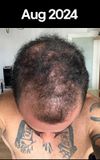
Low doses of dutasteride are as effective as higher doses for hair regrowth, with fewer side effects. Users find success taking it 2-3 times a week instead of daily.
The user is experiencing continued hair thinning despite taking Finasteride 1 mg daily for over a year and is hesitant to try Minoxidil due to potential side effects and inconsistency. Suggestions include trying topical Minoxidil once a day, considering oral Minoxidil, and possibly getting a skin biopsy to determine the type of hair loss.
Some hair loss may be linked to chromosome 20, which isn't affected by DHT blockers like finasteride. Treatments like minoxidil, microneedling, and genetic testing are suggested, but their effectiveness for this type of hair loss is uncertain.
The user experienced significant hair regrowth using a daily regimen of finasteride, minoxidil foam, and scalp massages over three years, with no side effects from finasteride. They noticed new hair growth within 1-2 months and have maintained their results, sharing their experience to help others.
Minoxidil and finasteride effectively improve hairlines and reduce balding, though some users report side effects like reduced libido. Consistent use over 1-2 years leads to significant hair regrowth, with some users also using skincare and biotin for added benefits.
The user is experiencing positive hair regrowth results after four months of using oral finasteride (1mg daily), oral minoxidil (5mg daily), Polaris NR02 shampoo, and ketoconazole 2% shampoo. They plan to continue the regimen and consider a hair transplant in the future, with no reported side effects from the current treatment.
The conversation is about a user trying a new hair loss treatment, Ruxolitinib, alongside their existing regimen of finasteride, minoxidil, ketoconazole shampoo, and microneedling. They plan to apply Ruxolitinib to their temples daily for 1-2 months.
A user shared their positive experience with hair regrowth after 13 months of using dutasteride and minoxidil, noting improved self-confidence and physical fitness. They reported noticeable results after 2 months, with significant improvement by 7-8 months, and no major side effects.
A 19-year-old with rapid hair loss since 16 is considering a hair transplant but refuses to take finasteride or any 5α-Reductase inhibitors. They are currently using minoxidil, tretinoin, and microneedling with a Derminator 2, and only want hair until age 27.
A user's progress with treating their hair loss, including using finasteride, minoxidil, retinoic acid, dermapenning twice weekly and ket 2% shampoo two to three times per week. Other users offered advice such as not derma penning too often or shaving the area bald for a couple of months.
Individuals with oily scalps, dandruff, and diffuse thinning hair loss who have managed to either halt the loss or regrow their hair by using topical finasteride and minoxidil as well as microneedling and ketoconazole 2% shampoo.
Microneedling with 5% minoxidil improves hair growth for hair loss patients. Best protocol: 1.5mm dermaroller weekly for 12 weeks or 0.6mm dermapen every 2 weeks for 12 weeks, skipping topicals for 24 hours.
David Barreto shared that a London-based research group is conducting a 12-month trial for a new nutraceutical treatment for pattern hair loss, designed with Dr. Carlos Puig. The trial aims to provide robust data, with results expected in 1-2 years, potentially representing a significant advancement since finasteride’s introduction in 1997.
The conversation discusses the impact of vitamins, stress reduction, and appropriate shampoo on hair health, with the original poster noting slight improvements after two months of using vitamins B5, B6, zinc, and a suitable shampoo. Many users express skepticism about the effectiveness of vitamins for hair loss unless there is a deficiency, emphasizing the importance of addressing DHT and considering 5AR inhibitors.
The user switched from finasteride to 1mg dutasteride daily due to continued hair loss and is also using minoxidil and rosemary oil. They are seeking advice on whether to increase the dutasteride dosage for better regrowth.
A male in his early 20s with CCCA (scarring alopecia) started treatment with Finasteride, Fluocinolone, and Doxycycline. Steroid injections were suggested but not yet done.
The user experienced hair shedding after using finasteride and topical minoxidil since August 2024, and briefly adding oral minoxidil in early 2025. They suspect the shedding might be due to the oral minoxidil, a bad batch of finasteride, or a normal shedding cycle, and are also experiencing an itchy scalp and acne.
The user experienced stable hairline but diffuse thinning after switching from oral finasteride to a topical solution of minoxidil and finasteride. They are concerned about the effectiveness of the topical treatment and are considering other options due to a recent decline in hair density.
Finasteride may cause insomnia, and ashwagandha is suggested to help with sleep issues without significantly affecting testosterone or DHT levels. Users discuss personal experiences with sleep disturbances and suggest consulting a doctor if side effects persist.
The conversation humorously discusses the side effects of finasteride, particularly sexual dysfunction. Users share mixed experiences, with some reporting issues and others not.
A user experienced an allergic reaction, including swollen lymph nodes, to Minoxidil 5% with an aqueous base. Switching to a non-alcohol-based Minoxidil (Prolox 5%) resolved the allergies.
Dutasteride can drastically reduce sebum production, leading to dryer hair and shedding. Alternating shampoos and periodic silica supplementation can improve hair quality and thickness.
The user started using oral minoxidil and estradiol in August 2025, added finasteride in December, and experienced significant hair shedding in February/March. They switched to estradiol injections and are considering their hair washing routine, while another user suggested consulting a dermatologist and possibly trying dutasteride.
A 22-year-old is using a hair loss treatment stack of 5% topical minoxidil, 0.1% topical finasteride, and oral minoxidil. They are avoiding oral finasteride due to concerns about side effects and hope this combination will stop thinning and promote regrowth.
The conversation is about a user's experience with hair loss treatments, specifically using finasteride, minoxidil, microneedling, and ketoconazole shampoo. The user reports improvements after almost nine months, with no side effects, and discusses the shedding process and expectations for results.
Dutasteride may reduce scalp oil and itchiness more effectively than finasteride, with some users experiencing drier skin and improved hair thickness. Users report varying results, with some noticing benefits after switching from finasteride to dutasteride, while others use a combination of treatments including minoxidil.
Rosemary oil is being used as an addition to minoxidil and finasteride for hair health, with mixed opinions on its effectiveness. Some users report positive results, while others see no benefit or experience adverse effects.
The user is excited about their hair regrowth after 10 weeks using oral finasteride, topical minoxidil, ketoconazole, dermarolling, and vitamin D. They've seen significant hair thickening and believe minoxidil and dermarolling are the main contributors to their progress.
Hair loss shouldn't dominate your life; focus on confidence and social aspects. Celebrities like Theo James, Henry Cavill, and Ryan Reynolds also experience hair loss but remain attractive and successful.