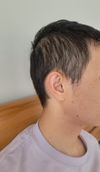
The user is experiencing excessive hair thinning and is unsure of the cause. They are seeking opinions on treatments like Minoxidil, finasteride, and RU58841.
Dutasteride is more effective than finasteride for hair loss as it blocks more of the enzyme causing hair loss. New treatments like stem cell therapies and alternatives to minoxidil are being explored, but major advancements are still years away.
A 32-year-old male used 1.25mg oral finasteride daily and 1ml topical minoxidil twice daily for 24 weeks, experiencing improved skin and hair growth with initial side effects that resolved after three weeks. He plans to try dermastamping to address a stubborn cowlick area.
The user has been using topical minoxidil, finasteride, microneedling, and laser light therapy for 11 weeks to address hair thinning. They report difficulty applying the treatment due to increased hair thickness and are unsure if the results are significant.
The conversation discusses hair loss causes beyond male pattern baldness, mentioning treatments like ketoconazole, zinc shampoo, and finasteride. Stress-related hair loss (telogen effluvium) is also suggested.
Users discussed their experiences with microneedling for hair loss, noting that visible progress typically starts after 1-4 months. Some combined microneedling with Minoxidil for better results.
Optimal microneedling routine is 1.25mm once a week with Dr Pen 36 needles. Applying Minoxidil right after microneedling may increase systemic absorption risk.
Rosemary oil is being used as an addition to minoxidil and finasteride for hair health, with mixed opinions on its effectiveness. Some users report positive results, while others see no benefit or experience adverse effects.
The conversation is about someone's hair regrowth progress using Hims serum from February 25th to April 6th. Users commented on the noticeable improvement and potential for full hair recovery.
Dutasteride mesotherapy in women with metabolic syndrome accelerated hair loss after initial regrowth, while women without metabolic syndrome saw continuous regrowth. The user with mild insulin resistance is hesitant to try topical dutasteride and seeks experiences from others with insulin resistance.
High prolactin levels can cause hair loss, and finasteride may increase prolactin. Cabergoline or Vitamin B6 might lower prolactin, but combining them with finasteride requires caution.
The conversation discusses a significant increase in hair shedding after starting Dutasteride and oral Minoxidil, with users sharing their own experiences of hair shedding and questioning if high shedding indicates future hair growth.
A user's successful 6-month journey with Minoxidil, Finasteride and 0.05 Derma Rolling to regain their hairline, eyebrows, facial hair and overall youthful look. They also discussed the use of topical minoxidil for eyebrow thickening, as well as other skincare routines and healthy lifestyle habits.
Dr. Kang-Yell Choi's company, CK Regeon, is developing a drug called KY19382 for hair regeneration, which involves creating fine wounds to activate stem cells. The drug is in the formulation development stage, targeting markets like the US and Korea.
The efficacy of various hair loss treatments, including Finasteride and Dutasteride, with personal anecdotal evidence about potential side effects. It also includes advice to get a male hormone blood panel done before starting treatment, and lifestyle changes to minimize side effects.
PP405, developed by Pelage Pharmaceuticals, can reactivate dormant hair follicle stem cells and increase hair growth by 20% in eight weeks, unlike minoxidil or finasteride. However, skepticism remains about its effectiveness and availability, with concerns about funding and the timeline for broader access.
Adding a daily scalp massage with an acupressure device before applying minoxidil can enhance its effects by improving blood circulation, with no side effects. Users are advised to continue microneedling weekly and consider using a derma stamp to avoid scarring.
The user switched from finasteride to dutasteride for stronger hair loss treatment, despite initial success with finasteride. They experienced significant shedding with dutasteride but remain hopeful for regrowth, emphasizing patience and the importance of giving treatments time to work.
A user stopped finasteride after 15 years due to severe side effects, which improved after quitting. They maintained most of their hair and are considering alternatives like topical treatments or RU58841.
The conversation discusses a user's positive experience with a hair loss treatment routine involving dutasteride, oral minoxidil, and Nourkrin Man, with no side effects reported. Other users share their experiences with similar treatments, discussing side effects like heart palpitations and depression, and offer advice on obtaining prescriptions affordably.
Switching from finasteride to dutasteride led to hair loss despite continued use of minoxidil. Many recommend reintroducing finasteride, as responses to treatments can vary.
The user has been dealing with an oily scalp, seborrheic dermatitis, and hair loss for 18 months, using finasteride without improvement. Another user suggested dutasteride for reducing scalp oiliness.
High cholesterol may accelerate hair loss by reducing blood flow and increasing DHT levels. Treatments mentioned include Minoxidil, finasteride, and RU58841.
A 24-year-old person who is worried about their hair loss after 14 months of taking finasteride and 11 months of minoxidil. Replies to the post suggested sticking with their current regimen, that shedding from one part may not be telogen effluvium, and that shedding is normal with these drugs and they should evaluate in two to three months.
A 41-year-old with over 10 years of hair loss showed progress after 2 months using topical finasteride and minoxidil, dermaroller, DHT blocker shampoo, laser cap, and vitamins B12, Biotin, D3. Commenters are impressed with the results and suggest continued treatment and focus on health for further improvement.
A user's 12 month progress on finasteride and 10 months of microneedling for hair loss treatment, which has resulted in improved temple areas with no side effects from the finasteride. They have not used minoxidil yet but are considering it for further gains. DHT blocking drugs such as finasteride and dutasteride are recommended to maintain regrowth results.
People are discussing obtaining and testing PP405 for hair loss treatment, with concerns about its purity and effectiveness. Some are considering delaying hair transplants, while others suggest using existing treatments like finasteride and minoxidil.
Finasteride is effective in promoting hair growth and reversing hair miniaturization in men with androgenetic alopecia, with improvements seen in various studies over different durations. Some users report initial side effects like ball ache, which often resolve as the body adjusts.