Search
for
Sort by
Community Join
960-990 / 1000+ resultscommunity Looking for 1.5mm Cartridges for Dr Pen M8s, Preferably on Amazon
The conversation is about finding 1.5mm cartridges for a Dr. Pen device, with a preference for purchasing through Amazon. The discussion does not mention specific hair loss treatments like Minoxidil, finasteride, or RU58841.
community Trestolone (MENT) as a nuclear treatment
Experimenting with trestolone as a treatment for hair loss in an attempt to avoid DHT-related treatments such as finasteride and dutasteride, and discussing the potential effects of its receptor selectivity on the androgen receptors in the scalp.
community Is Farmacia Tristaina pyrilutamide legit?
Concerns about the legitimacy of pyrilutamide solutions from Farmacia Tristaina due to low prices and lack of testing. Users suggest using Jano testing for product verification.
community My endless RU58841 cycle [experience thread)
The user experienced hair loss and itching after stopping RU58841 and resumed it to stop these symptoms. They also use Dutasteride and question which treatment is effective.
community 32M, 5 year progress pictures
The user has been using finasteride, ketoconazole shampoo, oral minoxidil, and minoxidil foam for hair loss but feels their hair is not as thick as desired. They have stopped using RU58841 due to lack of results and are concerned about hair miniaturization despite these treatments.
community Can HMI-115 reverse miniaturization?
HMI-115, a potential treatment for hair loss that can reverse miniaturization and make individual hairs thicker, as evidenced by data from macaques given the treatment and one subject in the phase I trial.
community Finasteride raw powder storage
Store finasteride powder in a cool, dry place. RU58841 needs to be stored in the freezer.
community Pyrilutamide for Hair Loss!? (Ft. Steve Cook)
Pyrilutamide is discussed as a potential hair loss treatment, acting as an androgen receptor antagonist. The conversation questions if it can maintain hair long-term without using finasteride.
community Carnitine Tartrate + Potassium chloride + Niacin
The post discusses using Carnitine Tartrate, Potassium Chloride, and Niacin to reduce hair shedding, with the user experiencing significant improvement. The user also suggests considering a ketogenic/paleo diet for those with insulin resistance-related hair loss.
community Will we be able to acquire pyrilutamide when it is on the market in China?
The conversation is about the possibility of obtaining Pyrilutamide, a hair loss treatment, once it becomes available in China, despite it not being approved by the US FDA yet. The user wants to use Pyrilutamide along with other treatments.
community [Nov 2019] The peptide AC 2 isolated from Bacillus-treated Trapa japonica fruit extract rescues DHT (dihydrotestosterone)-treated human dermal papilla cells and mediates mTORC1 signaling for autophagy and apoptosis suppression
A peptide from Japanese water chestnut fruit may help with hair loss by suppressing DHT's effect on hair follicle cell death, potentially serving as a finasteride alternative. The treatment's effectiveness and safety in humans remain uncertain.
community How exactly is Eucapil (fluridil) approved in Europe?
Hair loss discussion includes treatments like Minoxidil, Finasteride, and RU58841. Eucapil (fluridil) is approved as a cosmetic hair-care agent in Europe, but users question the level of testing required for approval.
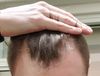
community Determining My Norwood Level with Photos
The conversation is about determining the Norwood level of hair loss. Treatments mentioned include Minoxidil, finasteride, and RU58841.
community Is RU58841 from Amazon (Germany) legit?
RU58841 availability on Amazon is questioned for legitimacy. Users discuss its use alongside Minoxidil and Finasteride for hair loss treatment.
community 22M Dut+min+microneedling. Diffuse AGA.
A 22-year-old male uses dutasteride, a serum with 10% minoxidil and 0.5% finasteride, and microneedling for diffuse androgenetic alopecia. Progress pictures show changes from July 2025 to February 2026.
community Kintors 1% Pyrilutamide comes in October/November
Kintor's 1% Pyrilutamide will be released in October/November. The user cannot tolerate finasteride.
community Since nobody else agreed to review this (mitoactive thingy) for long term, might as well be me
community Experiences with CB-03-01?
community Results of Procyanidin B2 in clinical studies
Procyanidin B2, a compound derived from Annurca apples, as a potential treatment for pattern hair loss. Several clinical studies were mentioned, which found that procyanidin B2 could increase hair growth, density, and keratin content. Other treatments such as Minoxidil, Finasteride, and RU58841 were not discussed.
community microneedling efficacy for male pattern baldness?
Microneedling, when combined with finasteride and topical minoxidil, can enhance hair regrowth for male pattern baldness, especially at the temples. Users report varying success with needle depths between 0.5mm and 1.5mm, with stamps preferred over rollers to minimize scalp damage.
community My microneedling journey (no min, fin, etc)
The user experienced positive hair growth results using microneedling with rosemary and mint oil, without Minoxidil, Finasteride, or RU58841. They switched from a dermaroller to a microneedling pen and targeted different scalp areas weekly.
community Should I pick Regenepure, Lipogaine Big 3, or Pura d'OR Argan Oil shampoo?
Regenepure is recommended for hair loss due to its gentle formula and beneficial ingredients like Saw Palmetto and Biotin, despite having only 1% Ketoconazole. Nizoral is noted for its higher Ketoconazole content but is considered harsher on the scalp.
community Anyone have PRP/Exosome results to share?
Considering alternative treatments to hair loss, such as platelet-rich plasma (PRP) and exosome therapy, instead of using medications like minoxidil, finasteride/dutasteride.
community Maneup GHK-Cu or similar top peptide
Maneup GHK-Cu peptide was used for hair loss, resulting in some hair growth in the receded hairline, but the new hairs were dry and split easily. Users discussed their experiences with this treatment.
community If PP405 doesn't work then why would Pelage continue with trials?
community What can finasteride do for you if you are destined to go NW6?
Finasteride can effectively slow or halt hair loss, even for those genetically predisposed to significant balding, like Norwood 6 or 7. Many users report long-term maintenance or improvement, often combining it with other treatments like Dutasteride or Minoxidil for better results.
community The expected timeline for PP405 - Next update at AAD Annual Meeting in March 2026 ?
A new hair loss treatment, PP405, showed promising Phase 2a results with 31% of patients experiencing over 20% hair density increase without systemic absorption, avoiding hormonal side effects. The treatment is expected to be expensive, with Phase 3 trials starting mid-2026, and there is skepticism about the data's strength.
community Microneedling with Topical solution of Min, Dut, and Latanoprost
A user is considering microneedling to enhance absorption of a prescribed topical hair loss treatment containing Minoxidil, Dutasteride, and Latanoprost, while already taking oral Minoxidil and Dutasteride. They seek advice on the effectiveness and safety of combining these treatments, especially due to the cost and their desire to maximize results.
community Does the ordinary multi peptide hair serum contain redensyl?
User wants to buy TO hair serum with redensyl but found a website not listing redensyl in ingredients. No specific treatments mentioned.