Search
for
Sort by
Community Join
840-870 / 1000+ resultscommunity Has anyone done research on Absci's AI‑driven antibody platform? Seeking your thoughts!
A user is interested in Absci's AI-driven antibody platform, ABS-201, for treating androgenetic alopecia, which shows promising preclinical results and potential for hair regrowth and pigmentation restoration. However, concerns are raised about the drug's development timeline and its advantages compared to existing treatments.
community 14-Month Update - FUE Hair Transplant
A 14-month update on a FUE hair transplant, and the effects of male pattern baldness. People discussed products such as Minoxidil, finasteride, Kerastase Chronologiste shampoo and care oil, and RU58841 to help treat hair loss.
community Mallia Aesthetics achieves key regulatory steps for novel sCD83-derived ingredient for hair growth
Mallia Aesthetics has developed MAL-838, a hormone-free product derived from sCD83, which stimulates hair growth without disrupting the skin microbiome. sCD83 promotes hair growth by activating hair follicles and preventing cell death, offering a localized treatment without systemic side effects.
community The Secret Recipe? How do celebrities do it?
Celebrities often maintain perfect hairlines through expensive transplants and common drugs like finasteride and dutasteride. Despite potential side effects, the importance of their appearance makes these treatments worthwhile.
community Is this fin/dut/min topical compound overkill?
A user questions if a topical compound with finasteride, dutasteride, minoxidil, retinoic acid, caffeine, and triamcinolone is excessive for hair loss treatment. Another user shares their experience using topical finasteride without issues and notes that alternating finasteride and dutasteride is common.
community FUT Verteporfin trials coming up soon. Dr. Baghouthi will also do a second FUE trial in the next months
Hair loss discussion involved Finasteride, Minoxidil, and RU58841. User experienced sudden shedding after 1.5 years of Finasteride and Minoxidil use, seeking advice.
community Some UFO/Alien enthusiasts believe that bald Grey Aliens are just time traveling humans from the future. That better not be true. I think you all know where I'm going with this.
The conversation humorously speculates that bald Grey Aliens might be future humans who haven't solved baldness, despite advanced technology. Treatments like microneedling, minoxidil, and finasteride are mentioned as potential solutions.
community My Last Hair Follicle Looking Up As I Pour The Most Vile Research Chemical
Treatments for hair loss, such as minoxidil, finasteride, and RU58841; humorous posts about hair loss; and the choice to stop using treatments in exchange for a different look.
community formula 82D for diffuse androgenic alopecia (DUPA)
The user is experiencing diffuse androgenic alopecia and is trying various treatments, including 5mg finasteride, loniten, and Formula 82D, which contains dutasteride, a steroid, and tretinoin. They report potential regrowth with Formula 82D, despite previous treatments being ineffective.
community Has anyone got results from pyrilutamide?
The user maintained hair with minoxidil, alfatradiol, and fluridil after stopping finasteride due to erectile dysfunction. They recently added pyrilutamide and are seeking feedback on its effectiveness after six months of use.
community Huge shed after one year Dut when I started RU.
After a year on dutasteride and oral minoxidil, the user experienced significant hair regrowth, improving from Norwood 2 to almost Norwood 1. They added RU58841, microneedling, rosemary oil, GHK-Cu, and annurca apple supplement to their regimen and are now noticing hair loss in the temple area.
community I don't care if it's thin, I'm keeping it long. 2 yr HT, 1 yr Fin
OP underwent a hair transplant (HT) and has been using finasteride for one year. Despite having thin hair, OP is happy with the results and feels more confident.
community 8 Month Update - Daily Topical Fin/Min, Weekly Microneedling, 40 y/o
User shared 8-month progress using daily topical Fin/Min, weekly microneedling, and supplements (biotin, zinc, saw palmetto, collagen). Others praised hairline regrowth and requested temple photos.
community Anyone looking at peptides for hair?
The conversation discusses interest in peptides for hair loss, specifically mentioning ahkCU and ghkCU. A user is considering adding ghkCU to their treatment regimen.
community [Discussion] Trichoscopy in sudden-onset AGA: Pathology and reversibility of "Yellow Dots" without 5AR-inhibitors?
Hair loss treatments discussed include microneedling, minoxidil, tretinoin, finasteride, dutasteride, pumpkin seeds, saw palmetto, and scalp massage. The consensus is that finasteride or dutasteride is necessary for significant regrowth, while other methods may only slow hair loss.
community Perifollicular Fibrosis and its role in androgenetic alopecia. Is Aminexil/Kopexil a must for anyone with AGA?
Aminexil/Kopexil may help reduce hair loss by addressing perifollicular fibrosis in androgenetic alopecia, but it lacks the extensive clinical backing of finasteride and minoxidil. Some users find it effective, but availability and cost are issues, especially in the US where it's not FDA-approved.
community Dutasteride might be better for your hairline. Some people have more type 1 5AR activity in their scalp than others.
Dutasteride might be better for hairline due to varying levels of 5AR activity in scalps. Genetic tests can determine if finasteride is enough or if dutasteride is needed.
community Bare Anatomy - Advanced Hair Growth Serum
A user is considering using Bare Anatomy's Advanced Hair Growth Serum, which contains Redensyl, Anagin, Baicapil, Rosemary, and Biotin, for thinning hair. Reviews are mixed, with some users skeptical about its effectiveness compared to minoxidil.
community Experiencing Sleep Issues on Fin, Switching to Dut: Is Pyrilutamide/RU a Good Addition?
The user experienced side effects from finasteride and is considering switching to dutasteride, while also using pyrilutamide to protect hair follicles. They are seeking advice on whether to add RU58841 to their regimen.
community Whoever had success with PYRILUTAMIDE, please give us hope outside of 5AR inhibitors.
Users discuss using pyrilutamide for hair loss, seeking alternatives to 5AR inhibitors. They mention using minoxidil, ketoconazole shampoo, and RU58841.
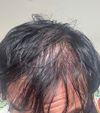
community Seeking Advice on Persistent Thin Hair Post-Transplant at 30
The user is using topical finasteride and minoxidil daily and has had a hair transplant, but their hair remains thin. They are considering using dutasteride to address the issue.
community Track hairline of Pelage executives
Pelage executives' hairlines were discussed, with speculation about them using PP405 for hair regrowth. Concerns were raised about using untested drugs, with some suggesting executives might not risk using them without safety data.
community Topilutamide (fluridil) raw active?
Topilutamide is a potential hair loss treatment between Clascoterone and RU58841. Users discuss finding Topilutamide powder and its possible benefits for those who can't afford or tolerate other treatments.
community Stem-cell hair transplants! 20k lab grown grafts from one single graft
Stem-cell hair transplants could potentially create thousands of grafts from a single donor graft, offering a solution for hair loss with DHT-resistant hair. Companies like Stemson Therapeutics and OrganTech are working on this technology, which may become available in the future, possibly reducing the cost and making it widely accessible.
community My 100 days progress (Hyper-resonder)
The user shared progress pictures after using oral finasteride 1mg daily and topical minoxidil 5% twice a day for 107 days, noting initial shedding that stabilized. Other users discussed application techniques, dosage, and shared encouragement and questions about side effects and results.
community 7.5 Months After 3950 Grafts at Sule Hair Transplan Istanbul — Here's Where I'm At
A user shared their experience 7.5 months after receiving 3950 hair grafts at Sule Hair Transplant in Istanbul, Turkey, with positive feedback on the transformation. The discussion included costs, recovery time, and the use of medications like finasteride and minoxidil post-transplant.
community Finasteride only. 7 months. Results
community Progress crown pictures (fin and min)
A user shared progress pictures showing significant hair improvement using finasteride and minoxidil, expressing satisfaction with the results. Another user accused them of having a hair transplant.