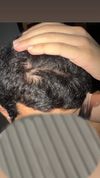
A 20-year-old male shared his 4-month hair regrowth results using finasteride, minoxidil, nizoral, and dermarolling. Commenters noted improved hair density and the potential for further progress.
User tresslessthrowaway89's experience with using minoxidil foam and redensyl liquid for three months to address hair loss, and their plan to begin taking finasteride in another three months.
The user experienced significant hair loss after extended fasting, initially thought to be Telogen Effluvium, but later suspected male pattern baldness. They tried finasteride briefly but stopped due to concerns about side effects, and are unsure if the hair loss is due to Telogen Effluvium or another cause.
Addressing hair loss by focusing on posture, blood flow, and craniofacial development. Methods include improving posture, cardiovascular activity, scalp massages, healthy diet, meditation, using minoxidil, and addressing craniofacial issues.
A new stemcell method for culturing hair follicles is being developed as an alternative to Minoxidil, finasteride, and RU58841. There are concerns about its cost and accessibility despite plans for commercialization.
The conversation discusses the potential effectiveness of hair loss treatments, with some companies claiming to have a cure by 2019-2025. Specific treatments mentioned include Minoxidil, finasteride, and RU58841.
A 36-year-old male had a 3000-graft FUE hair transplant in Turkey, with 2000 grafts to the front and 1000 to the crown. Post-operation, he experienced nausea, dizziness, itching, and pain, but saw hair growth and plans to take pictures once redness subsides.
A 23-year-old with hair loss uses finasteride, minoxidil, and other treatments, considering adding dutasteride due to hairline recession. They seek advice on dutasteride's effectiveness and sourcing.
A 36-year-old is concerned about early hairline recession despite no family history of hair loss. They are considering treatments like finasteride, minoxidil, and ketoconazole shampoo but are worried about potential side effects and are seeking natural alternatives.
A user shares their positive experience of embracing baldness, noting increased attractiveness and dating success after shaving their head. They encourage others to consider going bald instead of relying on medications like Minoxidil, finasteride, or RU58841.
Stemcell therapy shows promise in treating hair loss by mimicking DHT-resistant cells from the back of the head. Traditional treatments like finasteride are also discussed, but stemcells could potentially offer a more permanent solution.
Hair follicles are mostly dormant but can be reactivated with treatments like minoxidil, finasteride, and microneedling. A new drug, PP405, shows promise for hair regrowth but may not be available until 2027-2028.
Stemcell treatments for hair restoration can be effective, but results vary and depend on factors like the type of stemcells used and timing of treatment. PRP and exosomes have shown some success, while costs and effectiveness differ by location, with South Korea and Turkey offering more affordable options.
A user proposed genetically engineering scalp stemcells to stop androgen receptors from causing hair loss. Others discussed the feasibility, existing research, and potential issues with this approach, including targeting the correct cells and unintended effects.
The user had a hair transplant in March 2025 and has been using finasteride since 2023, which halted hair loss but didn't fully restore density. They plan to use dutasteride twice weekly, finasteride five times a week, and saw palmetto to improve hair thickness.
KX-826 shows promising results for hair growth with fewer side effects, offering an alternative to finasteride and minoxidil. Users discuss combining it with minoxidil, dermarolling, and Nizoral for improved results.
The user experienced significant hair growth and density improvement over nine months using 1 mg finasteride daily, initially 5% topical minoxidil, then transitioning to 2.5 mg and later 5 mg oral minoxidil, along with weekly microneedling. Noticeable changes were observed after three months, with the most significant progress by month nine.
The user has been using finasteride and minoxidil, then switched to dutasteride and minoxidil for six months without significant results, noticing thinning after increasing creatine dosage. They plan to consult a dermatologist to explore potential causes beyond androgenetic alopecia.
A user shared their experience using Dutasteride for hair loss, alongside a regimen of Minoxidil, Finasteride, and RU58841. They reported no major shedding or sexual side effects, but experienced mild acne when increasing the Dutasteride dose, and noted their hair condition remained stable.
A 21-year-old is using 5mg Minoxidil, 1mg Dutasteride, Nizoral, and occasional microneedling for hair loss, seeing improvement on the left side of the scalp. They stopped microneedling due to scalp inflammation and are awaiting a dermatologist appointment.
After 3 months of using oral minoxidil and finasteride, the user experienced thicker hair and filled-in thinning areas, with no major side effects except an initial shedding phase. The treatments were prescribed online, and the user noticed results after 2.5 months.
The conversation discusses the potential long-term effects of stopping finasteride after extended use, with differing opinions on the existence and prevalence of post-finasteride syndrome (PFS). Some users report persistent side effects, while others argue that such effects are rare or unrelated to the medication.
A 22-year-old experiencing worsening hair loss after initially stabilizing on Dutasteride, despite adjusting the dosage. They cannot use Finasteride or Minoxidil due to side effects and are seeking advice and planning to consult a specialist.
A 31-year-old man successfully used oral minoxidil and finasteride for hair regrowth over eight years, experiencing minimal side effects like initial shedding and increased body hair. He credits these medications for preserving his hair despite a family history of baldness.
A 45-year-old male has been using oral finasteride for 12 months and oral minoxidil for 8 months to address hair loss, with plans for a hair transplant next year. He reports no side effects and some improvement, but acknowledges a transplant is needed for full restoration.
The user is considering starting oral minoxidil for hair regrowth, debating between 2.5mg and 5mg doses, while already using topical minoxidil, dutasteride, and ketoconazole shampoo. Users suggest starting with a lower dose to monitor side effects, with some recommending trying finasteride first.
The user experienced significant hair regrowth using oral finasteride (1 mg) and oral minoxidil (2.5 mg) daily, with minimal side effects. They also use testosterone to balance any libido effects from finasteride.
The user is using topical dutasteride, minoxidil, and spironolactone for hair loss, with positive results after adding spironolactone. Another user takes oral spironolactone, dutasteride, and finasteride, noting decreased libido but no major side effects.
The conversation discusses hair loss treatments, specifically the transition from finasteride and minoxidil to dutasteride, with positive results reported by the original poster. Users share experiences with these treatments, noting varying effectiveness and side effects.
Ozzy had great hair despite a rough lifestyle, likely due to genetics. Discussions included the effects of drugs on hair, with some users mentioning treatments like Minoxidil and finasteride.