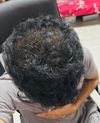
The conversation is about seeking alternatives to finasteride for hair loss treatment due to concerns about sexual side effects, with pyrilutamide mentioned as a potential alternative.
The user has been using dutasteride, minoxidil, and RU58841 for a year to stabilize hair loss and is considering a hair transplant. They are taking 5mg of oral minoxidil daily and are unsure of its effectiveness but have noticed more hair than a year ago.
The effectiveness of Dutasteride compared to Finasteride in treating hair loss, with evidence given such as studies and experiences, as well as discussion around whether one should switch from Finasteride to Dutasteride. There is also a discussion on post-Dutasteride syndrome.
The user started taking dutasteride a month ago and is seeking advice on whether to wait for a year before getting a hair transplant, as it could potentially strengthen the donor-zone and require fewer grafts, or to get a transplant immediately, extracting only the "strong hairs" not affected by dutasteride. The user is unsure which approach is correct.
A 23-year-old male has been using oral finasteride and topical minoxidil for 14 months, along with derma stamping and vitamins, but is considering switching to dutasteride due to dissatisfaction with progress. Users suggest cutting hair shorter to better track progress, and some recommend adding dutasteride and possibly a hair transplant in the future.
The conversation discusses the pros and cons of dutasteride for male pattern baldness, with a focus on its long half-life. The user, a physician, also mentions that switching from finasteride to dutasteride can cause temporary hair loss until dutasteride reaches effective levels or accelerates the hair cycle.
The conversation discusses managing hair loss and scalp issues, with users sharing experiences using treatments like dutasteride, finasteride, ketoconazole, sulfur soap, and topical anti-androgens. Suggestions include trying sulfur soap, scalp massages, spironolactone, and dietary changes to reduce sebum production and dandruff.
A user shared their 6-month update after a 5000-graft hair transplant at Sule Hair Clinic in Istanbul, noting a smooth procedure and ongoing growth without using finasteride or minoxidil. Some users expressed concerns about the decision to avoid these treatments, predicting potential future hair loss issues.
A 22-year-old underwent a hair transplant in Bangkok, using 2,500 grafts, and has been using dutasteride and minoxidil to stabilize hair loss. The user chose the procedure to enjoy youthful confidence, despite some opinions that it's too early for a transplant.
Mixing RU58841 with minoxidil compounded with tretinoin is discussed, with concerns about systemic absorption. Topical dutasteride and finasteride are also mentioned as treatments, with varying personal experiences and concerns about side effects.
A 25-year-old male was initially prescribed finasteride, oral minoxidil, and topical minoxidil for hair loss but saw no improvement after a month. His doctor switched him to dutasteride, continued both minoxidil treatments, and added PRP therapy.
RU58841 is considered effective by some users, but finasteride and minoxidil are commonly used with varying dosages to manage side effects. Users report different experiences with treatments like pyrilutamide, fluridil, and RU58841, with some seeing results and others not.
A 27-year-old male experienced limited success with Dutasteride and topical Minoxidil for hair loss and eyebrow thinning, with side effects like decreased libido and erectile dysfunction. He is considering oral Minoxidil but is concerned about side effects, and is advised to try ketoconazole for possible dermatitis and monitor vitamin D levels.
A user traveled to Turkey for a 5000-graft FUE hair transplant at ASMED Clinic with Dr. Koray Erdogan. They used finasteride before and after the surgery and shared detailed experiences, costs, and recovery tips.
The user applied 0.005% topical finasteride, minoxidil, tretinoin, caffeine, and ketoconazole shampoo for four months but saw no hair regrowth. Some users suggested increasing the finasteride dose or trying alternative treatments like clascoterone, pyrilutamide, or RU58841.
The conclusion of the conversation is that the user "lemmeseesomeass" has experienced significant hair regrowth using a combination of RU58841, dutasteride, and minoxidil. They mention that RU58841 is effective but not medically approved. They provide instructions on how they use RU58841.
Topical androgen receptor antagonists may not be necessary if 5-AR inhibitors like finasteride or dutasteride effectively reduce DHT levels. Combining a 5-AR inhibitor with a topical androgen antagonist could potentially enhance treatment, but oral use of androgen antagonists is too risky due to severe side effects.
Dutasteride raises scalp testosterone by 99%, which may not be ideal for those sensitive to all androgens. Some argue finasteride's balancing act might be better, while others believe dutasteride is superior for hair regrowth.
The conversation discusses an extensive hair loss treatment regimen including dutasteride, GT20029, RU58841, pyrilutamide, minoxidil, microneedling, ketoconazole shampoo, and experimental compounds. The user humorously describes their approach as a comprehensive strategy to combat hair loss while maintaining hair growth.
The user underwent a hair transplant and was prescribed dutasteride and minoxidil for 6 months to address crown thinning. They are skeptical about the short duration and consider continuing the medication longer.
A dermatologist prescribed 0.5mg dutasteride every two days and 5mg Minoxidil daily for hair loss, suggesting dutasteride mesotherapy as an alternative. The discussion questions the effectiveness and cost of mesotherapy compared to oral treatments, with concerns about side effects and the dermatologist's approach.
The user stopped using finasteride due to side effects and is considering Fluridil (Eucapil) as an alternative for hair loss treatment. They are exploring other options like RU58841 and are interested in the experiences of others with Fluridil, noting its good safety profile despite the cost.
The half-life of Dutasteride is commonly stated as around 5 weeks, but some sources suggest it is 170 hours for men aged 20–49, with further information indicating it varies from 3 days to 5 weeks depending on the dose. The user is seeking clarity on these conflicting figures.
The conversation humorously discusses George Clooney's hair and aging, suggesting he switch to dutasteride for his temples. It also mentions minoxidil and finasteride, debating the effects of hair dye and styling on his appearance.
RU58841 is used by some for hair loss when finasteride and minoxidil are ineffective. Users report mixed results, with some experiencing side effects like chest pain and mood changes.
Treatment options for female alopecia androgenetica, discussing the availability of spironolactone online in The Netherlands and other potential treatments like finasteride, minoxidil and RU58841.
A 24-year-old user tried finasteride, oral minoxidil, and dutasteride for hair loss but saw no improvement and was advised by their dermatologist to accept baldness. Other users suggested alternative treatments like RU58841, pyrilutamide, microneedling, and checking for underlying conditions or lifestyle factors.
KX826 is considered a legitimate option for those who cannot use finasteride or dutasteride, but many users report it as ineffective compared to RU58841. RU58841 is favored by some due to anecdotal evidence of effectiveness, despite the lack of published clinical data.
A user is concerned about taking 1mg/day of finasteride due to potential gynecomastia, given their blood results. They seek advice on how their hormone levels might be affected by blocking DHT.
Spironolactone and finasteride are not recommended for women planning pregnancy due to birth defect risks. Both need to be stopped months before conception, and finasteride is generally not advised for women.