Search
for
Sort by
Community Join
390-420 / 1000+ resultscommunity Is this too much powder not dissolving (DIY topical finasteride
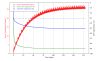
community Research Backed Dutasteride Simulator (Serum/scalp DHT included for all doses)
A Dutasteride Simulator predicts serum dutasteride, serum DHT, and scalp DHT levels using models from research papers. It simulates various dosing schedules to determine steady-state effects and visualizes outcomes, including hair growth-related scalp DHT suppression.
community VDPHL01 works really quickly .. apparently?
VDPHL01 shows faster and stronger hair growth compared to standard minoxidil, with no major side effects reported. Users discuss combining it with other treatments like dutasteride and finasteride for better results, while expressing skepticism about the effectiveness of PP405.
community Highly recommend buying a microscope (see pictures)
A user recommends using a microscope to assess hair density and track hair loss progress, finding it useful for evaluating treatment effectiveness, particularly with dutasteride and minoxidil. They advise against obsessing over hair loss and emphasize focusing on other meaningful life aspects.
community GHK-Cu is reducing my Seb Derm Flare
community 2-month progress: Ket 3x a week, Min 2x a day, Dut 0.5 every other day, Vit D 125mcg daily, and PRP once a month.
User's 2-month progress with hair loss treatment includes Ket 3x a week, Min 2x a day, Dut 0.5 every other day, Vit D 125mcg daily, and PRP once a month. Users discuss treatment effectiveness, side effects, and alternative solutions.
community Important blood values on Dut?
The conversation is about a user planning a blood test to monitor health while on hair loss treatments: Finasteride, Minoxidil, and Dutasteride. Recommendations include testing for androgens, thyroid function, micronutrients, and basic health markers, with additional suggestions for PSA, prolactin, and estradiol.
community What is the best legit source of RU58841 in the UK?
A user is seeking a trusted supplier for RU58841 in the UK, expressing doubts about their current source, rudirect, and considering Anagenic and receptorchem. They are asking for recommendations for other suppliers.
community Switching from Oral to DIY Topical Finasteride – Will This Work?*
The user is switching from oral to DIY topical finasteride due to side effects and is using a solution with 10 mg finasteride in a 100 mL mixture. They are concerned about the effectiveness of the formula due to white sediment forming in the solution.
community Any thoughts on DS Lab's Nanoxidil Serum?
community How is PP405 looking compared to Minoxidil?
community Sons altering formula, clinically sound or greed?
A user is concerned about a change in the formula of Sons topical treatment, which now requires fewer sprays but contains less minoxidil. They question if the change is for convenience or if it's a way to charge the same for less product.
community 50% test increase after 18 months of taking DUT
A user reported a 50% increase in testosterone after 18 months of taking dutasteride for hair loss. The conversation includes skepticism about the reliability of single testosterone tests and questions about estrogen levels.
community Dosage Analysis of Topical Finasteride and Minoxidil
The user is applying 0.4 mg of finasteride and 4 mg of minoxidil daily through a topical solution. This corresponds to a specific dosage analysis for hair loss treatment.
community Comparison of the efficacy of topical minoxidil 5% and adenosine 0.75% solutions on male androgenetic alopecia and measuring patient satisfaction rate
Comparing the effectiveness of minoxidil 5% and adenosine 0.75% for treating male androgenetic alopecia, and measuring patient satisfaction rate; results showed that adenosine is comparable to minoxidil but provides quicker results, however availability of products with adenosine is much less than those with minoxidil.
community Winlevi 1% Cream - Lets See how it goes
community Aesthetic Cosmetics RU8841 real or not? Australia RU
A user switched from Anageninc to Aesthetic Cosmetics for RU58841 and experienced increased shedding, questioning the product's authenticity. They seek advice on reliable sources for RU58841 in Australia.
community Sons offering free Biotin & hair care testing for UK men — just spotted this
Sons are offering free Biotin capsules, Thickening Clay, or Conditioner for hair care testing to UK men. Interested individuals can apply to receive these products without purchase.
community Selling KY19382 powder a novel activator of Wnt/β-catenin signaling
The conversation is about selling KY19382 powder, a novel activator of Wnt/β-catenin signaling, and Kolliphor EL liquid for vehicle formulation. The seller offers worldwide shipping.
community Need help with RU58841 (preparation + dosage).
The conversation is about using RU58841 for hair loss treatment, specifically mixing it with minoxidil without propylene glycol due to an allergy. The user is considering starting with a lower concentration of RU58841 and making smaller batches to maintain efficacy.
community For those who have suffered for Vitamin D insufficiency
Hair loss due to low Vitamin D levels improved significantly after taking 4000UI Vitamin D capsules and vitamin B supplements. The user noticed a reduction in hair shedding within a week.
community What's more reliable right now, pyrilutamide or RU?
Treatments for hair loss, with the user considering Pyrilutamide and RU58841 as options. It is noted that although Pyrilutamide has been studied more and is allegedly more effective, there are doubts about its authenticity in the market. KX-826 is suggested as an alternative as it has a stronger effect than RU58841 and there is scientific research on it.
community Looking to make my own 2-Deoxy-D-ribose. Any science bros can give advice?
A user is making a 2-Deoxy-D-ribose solution and asks if it can be put into an oil instead of a gel, considering adding hydrocortisone and retinoic acid. They seek advice on the best carrier oil for hair growth.
community Somebody has gotta try this- HMI-115 reference anti-body
The potential of using a specific antibody, HMI-115, as a treatment for hair loss alongside traditional treatments such as minoxidil and finasteride. The user suggests trying either a 240 mg or 30 mg dose to see if it works.
community A few days on RU58841 and JXL069, are my eyes deceiving me?
The conversation discusses a hair loss treatment regimen involving minoxidil, finasteride, RU58841, JXL069, and nizoral shampoo. The user reports seeing new black dots in areas where hair hasn't grown in years, suggesting potential regrowth.
community Anyone using CB-03-01? What are you thoughts? How do you get it from powder to solution? What strength should be used?
The conversation is about someone considering using CB-03-01 for hair loss but has ordered finasteride, which they are hesitant to use. They are seeking advice on how to prepare CB-03-01 from powder form and the appropriate strength to use.
community My Fluridil/Eucapil 2% experience 30 days.
community One month of 1mL each daily of 6% min/0.05% fin, 0.05% jxl069, 5% ru58841, and nizoral shampoo
The user shared before and after photos showing hair regrowth after one month of using a combination of 6% minoxidil, 0.05% finasteride, 0.05% jxl069, 5% RU58841, and Nizoral shampoo. Another user noted progress and suggested using a scope to monitor further changes.
community Starting MV Supplements topical RU+Min with Copper Peptides added.
The conversation is about starting a hair loss treatment using a topical solution containing RU58841, Minoxidil, and Copper Peptides. The user plans to test the product and share updates on its effectiveness.