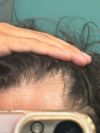
The user has been using minoxidil for years without success, but after adding DUT (dutasteride) to their routine, they have seen progress in their hair growth.
The user experienced significant hair regrowth using a combination of minoxidil, alfatradiol, pyrilutamide, and nizoral, despite previous intolerance to finasteride. They emphasize the importance of consistency in treatment and are optimistic about the results, noting no side effects so far.
The user experienced side effects from a hair loss treatment and is considering using pyrilutamide, alfatradiol, and possibly minoxidil. They are unsure about starting minoxidil immediately or waiting to see the effects of the other treatments.
Exosomes were used for hair loss treatment, showing results 33 days after the second session. The conversation also mentions Minoxidil, finasteride, and RU58841 as treatments.
A 25-year-old shared progress in hair regrowth after 7 months using dutasteride, minoxidil, and microneedling, noting some baby hair growth on the temples. The user plans to continue this treatment, having found it effective despite some initial shedding and challenges with styling due to topical minoxidil.
Upcoming hair loss treatments for those who can't tolerate DHT blockers, focusing on Minoxidil, microneedling, and ketoconazole. Promising treatments include GT20029, PP405, KX-826, and RU58841, though RU58841 may not be safe.
Topical dutasteride may have limited absorption due to its higher molecular mass compared to finasteride, potentially affecting its efficacy in suppressing DHT locally. Microneedling might enhance dutasteride absorption, possibly offering stronger local DHT suppression with fewer systemic effects.
The conversation discusses hair loss treatments, specifically topical dutasteride, minoxidil, and finasteride. Users share experiences and opinions on the effectiveness and side effects of these treatments.
The user is considering starting pyrilutamide before a scheduled hair transplant, having previously used oral minoxidil and finasteride with worsening results. They also tried dutasteride, which worsened their hair and made their skin oily.
The user experienced significant hair loss after stopping a treatment with vitamins, minoxidil (2.5mg), and dutasteride (0.5mg) for three months. They resumed the treatment 20 days ago and are hopeful for recovery, with no side effects reported.
The user is using dutasteride, oral minoxidil, and topical minoxidil with tretinoin for hair loss. They are considering whether to continue this treatment or opt for a hair transplant for their temples.
User made progress with topical Finasteride/Minoxidil and topical Dutasteride for hair loss. Microneedling at 1.5mm daily was also mentioned as part of the treatment.
A user is experiencing uneven hair thinning and has tried topical minoxidil without success and finasteride with adverse effects. They are considering microneedling and PRP treatments while avoiding finasteride, and another user suggests trying dutasteride as an alternative.
The conversation discusses hair loss treatments, including topical and oral minoxidil, finasteride, RU58841, and microneedling. Users suggest adding oral dutasteride or finasteride for more effective results.
A new topical treatment, TH07, combining finasteride, latanoprost, and minoxidil, is entering phase III trials with promising early results. Some users express skepticism, noting the treatment uses existing products.
The conversation is about purchasing dutasteride solution for mesotherapy, with a suggestion to make it using dutasteride capsules and oils. A user shared a link to a potential supplier and mentioned using dutasteride with microneedling.
The conversation discusses seeking a stronger treatment than Dutasteride (DUT) for hair loss. Suggestions include combining DUT with RU58841, increasing DUT dosage, and using transgender hormone replacement therapy or testosterone blockers, though some options may have feminizing side effects.
A 31-year-old uses Minoxidil, RU58841, Reviv Hair Serum, and Ketoconazole shampoo for hair loss but avoids finasteride. They plan to reintroduce red light therapy (LLLT) and Eucapil despite previous shedding concerns.
User discusses hair regrowth using RU58841, minoxidil, and dutasteride. Many users praise the progress and ask about the treatments' effectiveness and side effects.
Microneedling's effectiveness for hair growth is debated, with some suggesting it enhances minoxidil absorption, but evidence is inconclusive. Concerns exist about its impact on hair transplants, and opinions vary on its use with other treatments like RU58841 and stemoxydine.
The user reported hair regrowth using microneedling with a Dr.Pen Ultima M8 over six months, without additional treatments like minoxidil or finasteride. They followed a schedule of varying needle depths and noted lifestyle changes to reduce stress.
A user shared progress pictures showing significant hair regrowth after using 1mg finasteride and weekly microneedling for about 2.5 to 3 months. The user reported no side effects and maintained good health and mood.
The user stopped finasteride while trying to conceive and switched to oral minoxidil, ketoconazole shampoo, minoxidil foam, tretinoin, and microneedling. They are considering dutasteride mesotherapy but are unsure of its safety during conception.
A user reports significantly reduced hair shedding by using a topical mixture containing 10% Minoxidil, 0.1% Melatonin, 5% Azelaic Acid, 5% Rosemary Oil, and 5% Peppermint Oil, and attributes the success mainly to Melatonin. They also use a copper peptide serum (AHK-Cu) for hair growth and Ketoconazole shampoo for scalp cleaning, but have stopped using other treatments like Finasteride and RU58841.
The conversation discusses using topical melatonin as a treatment for hair loss, with one person considering adding it to their minoxidil solution and another sharing their experience of no hair shedding, possibly due to melatonin.
A user shared their progress with hair loss treatment using Dutasteride Mesotherapy but mentioned they ruined their progress. Another user commented that Minoxidil caused shedding, which should regrow in three months.
The user has tried topical Minoxidil and oral Minoxidil for beard and scalp hair growth with minimal results, and has been on Finasteride for 7 months with stabilized scalp hair but no facial hair improvement. They are considering using a SULT1A1 enzyme booster to enhance results and are questioning its effectiveness without concurrent topical Minoxidil application.
The conversation discusses the link between increased estrogen and autoimmune diseases, with a focus on avoiding soy and milk. It also mentions treatments like Minoxidil, finasteride, and RU58841 for hair loss.
The user reports some hair regrowth after 12 weeks using 5% topical Minoxidil, 0.015% topical finasteride, and occasional microneedling. They also take multivitamins including biotin, though others suggest these are only effective if deficient.