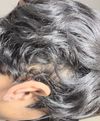
Verteporfin is being explored for hair regeneration, with unofficial trials and updates shared online. Efforts are being made to encourage more surgeons to trial verteporfin for donor hair regeneration.
A user who is using Pyrilutamide, Finasteride, and a homemade topical solution to treat their hair loss. Replies mentioned the potential of Pyrilutamide being a "cure" for hair loss and a reminder that results may not be credited solely to it.
The conversation discusses diffuse unpatterned alopecia (DUPA) and its possible causes, including sensitivity to DHT, not being androgenic alopecia, being diffuse alopecia areata, or hormonal issues. Treatments mentioned include topical melatonin, Clobetasol Propionate for alopecia areata, and the lack of results from using finasteride, dutasteride, and minoxidil.
Pelage Pharmaceuticals' PP405, a new hair loss treatment, was recognized by Time Magazine as one of the best inventions of 2025. The conversation expresses optimism about the recognition of this in-development treatment.
People are discussing the use of the peptide GHK-Cu for hair and skin, with mixed results. Some users have tried it alongside other treatments like adenosine and melatonin, but have not seen significant improvements, and one user stopped due to cost.
The user is using a hair loss regimen involving 2ddr applied twice daily, tretinoin weekly, and occasionally micro-needling. They report feeling increased scalp thickness and seeing some hair growth progress.
The user experienced hair loss due to defective dutasteride and is now using a regimen including dutasteride, oral and topical minoxidil, RU58841, tretinoin, and microneedling to recover hair density. They are optimistic about regaining their hair despite recent setbacks.
Injectable GHK-CU and BPC157 were discussed for hair loss, but users did not notice significant hair changes. BPC157 was noted to help with shoulder issues.
The user shared an 11-month hair loss treatment update, maintaining the same regimen but adding vitamins and increasing minoxidil application to 1ml during the day. It's unclear if the vitamins contributed to any changes.
A user humorously questions if they should shave their head due to hair loss, mentioning Ronald Reagan's impressive hair genetics. Replies include jokes and comments about jealousy and distrust towards older individuals with full heads of hair.
The conversation discusses using Botox to treat male pattern baldness, suggesting it may promote hair growth by increasing scalp blood flow and oxygen, reducing dihydrotestosterone levels. The user wonders why this treatment is not widely discussed or if it has been discredited.
A stem cell and adenosine triphosphate cocktail showed promising results in hair regrowth for male and female mice, with potential for future clinical trials. Users humorously reacted to the success in mice, expressing hope for human application.
Clinical studies by Dr. Barghouthi and Dr. Bloxham indicate that Verteporfin, when used with FUE and FUT hair transplantation methods, shows promise in hair follicle regeneration and minimal scarring due to its ability to inhibit Yes-associated protein (YAP). Microneedling at depths of 3-3.5mm, combined with Verteporfin, could potentially reactivate dormant follicles, although the optimal dosage and application method are still under investigation. Concerns remain about the DHT sensitivity of regenerated follicles, highlighting the need for further research to optimize trauma levels and Verteporfin concentrations to achieve effective and scar-free hair regeneration.
The conversation is about a user experiencing accelerated hair loss after starting vitamin D3 supplements, suspecting a link between the supplement and increased DHT levels. The user decides to stop taking the supplements, preferring natural sources of vitamin D.
The potential of using Verteporfin to prevent hair loss scars and possible regrowth, with two doctors currently testing it, although the price of a 15mg bottle is expensive.
Oral PTD-DBM was discussed as a potential hair loss treatment, but it was deemed ineffective in humans despite promising results in mice. The conversation concluded that trying it without VPA might be unwise.
The post and conversation are about skepticism towards a new hair loss treatment containing 2-deoxy-D-ribose, copper peptides, and exosomes, with concerns about the legitimacy of the product and its website. The treatment's effectiveness and authenticity are questioned due to lack of testing and transparency.
The user shared positive progress in hair regrowth using dutasteride, topical minoxidil, and Keeps shampoo, with a unique minoxidil application schedule and glycolic acid exfoliation to maintain scalp health. They reported no side effects from dutasteride and are pleased with the results.
Phase II for TDM-105795 for Androgenic Alopecia is set to begin in April 2023. The study aims to evaluate the efficacy and safety of TDM-105795 in male subjects.
A user with diffuse thinning alopecia uses a custom full cap wig for an active lifestyle, costing $450 and lasting about 10 months. They share their positive experience with the wig as an alternative for those for whom treatments like Minoxidil, finasteride, or RU58841 don't work.
A 19-year-old male is experiencing accelerated hair recession after two months on oral Dutasteride, despite no noticeable shedding, while also using topical Minoxidil and Finasteride. He is unsure if the treatment is effective and is unable to access RU58841.
A 57-year-old man with male pattern hair loss and insulin resistance experienced hair regrowth and weight loss after using tirzepatide, without other hair treatments. Dysregulated glucose metabolism is linked to hair loss, with tirzepatide potentially improving hair density by normalizing insulin resistance.
PP405, a topical treatment, shows promise for hair growth by activating inactive follicles, with 66% of participants experiencing positive results. The treatment is well-tolerated and may proceed directly to Phase 3 trials, offering a potential alternative to minoxidil and finasteride.
The conversation is about a user's hair loss treatment regimen, which includes Dutasteride, oral Minoxidil, topical Dutasteride, Minoxidil sulfate, antioxidants, and various supplements. The user is also using a derma stamp and has paused Tretinoin due to a TCA peel recovery.
The conversation discusses the use of Verteporfin in hair loss treatment. It suggests that Verteporfin could potentially regenerate hair follicles instead of forming scars, providing an unlimited donor supply for hair transplants.
A user plans to experiment with creating new hair follicles using methods like derma rolling, applying lithium chloride, tannic acid, and various other substances including caffeine, ketoconazole, and raspberry ketones. They also consider using anti-inflammatories, immunosuppressants, and DHT inhibitors to potentially improve results.
A user is trying to reverse hair loss using vitamins E and D, jojoba oil, rosemary oil, peppermint oil, and microneedling, avoiding finasteride and minoxidil. They plan to use Alpecin shampoo and will provide updates on the effectiveness of this regimen.
A user shared their aggressive hair loss treatment regimen, which includes daily use of Avodart (dutasteride) and Minoxidil, bi-weekly use of Davines Purifying shampoo, and almost daily use of Ducray Anaphase+ shampoo, along with supplements like vitamin D3, collagen, biotin, and zinc. They also use a dermastamp every 10 days and are considering a hair transplant for increased density, followed by a switch to finasteride and Minoxidil foam.
The user had a hair transplant in March 2025 and has been using finasteride since 2023, which halted hair loss but didn't fully restore density. They plan to use dutasteride twice weekly, finasteride five times a week, and saw palmetto to improve hair thickness.
Topical Vitamin D3 may stimulate hair growth and has been used for Alopecia Areata. There is a question about the lack of research on its use for Androgenetic Alopecia (AGA).