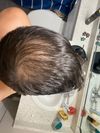
A 21-year-old with diffuse thinning hair is considering RU58841 due to side effects from topical finasteride and is asking for the lowest effective dose and time to see results from RU58841 users.
The user is considering switching from finasteride to daily dutasteride and adding oral minoxidil to their current regimen of topical minoxidil, tretinoin, and microneedling due to a lack of progress in hair regrowth. They are seeking advice on whether this change could make a difference.
A 29-year-old male experienced hair thinning and used topical minoxidil, finasteride, and RU58841, but stopped RU58841 due to health concerns. He is considering adding topical dutasteride and switching to oral minoxidil to enhance regrowth, while others suggest using ketoconazole shampoo, microneedling, and lifestyle changes like diet and exercise.
The user plans to enhance their hair loss treatment with oral minoxidil, finasteride tablets, laser cap therapy, and various supplements. They are also considering a hair transplant and exploring reputable sources for these products.
Consider increasing dutasteride dosage to 2.5mg daily and continue using oral minoxidil. Check DHT levels, thyroid, vitamin D, and consider additional treatments like microneedling, RU58841, and improving diet and lifestyle.
Combining Minoxidil with Finasteride or RU58841 may cause interference, irritation, or reduced absorption. It might be better to apply one topical at a time and wait an hour before applying another.
A user trying to avoid an expensive hair transplant, and the replies suggesting they wait two years on treatment before deciding if they need a transplant or not.
The user is using 5% topical minoxidil twice daily and 1.25 mg oral finasteride for hair thinning at the temples. They are considering switching to once-daily minoxidil due to scalp flakiness and future time constraints.
The user plans to switch from dutasteride back to finasteride due to worsening hair loss, possibly due to increased scalp testosterone. Others report mixed results with both treatments, showing individual variability.
The user has been using minoxidil for hair loss and is considering trying a compounded topical treatment with 0.1% dutasteride, minoxidil, tretinoin, collagen, and silicon, as recommended by a trichologist. They learned that dutasteride might be more effective than finasteride and are seeking opinions on the use of topical dutasteride.
The conversation discusses the variability in effectiveness and safety of generic finasteride from different manufacturers, with some generics potentially containing impurities. Users shared their experiences with various brands, questioning if different brands affect hair loss treatment outcomes.
Some individuals experience hair loss despite using treatments like 2.5 mg dutasteride, finasteride, and minoxidil, suggesting sensitivity to DHT or other factors. Various treatments and lifestyle changes are discussed, but results vary, and some consider hair transplants or other solutions.
Breezula is seen as potentially overhyped, with concerns about its cost, effectiveness, and long-term benefits compared to existing treatments like finasteride and minoxidil. Some users believe it could complement existing treatments, while others are skeptical about its impact and prefer waiting for newer options like GT20029 and PP405.
A 27-year-old male is using minoxidil 5% nightly and alternating between three hair serums during the day, seeking advice on whether this routine is beneficial or overly complicated. Responses suggest simplifying the routine by focusing on minoxidil, possibly increasing its concentration, and considering finasteride or dutasteride instead of multiple serums.
A user shared progress pictures 1.5 months after a hair transplant of 3500 grafts, using oral finasteride, topical finasteride, minoxidil, and vitamins. They are concerned about potential shock loss and the thinning appearance.
The user is experiencing hair loss and is using 2% ketoconazole shampoo, Minoxidil, and Finasteride. They are considering switching from Finasteride to Dutasteride, but others suggest waiting due to a possible shedding phase.
The conversation discusses hair loss treatments, specifically Setipiprant, finasteride, and bimatoprost. Setipiprant is suggested for maintenance, while bimatoprost is for regrowth, and combining them with dermarolling is recommended for better results.
The user is using Finasteride gel and considering adding Redensyl to their routine, along with weekly microneedling, but is hesitant to use Minoxidil due to its initial shedding phase. They seek advice on the safety and ideal routine for combining these treatments.
Finasteride and minoxidil are recommended for hair loss treatment, with stress-reducing activities like meditation and yoga suggested to enhance results. Dutasteride is avoided by some due to concerns, and mental health is emphasized as crucial in the treatment process.
The conversation discusses that dutasteride may be more effective than finasteride for frontal hair loss due to higher 5ar Type 1 enzyme activity in that area. Some users question the validity of this information, while others confirm it with additional sources.
The user has been using finasteride and minoxidil for hair loss but is considering switching to dutasteride due to insufficient results, particularly for hairline improvement. Other users shared their experiences with dutasteride, noting potential benefits and side effects, and suggested a gradual transition from finasteride to dutasteride.
Genetic factors, enzyme activity, and DHT sensitivity affect individual responses to hair loss treatments like finasteride, minoxidil, and dutasteride. Starting treatments early can slow hair loss, but results vary among individuals.
PP405 is expected to finish Phase 2 trials in late 2025, with potential market availability around 2028-2029 if all goes well. Current treatments like finasteride and minoxidil are still popular, while new options like KX-826 and Breezula are anticipated soon.
A 30-year-old male is considering starting finasteride for thinning hair at the crown and is seeking advice on whether to add minoxidil. A user suggests using both treatments for better results.
Dutasteride is more effective than finasteride for hair loss, especially at the crown and midscalp, but both have similar side-effect profiles with low incidence of sexual adverse events. Improvement is measured visually, and significant results may take over 12 months to appear.
The conversation discusses a topical finasteride therapy with hydrocortisone butyrate, estrone base, and breviline. A user suggests oral finasteride as a superior option.
The conversation discusses hair loss treatments, including finasteride, microneedling, minoxidil, and PTD-DBM. The user has not noticed significant regrowth and is considering cost-effective options like valproic acid.
Minoxidil, finasteride, and RU58841 are discussed as treatments for hair loss, with excitement around a new drug, PP405, and a reformulated oral minoxidil in trials. Concerns about cost, side effects, and long-term use are also mentioned.
The user experienced severe side effects from finasteride, including cognitive and sexual issues, despite its effectiveness for hair growth. They are considering switching to RU58841 and seek insights from others who have made a similar change.