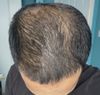
The conversation discusses hair regrowth progress using topical dutasteride with cetirizine, laser therapy, and growth serum. The user observes miniaturized, vellus hairs on the scalp.
A user discusses using dermastamping for hair loss and questions the timing of applying a mixture of peppermint oil, spearmint oil, rosemary oil, and castor oil due to their anti-inflammatory effects. They wonder if waiting 10 hours after stamping would be more effective.
The conversation discusses the delay in the release of GT20029 for hair loss treatment and skepticism about its effectiveness. Participants mention other treatments like verteporfin and advancements in transplant procedures as more realistic options.
The conversation discusses hair thinning and the potential role of vitamin D deficiency in hair loss, with suggestions to take vitamin D3 supplements. The user also mentions having diffuse thinning and a slightly receding hairline.
A 33-year-old male experienced initial hair improvement with exosomes, PRP, Regenera, oral minoxidil (2.5mg), and finasteride (1mg), but his condition worsened after stopping treatments. He is considering a hair transplant and seeks advice on its viability.
A 25-year-old male is experiencing advanced hair loss and is using topical and oral minoxidil, topical finasteride, and vitamin D3, but has not seen significant regrowth. He is considering switching treatments, including oral dutasteride, topical spironolactone, and possibly a scalp biopsy to better understand his condition.
The conversation discusses a person's experience with hair loss treatments, including 7 months of using finasteride and minoxidil, switching to oral minoxidil, using ketoconazole shampoo, and microneedling. They notice hair regrowth more with flash photography than in regular light.
A user shared their positive experience with a hair transplant surgery, detailing the process and results, including the use of 2800 grafts and post-surgery treatments like PRP. They also mentioned using finasteride, minoxidil, and supplements to maintain hair growth.
The user is using a regimen of dutasteride, oral and topical minoxidil, Nutrafol, and keto shampoo for hair regrowth, with plans for a hair transplant at the one-year mark. Users suggest adjusting treatments due to scalp inflammation and discuss the potential addition of RU58841, while noting impressive results so far.
The user experienced rapid hair loss due to stress and started using minoxidil, finasteride, a derm roller, and Mielle hair oil, along with men's supplements. They are pleased with the progress and grateful for the support from the community.
The user is seeking advice on a hair loss treatment called Ell Cranell, which contains Alfatradiol. Another user shared information from a study stating that Alfatradiol only slows down or stabilizes hair loss, but does not increase hair density or thickness.
The user experienced significant hair regrowth using 7% minoxidil, 0.3% finasteride, and derma stamping over nine months. They reported no side effects and noticed results around 3-4 months, with faster progress when using derma stamping 2-3 times a week.
The conversation is about experimenting with microneedling and growth factor topicals for hair growth, avoiding Minoxidil due to shedding concerns. The treatment includes microneedling, growth factor topicals, finasteride, biotin, and a caffeine shampoo.
The conversation is about a hair loss treatment regimen that includes finasteride, dutasteride, oral minoxidil, Dermapen, quercetin, N-acetyl L-cysteine, biotin, millet seed extract, MSM, OPC, green tea extract, high-dose vitamins B1-B12, boron, and silica. The user is seeking advice on additional treatments.
The user has seen no regrowth after 1 year and 2 months on finasteride, despite increasing the dose, and is inquiring about the potential of future treatments like verteporfin and gt20029 for hair regrowth.
The conversation is about hair regrowth using topical finasteride, minoxidil, and microneedling, with some users noticing new hair growth. The original poster also takes protein, biotin, and vitamin D supplements and prefers topical treatments due to concerns about side effects from oral finasteride.
The conversation is about a user's one-year progress after a 3,200 graft FUE hair transplant and their use of oral finasteride and minoxidil. People are impressed with the results and are discussing the effectiveness and cost of the treatment.
Scalp massage may help with hair growth by stimulating blood flow, similar to minoxidil. Users discuss its potential benefits and share personal experiences, noting it might reduce DHT levels and improve hair health.
A physician experienced hair thickening and new growth using microneedling and minoxidil, but stopped using topical finasteride due to side effects like reduced libido and erectile dysfunction. The physician plans to continue with microneedling and minoxidil, considering finasteride nonessential for cosmetic purposes.
User reports regrowth at temples and improved hairline density after 6 months of using 0.5 mg Dutasteride daily, topical minoxidil twice daily, and vitamins. Considering adding copper peptide but concerned about overdoing it; experiencing increased shedding on the crown.
Transplanting mice skin to humans is not feasible due to immune rejection, but some suggest genetic modification or immune suppression could make it possible. Xenograft hair transplants are discouraged.
A user is seeking recommendations for dermatologists or hair clinics in the Greater Sacramento or Bay Area for exosome treatments, comparing topical application plus microneedling versus direct scalp injections. They are also asking for personal experiences and before-and-after photos.
The user had a hair transplant 5 years ago and is currently using 1 mg finasteride and topical minoxidil but is not seeing an increase in hair volume. They are considering another transplant to improve hair volume.
Dutasteride is more effective than finasteride for hair loss as it blocks more of the enzyme causing hair loss. New treatments like stem cell therapies and alternatives to minoxidil are being explored, but major advancements are still years away.
The user is using a combination of microneedling, minoxidil, tretinoin, scalp massages, and red light therapy to address hair loss, with a focus on the hairline and temples. They emphasize the importance of scalp massages and have seen regrowth, attributing success to their comprehensive routine.
The conversation discusses hair cloning progress and mentions treatments like Minoxidil, finasteride, and RU58841. Users also talk about hair transplants and their effectiveness.
The conversation is about whether treatments like finasteride, dutasteride, and minoxidil can make single hair follicles produce multiple hairs again. The user is curious if these medications can thicken hair and prolong the growth phase.
The conversation is about hair regrowth using topical finasteride, minoxidil, and keto spray, along with oral Saw Palmetto, Lustriva complex, collagen, and microneedling. Users discuss their experiences with these treatments, noting improvements in hair density and color, with some experiencing mild side effects.