Search
for
Sort by
Community Join
150-180 / 1000+ resultscommunity 3 months. Dut, Min, Keto, Vitamin D, exercise
A user's experience using dutasteride, minoxidil, ketoconazole, vitamin D, scalp massage, exercise, and avoiding vaping and 2-in-1 shampoo/conditioner to treat hair loss; they also discussed the side effects of finasteride.
community Protac degradation of the androgen receptor in mice shows good efficacy and no systemic drug could be found
The efficacy of degrading the androgen receptor through dermal application in DP cells, a delivery system for topical drugs that involves dissolving microneedles, and rosemary oil as an alternative anti-androgen.
community How’s RCH-01 doing?
RCH-01's progress is uncertain, and there's skepticism about its effectiveness. Users are losing hope in this treatment.
community Dermastamping — do you use hyaluronic acid as lubricant?
The conversation discusses using high molecular weight hyaluronic acid after microneedling to form a protective barrier, though it's considered expensive and offers marginal improvement. Users share experiences with different microneedling tools like derma rollers, dermastamps, and Dr. Pen, with some opting not to use any products on the scalp.
community What vitamin D level would cause hair loss?
A user experiencing excessive hair shedding and a receding hairline is questioning if low vitamin D levels could be the cause, despite levels being within the normal range. Replies suggest that while vitamin D deficiency can cause hair loss, it might not be the issue in this case.
community My DHT levels on 1400mg testosterone per week and 0.5mg dutasteride daily
community RU58841 and Dutasteride: How do they interact?
community Pelage Pharmaceuticals’ PP405 and its Impact on Follicular Regeneration to be Presented at the American Academy of Dermatology (AAD) Annual Meeting 2026
PP405 shows promise in regenerating hair by activating dormant follicles. Other treatments like VDPHL01 and Breezula are also advancing, providing new hope for hair loss solutions.
community Should I Derma Stamp on Oral Dut/Min?
The user switched to oral dutasteride and minoxidil and is questioning the need for derma stamping, which is typically used with topical treatments. They are considering whether derma stamping is necessary with their current oral regimen.
community thoughts on dutasteride mesotherapy?
community 14 month progress on Oral Min/dutasteride
community 1 year progress update, dut+min
A 35-year-old shared their 1-year hair loss treatment progress using 0.5mg Dutasteride, 5mg oral Minoxidil, topical Minoxidil, and Ducray Anaphase+ shampoo daily, noting significant changes after 4 months despite some shedding. They reported minor side effects and followed their dermatologist's advice for the treatment plan.
community Avodart (dut) side effects tracking
User tried various hair loss treatments, now switching to Dut and hair transplant. Experienced side effects and plans to track them.
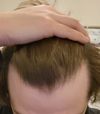
community Dutasteride left me in the dark, need help
The user switched from finasteride to dutasteride due to hairline recession but noticed further hair loss and is seeking new dermatological advice. They are concerned about the effectiveness of dutasteride and are looking for help.
community Sooo whens the next big thing gonna come?
New hair loss treatments like VDPHL01, PP405, Gt20029, and Breezula are anticipated, with VDPHL01 possibly releasing in 2027/28. Current treatments include finasteride, dutasteride, and minoxidil, but new options are eagerly awaited.
community Treating my DUPA via controlling inflammation
The user has DUPA and suspects autoimmune activity as a cause. They have tried various treatments including finasteride, minoxidil, dutasteride, pyrilutamide, estrogel, hydrocortisone, and clobetasol, and are now seeking a long-term immunosuppressant.
community Duality of (diffuse thinning) man
The user has been using finasteride for over two years with mixed results and is considering starting dutasteride and oral minoxidil, though both are hard to obtain. They are also contemplating a hair transplant in the future due to diffuse thinning.
community DUPA VS. FAPD, which is more treatable? Which is worse?
DUPA is considered more treatable than FAPD, as FAPD involves scarring that prevents hair regrowth. The user has started treatment with oral dutasteride and minoxidil, hoping for better results than previous treatments.
community 3 Months Oral DUT + MIN 1st photo in day one and 2nd is 3 months to the day.
The conversation is about hair regrowth progress using oral dutasteride (DUT) and minoxidil (MIN) over three months, with significant improvement noted. Users discuss potential future results and share personal experiences with similar treatments.
community to my gymbros on dute, any alternatives for creatine?
community 13 month update - dut, min, niz, 1.5mm roller
The conversation discusses a 13-month hair loss treatment update using dutasteride, minoxidil, nizoral, and a 1.5mm derma roller, with the original poster reporting no side effects and some improvement in hair thickness. Participants request before-and-after pictures with consistent hairstyles to better assess the treatment's effectiveness.
community Twist-1 vs Scube-3. Is it worth pursuing both?
community Breezula/Winlevi
community Almost 4 Months dutasteride, min and derma stamp
The conversation is about a user's nearly 4-month hair loss treatment regimen, which includes dutasteride every other day, 0.25ml minoxidil on the hairline once a day, and using a 1.5 mm derma stamp every two weeks. Some responses question the need to start multiple treatments simultaneously, while others comment on the visible improvement and the necessity to continue treatment for sustained results.
community 22M Dut+min+microneedling. Diffuse AGA.
A 22-year-old male uses dutasteride, a serum with 10% minoxidil and 0.5% finasteride, and microneedling for diffuse androgenetic alopecia. Progress pictures show changes from July 2025 to February 2026.
community For those who have suffered for Vitamin D insufficiency
Hair loss due to low Vitamin D levels improved significantly after taking 4000UI Vitamin D capsules and vitamin B supplements. The user noticed a reduction in hair shedding within a week.
community PTD-DBM Update: Q&A With Dr. Kang-Yell Choi
PTD-DBM is being explored for hair regrowth by targeting CXXC5, with clinical trials expected after pre-clinical studies. Users express anticipation and skepticism about its effectiveness.
community 2 months fin + min + dermastamping results
community FUE Crown transplant + dut&min - 1,5y progress
A user shared their 1.5-year progress after a FUE crown transplant, using dutasteride and oral minoxidil, which improved their hairline and stabilized hair loss. They experienced dizziness from topical minoxidil but had no side effects from finasteride, dutasteride, or oral minoxidil.