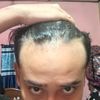
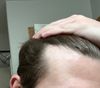
A user shared their positive experience with a hair transplant at Wimpole Clinic, performed by Dr. Malkani, and discussed using finasteride at a reduced dose due to side effects. They also mentioned avoiding minoxidil due to heart pain and taking supplements like biotin, marine collagen, viviscal, and krill oil.
A gel of keratin microspheres promotes hair follicle growth, showing similar effectiveness to minoxidil in mice. The treatment activates hair growth pathways and reduces inflammation, with potential applications in drug delivery for hair-related disorders.
A 22-year-old has been using minoxidil and finasteride for hair loss with initial success, but later experienced increased shedding and no regrowth. They recently added vitamin D3 supplements and microneedling, which reduced shedding, but are seeking advice on regrowth, with suggestions to try tretinoin with minoxidil and consider dutasteride.
A sugar gel containing 2-deoxy-D-ribose has shown promising hair regrowth results in mice, comparable to Minoxidil. Users are discussing the potential to buy and try this compound themselves.
The conversation is about whether doctors are offering hair transplants using verteporfin. Dr. Bargouthi in Jordan and Dr. Bloxham in New York are currently conducting trials on it.
Pelage is recruiting for phase 2 trials, showing promise for treating bald regions. The discussion highlights its potential effectiveness based on its mechanism of action.
A 40+ male shared his one-year progress using minoxidil twice daily and microneedling once a week, showing significant hair improvement. He also occasionally uses finasteride in a low dosage due to side effects.
Hair follicle stem cells remain in bald individuals, but progenitor cells do not, raising questions about hair regrowth claims by Pelage. PP405 is discussed as a potential treatment, with skepticism about its effectiveness compared to existing treatments like Minoxidil and Finasteride.
RU58841, a potential hair loss treatment, was not commercialized due to marketability issues and lack of long-term safety data. Concerns about its formulation and delivery methods further complicate its use.
People are hopeful about future hair loss treatments like PP405, GT20029, and VDPHL01, while some are currently using finasteride and minoxidil. There is skepticism about the effectiveness of new treatments, and some advise against hair transplants until more promising drugs are available.
A user is experiencing uneven hair thinning and has tried topical minoxidil without success and finasteride with adverse effects. They are considering microneedling and PRP treatments while avoiding finasteride, and another user suggests trying dutasteride as an alternative.
The post discusses a phase 2 trial for HMI-115, a hair loss treatment, in China, specifically seeking volunteers aged 18-65 with Norwood 3 vertex, 4, and 5 hair loss. The conversation includes questions about the specific recruitment criteria and how to volunteer.
A user shared their successful hair loss treatment using RU58841, topical minoxidil, and microneedling, noting significant improvement over three months. They chose RU58841 over finasteride due to personal preference and reported no side effects, while others discussed their experiences with different treatments and supplements.
The conversation discusses the safety study of PP405, emphasizing that early trials focus on safety rather than efficacy, and that any efficacy data from such a short study should be viewed skeptically. It also highlights that the information released is primarily for securing funding, and that meaningful efficacy results are expected in later phases.
The conversation discusses alternatives to Dr. B's hair loss treatments, specifically mentioning Minoxidil, Finasteride, and RU58841. A user notes a price discrepancy on a website.
The conclusion of the conversation is that the user, PirateBeastBaby, had good results with microneedling for hair loss after using oral finasteride and topical minoxidil 20 years ago. They believe that microneedling was the gamechanger for their hair growth.
Finasteride is effective for DHT/AR-driven hair loss but not for chromosome 20-driven cases, where treatments like minoxidil, prostaglandin analogs, and low-level laser therapy may be more beneficial. Genetic testing can help determine the underlying cause of hair loss to tailor treatment effectively.
Users discussed hair loss treatments, specifically 0.1% latanoprost with melatonin, caffeine, and biotin. Other treatments mentioned include minoxidil, finasteride, RU58841, and microneedling.
The conversation discusses the potential of Verteporfin, an FDA-approved drug, for hair loss treatment, particularly in combination with microneedling or PRP. Users express hope and curiosity about its application, while some remain cautious due to the need for more extensive testing.
A compound called MTP3 from the Monoterpene family was found to be safe and highly effective at treating hair loss by inhibiting the FGF5 gene, but its identity is undisclosed for commercial reasons. No specific treatments like Minoxidil, finasteride, or RU58841 were discussed.
A user used Minoxidil twice daily, 1 mg finasteride in the morning, and a dermaroller weekly for a year but is unhappy with the results and sperm quality. Others suggest continuing the regimen, noting hair maintenance and thickness, and considering additional treatments like dutasteride or a hair transplant.
TurboMoe has been using 1mg finasteride and 2mL minoxidil daily for 6 months to reverse his frontal hair loss, with good results. He previously used finasteride in his 20's but stopped before having children due to low sperm count; he stayed off it until his last child was born.
A 37-year-old male stopped using finasteride and minoxidil due to side effects and switched to derma rolling, scalp massaging, and Revita shampoo, resulting in thicker, healthier hair with new growth. Users discuss the effectiveness of mechanical scalp stimulation, with some sharing similar positive experiences and others expressing skepticism.
MaximusDurkimus shares experience with 0.25mg Finasteride, Minoxidil-induced lupus, and less than 10mg RU58841 for hair loss. Plans to try 0.025% topical Finasteride with 5% Stemoxydine and possibly Tretinoin, Fluridil, or CB-03-01 in the future.
A user is treating hair loss with 0.5mg Dutasteride three times a week, 5mg oral Minoxidil daily, and topical finasteride and minoxidil, seeing some improvement but insufficient density. They are considering increasing Dutasteride dosage and addressing high estradiol levels, while also trying to quit vaping.