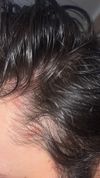
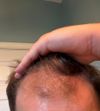
User uses dermaroller and minox for hair loss without success, considers adding Stemoxydine and mixing tretinoin with minox. Another user suggests a DHT inhibitor for sustainability.
A user with scalp psoriasis and hair loss is hesitant to use topical minoxidil and finasteride due to concerns about psoriasis and potential side effects. They are considering alternatives like pumpkin seed and saw palmetto.
Fish oil may not significantly improve hair health, but it is beneficial for overall health, especially for those who don't consume fish. Some users report better skin and less frizzy hair with omega-3 supplements, but no clear evidence of hair improvement.
The user is experiencing scalp irritation and hair thinning, possibly due to stress, with red patches on the face and dry skin. They are considering seeing a dermatologist and have used tea tree and rosemary oil.
The user started treating hair loss with minoxidil, Nizoral shampoo, dermarolling, and castor oil, and noticed small hairs growing at the temples. They plan to add biotin and azelaic acid to their routine but are avoiding finasteride due to potential side effects.
The conversation is about making a topical finasteride solution by dissolving crushed finasteride tablets in an alcohol-based hair treatment. Ingredients of the hair treatment include alcohol, water, and various plant extracts and preservatives.
The conversation is about the use and application of CB-03-01-2 (Breezula) for hair loss, including questions about its form, how to apply it, and the duration 10g would last. Specific treatments discussed are Minoxidil, finasteride, and RU58841.
The user reports that MSM supplementation has thickened their hair strands while using finasteride and topical minoxidil. They also take zinc, copper, B-complex, vitamin C, vitamin D3, and K2, and plan to add omega-3, magnesium, astaxanthin, and pterostilbene.
The user used microneedling, zinc, vitamin D3, biotin, magnesium, saw palmetto, pumpkin seed oil, and a DHT-blocker shampoo with biotin for hair loss. They are considering adding minoxidil due to stagnation in progress.
The conversation discusses hair loss treatments, specifically Minoxidil, finasteride, RU58841, and Sulforaphane supplements. Two brands of Sulforaphane supplements, Avmacol and Prostaphane, are mentioned with optimal dosages.
The conversation is about using topical melatonin for hair loss and seeking advice on a safe mixing solution or pre-mixed product. Specific treatments mentioned are minoxidil, finasteride, and RU58841.
The conversation discusses alternative hair growth treatments to minoxidil, including Stemoxydine, Tretinoin, adenosine, Baicalin, castor oil, Latanoprost/bimatoprost, and Redensyl. Users share their experiences and opinions on the efficacy of these treatments.
The user wants to reduce their dose of topical finasteride to 0.1-0.2mg and is considering mixing 0.2ml of their current finasteride + minoxidil serum with 0.8ml of a minoxidil-only serum for better scalp coverage. They are asking for advice on whether this method is effective or if there's a better way to dilute the finasteride solution.
The user has been taking oral minoxidil and finasteride for 10 months with no hair growth but no further hair loss. They are considering adding rosemary oil and possibly returning to a topical solution.
The conversation discusses using a multimodal approach to treat androgenic alopecia, including substances like gamma-linolenic acid, DHA, sulforaphane, melatonin, cetirizine, astaxanthin, fisetin, apigenin, curcumin, limonene, genistein, and berberine. Users also mention using ketoconazole, minoxidil, and low-level laser therapy (LLLT) as part of their hair loss treatment regimens.
Rice water was used as a hair treatment and showed noticeable results in a week, more than finasteride used for seven months. The user plans to continue using rice water and might stop finasteride, while still using ketoconazole for dandruff.
The conversation discusses various hair loss treatments, including minoxidil, finasteride, latanoprost, tretinoin, dutasteride, and cetirizine, with concerns about effectiveness, cost, and potential side effects. Users express skepticism about the product's price and the combination of multiple compounds.
A trial of verteporfin for hair regeneration, with pictures comparing the original and current status, as well as links to other resources discussing the efficacy of this treatment in combination with Minoxidil, Finasteride, and RU58841.
The conversation discusses alternatives to RU58841 for hair loss treatment, with suggestions including topical spironolactone, peppermint and rosemary oils, and saw palmetto. The user also considers ordering RU58841 from China but finds it too expensive.
The user has been using finasteride, minoxidil, dermaneedling, and keto shampoo with great results. They seek a propylene glycol-free, volume-boosting shampoo for thin and fine hair.
Finasteride, a hair loss treatment, was observed to reduce scalp oiliness in users. Anti-androgens like Finasteride are known to decrease the activity of oil-producing glands.
Saw palmetto can help reduce DHT levels and may work in combination with other supplements like beta sitosterol and pygume, but it's less effective than finasteride. Additional treatments like pumpkin seed extract, zinc, biotin, essential oils, scalp massages, and micro-needling can support hair health, but should not replace existing treatments like finasteride.
The conversation discusses a topical hair loss treatment containing 0.1% dutasteride, 6% minoxidil, tretinoin, and ketoconazole. The user is asking for opinions on the effectiveness of this solution.
The user shared their hair transplant progress, using saw palmetto, vitamins, biotin, zinc, ginseng, ozonized olive oil, and a dermaroller with serum. They avoid finasteride due to trying for a second child.
Breezula, a potential hair loss treatment, is still in trials with no recent updates on its release, while its acne version, Winlevi, is available but expensive. Users discuss the high cost of hair loss treatments and alternatives like Minoxidil and topical Finasteride.
Combining Finasteride with topical Quercetin, Onion/Garlic juice and Peppermint Oil to reduce Wet Prostate Weight in Rats. Luke10191 asked the user LITUATUI to update them on progress after trying this combination of treatments for hair loss.
A 21-year-old is experiencing aggressive hair loss and dandruff, possibly due to seborrheic dermatitis, and is using pumpkin seed oil, scalp massages, and anti-dandruff shampoo as treatments. They are hesitant to use prescribed Finasteride and Minoxidil and have noticed some improvement after stopping Serenoa capsules.
The user is experiencing scalp irritation from a compounded treatment of finasteride, minoxidil, and tretinoin. They are considering switching to a non-alcohol, propylene glycol-free formula with a lower tretinoin percentage to reduce irritation.