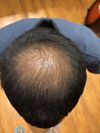
User shared 1-year progress using finasteride 1mg and minoxidil, regaining hair density. Others praised the improvement and asked about side effects and additional treatments.
The user experienced some hair regrowth using twice daily topical 5% minoxidil and once daily oral 1mg finasteride, along with dermarolling. They plan to continue this regimen for at least two years and may try additional treatments if needed.
The user experienced side effects from finasteride and is considering adding Alfatradiol or Fluridil to their regimen, which includes Minoxidil, dermarolling, and ketoconazole. Fluridil is noted to be more effective than Alfatradiol but less effective than finasteride, with mild side effects reported.
New hair loss treatments like GT20029 and PP405 could potentially replace minoxidil and finasteride, offering better results with fewer side effects. However, current treatments like finasteride and minoxidil are still effective for many, despite concerns about side effects.
Verteporfin is discussed as a potential treatment for hair regrowth, but skepticism exists about its effectiveness in regenerating extracted hair follicles. The conversation also mentions the possibility of needing a hair transplant by 2028.
An 18-year-old has been using minoxidil and finasteride for hair loss since age 15, recently adding dutasteride and GHK-Cu, but sees no significant improvement and is considering a hair transplant. Concerns are raised about using hormone suppressors at a young age, with suggestions to explore other treatments like dermarolling, diet changes, and checking for deficiencies.
Plant-based exosomes for hair loss lack scientific evidence and are considered high-risk with low evidence. Combining PRF with minoxidil and finasteride is suggested as a better option.
The user shared progress pictures showing hair improvement after using 5% topical minoxidil for two years and 1mg finasteride for one year. The user also used tretinoin and trifarotene as part of their routine.
Users discuss using RU58841 with finasteride, dutasteride, and minoxidil for hair loss, noting reduced itching and effective results. Some users report no side effects, while others experience side effects with dutasteride.
OP used finasteride 1mg and 2.5mg oral minoxidil since late April, showing hair improvement despite some initial libido issues. Users discussed side effects, costs, and alternative treatments, with OP noting increased facial hair but no significant body hair growth.
Hopeful treatments for hair loss, including Verteporfin, Androgen Receptor Degradation, and SCUBE3. These treatments offer potential solutions to slow or stop the effects of androgens on the scalp.
A user found a successful hair loss treatment using a combination of finasteride, dutasteride, minoxidil, and RU58841. They plan to switch to a purely topical regimen with finasteride, RU58841, and minoxidil.
The user updated their hair loss treatment to include daily dutasteride, oral minoxidil, topical dutasteride with minoxidil and tretinoin, and RU58841. Commenters feel the extensive treatment is unnecessary for the user's level of hair loss.
The conversation discusses hair loss treatments, focusing on alternatives to Minoxidil, such as Bimatoprost and Latanoprost, and the use of Finasteride, Dutasteride, RU58841, and microneedling. The user plans to add Latanoprost to their regimen, which already includes oral and topical Minoxidil and Finasteride, Ketoconazole shampoo, and microneedling.
A user applied the 8T3 product for hair loss, targeting LPP and AGA, and plans to update on its effectiveness. The product uses a saline buffered phosphate vehicle, suitable for those intolerant to ethanolic vehicles.
The user has been using finasteride for 1.5 years, along with microneedling and jojoba with rosemary oil, and is considering a hair transplant due to limited regrowth. They are hesitant to use minoxidil daily and are exploring other options like a combined finasteride and minoxidil pill.
The user is treating alopecia areata with 1.25mg oral minoxidil daily and topical mometasone furoate, considering increasing the dose or adding finasteride, though finasteride is not typically used for this condition. A gluten-free diet is suggested, and alternatives like Olumiant are mentioned.
Minoxidil's effectiveness varies due to genetic differences in the SULT1A1 enzyme, affecting how well it converts to its active form, minoxidil sulfate. Hyper-responders may experience rapid hair growth and increased side effects, such as pericardial effusion, even at low doses.
The user has been using oral finasteride and minoxidil for hair loss but hasn't seen improvement and is considering switching to dutasteride or RU58841. They plan to start microneedling for better results.
The user experienced significant hair regrowth and improved hair health using topical minoxidil, oral finasteride, microneedling, and ketoconazole shampoo. Other users discussed the effectiveness and side effects of finasteride, dutasteride, and RU58841, with some expressing concerns about potential side effects.
Some people may not respond to topical minoxidil due to low SULT1A1 enzyme activity, but oral minoxidil can be effective. Tretinoin may enhance minoxidil's effectiveness, and some users prefer oral minoxidil despite side effects.
A user's progress with hair loss treatments, including minoxidil, microneedling, nizoral 2%, finasteride 0.5mg/day and 0.5mg/ml per day in minoxidil, as well as RU58841 purchased from Anagen Inc., which allowed the user to go outside without a hat or cap for two years.
The user is experiencing hair loss despite using dutasteride and minoxidil and is considering adding RU58841 or other treatments like microneedling. Suggestions include stopping smoking, trying dutasteride mesotherapy, using tretinoin, maintaining a healthy lifestyle, and possibly using a red light cap.
The user experienced side effects from daily 1 mg Finasteride and switched to 0.5 mg every other day, supplemented with creatine, tongkat ali, tribulus terrestris, vitamin D3, bromantane, l-tyrosine, and caffeine. They also use weekly 1.5 mm microneedling and daily 50 mg RU58841, except on microneedling days, to manage hair loss.
RU58841, a potential hair loss treatment, was not commercialized due to marketability issues and lack of long-term safety data. Concerns about its formulation and delivery methods further complicate its use.
The conversation discusses alternative hair growth treatments to minoxidil, including Stemoxydine, Tretinoin, adenosine, Baicalin, castor oil, Latanoprost/bimatoprost, and Redensyl. Users share their experiences and opinions on the efficacy of these treatments.
A user shared their 1.5-year progress after a FUE crown transplant, using dutasteride and oral minoxidil, which improved their hairline and stabilized hair loss. They experienced dizziness from topical minoxidil but had no side effects from finasteride, dutasteride, or oral minoxidil.
Choosing between two hair loss treatments, with a preference for a higher concentration of RU58841 and 5% minoxidil, avoiding oils like castor and argan that may hinder absorption.
Topical RU58841 is discussed for hair loss treatment, with a focus on brands available in Europe that have low systemic absorption. Users suggest mixing your own solution to control vehicle and dosage, and mention different brands like Actifolic and Biolabshop.
A 21-year-old shares progress 1.5 months after starting finasteride (0.5 mg every other day) with no side effects, using minoxidil for beard growth, rosemary oil, and weekly microneedling. They report healthier hair texture and positive feedback from family.