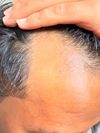
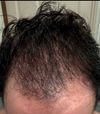
A woman using minoxidil for hair loss is trying hair fibers but finds they look like dandruff. Suggestions include using pomade, Derm Match, matte eye shadow, mascara, and spray applicators for a more natural look.
The user shared a 2-month progress update using topical finasteride and minoxidil for hair loss. The conversation included comments on the user's appearance and potential side effects.
A 23-year-old is experiencing hair that is thick at the ends but thin at the roots despite using minoxidil and finasteride for 10 months. They are concerned about whether this is normal or a sign of miniaturization and seek advice on reversing or improving the condition.
The user has been using finasteride (1.25mg) for 21 months and oral minoxidil (2.5mg) for 7 months with no noticeable improvement, seeking others' experiences on timelines for results. Suggestions include microneedling and vitamin D supplements, with the expectation that modest results or maintenance are common.
A user is using 2.5 mg minoxidil for beard growth and considering increasing the dose to 5 mg for more body hair gains, despite experiencing a bald spot on the scalp. Another user questions the desire for more body hair, suggesting it's not appealing.
Microneedling alone may not be effective for hair regrowth, though it can improve skin and reduce scars. Minoxidil caused heart palpitations for one user, leading them to stop its use.
The user is using a solution of 5% minoxidil and 0.1% finasteride with micro-needling and is considering adding 1mg oral finasteride. They notice small hairs on their forehead and are questioning if these indicate potential regrowth.
The conversation is about hair regrowth progress using a combination of treatments: dutasteride, minoxidil, RU58841, ketoconazole, and monthly microneedling. The user reports that microneedling and topical minoxidil had the most impact on their hairline.
Hair growth progress using Propecia, Minoxidil, dermarolling, ketoconazole shampoo, and vitamins. Noticeable hair growth in temples after 3 months and 10 days.
The user experienced significant hair regrowth after using finasteride, minoxidil, and derma stamping, despite an initial heavy shedding phase. They also take omega-3, zinc, biotin, and folic acid daily, and report improved confidence and hair strength.
PP405 shows significantly better early-stage hair regrowth results compared to minoxidil and finasteride, with 31% of users experiencing over 20% density increase in 4–8 weeks. Minoxidil and finasteride show minimal or no visible regrowth in the same timeframe.
The user experienced hair regrowth using dutasteride daily, microneedling weekly, and Nizoral shampoo, after stopping minoxidil due to side effects. They also use a mix of pumpkin seed, rosemary, and peppermint oil, and are considering RU58841 for more temple area thickness.
The user switched from finasteride to dutasteride eight months ago due to worsening hair loss but continues to experience hair thinning and seeks advice on additional treatments. They are asking for suggestions on medications, topical therapies, lifestyle changes, or professional treatments.
The user is experiencing significant hair regrowth after three months using 5% minoxidil, natural remedies, and dermarolling, and plans to start finasteride soon. Other users discuss the importance of combining minoxidil with finasteride to prevent hair loss and maintain progress.
The conversation discusses using USB microscopes for scalp photos and provides a link to an overview of trichoscopy. Treatments mentioned include Minoxidil, finasteride, and RU58841.
The user is considering adding castor, rosemary, and pumpkin oils to their current hair loss treatment of finasteride and minoxidil. They are unsure about the effectiveness of these oils.
User on Finasteride and Minoxidil saw minimal regrowth, tried micro needling with derma pen and noticed thin hair regrowth. Asks if micro needling hair gets thicker eventually.
A 24-year-old man saw hair loss improvement after 5 months using 1 mg finasteride daily, 5% minoxidil nightly, weekly microneedling with a Dr. Pen A6 at 1.5mm, daily biotin (at least 10,000 mcg), and using a shampoo for thinning hair every other day. He experienced no side effects and confirmed his health with bloodwork.
KX-826 (Pyrilutamide) being tested in the US for hair loss treatment and that they have found enough people to participate in phase II clinical trials. Other treatments discussed are Minoxidil, finasteride, and RU58841.
Bimatoprost, latanoprost, and travoprost can aid hair regrowth but are costly and less effective than minoxidil. They work best when combined with minoxidil and finasteride.
The conversation discusses the potential benefits of castor oil for hair thickening, with one user noting it may increase prostaglandin E2 and decrease PGD2. The original poster plans to take 1-2ml orally daily.
The user saw some hair regrowth with topical finasteride but is switching to oral finasteride due to supply issues. They also tried needling and minoxidil.
User noticed hair growth after 1.5 months using Fin, Min, stemoxydine, dermarolling, nizoral, and scalp massage. Others commented on promising results and potential improvement in 6 months.
The conversation discusses enhancing Minoxidil absorption for hair loss treatment using Tretinoin and MSM (Methylsulfonylmethane). The user is seeking sources for Tretinoin and mentions MSM's potential to improve the absorption of topical agents.
Human pluripotent stem cells have been used to create hair and skin, potentially offering a new solution for baldness. A user also mentioned starting finasteride but experiencing unexpected hair thinning.
The user is experiencing hair regrowth in small clusters using oral minoxidil, oral finasteride, a red light cap, and Nizoral 2% shampoo. They are hopeful for continued improvement and thicker hair.
The conversation is about hair regrowth using high-dose dutasteride, oral minoxidil, and microneedling. Users discuss seeing tiny hairs and hope they will become terminal, with advice to use derma rolling weekly for better results.
A user experiencing diffuse thinning since age 18 describes their hair as unhealthy, dry, thin, and hard, with texture changes cycling between good and bad every few weeks. They are not on any medication, only taking vitamins and supplements.
A user shared their experience with a hair restoration method involving adding individual human hairs on ultra-fine strands between existing hair, allowing for natural movement and appearance without blocking the scalp. They also continue using rosemary oil and gentle massage for basic growth support.