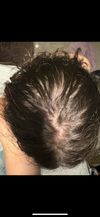
A 5 year journey of using Dutasteride and Minoxidil for hairloss, with progress pictures shared by the user. Replies have expressed amazement at the progress.
A 30-year-old woman has been using oral minoxidil and spironolactone for hairloss without success for 18 months and is considering switching to topical minoxidil. Users suggest trying topical minoxidil, dermastamping, red-laser therapy, and checking hormone levels, while noting that oral minoxidil is often more effective than topical.
The user is considering using topical finasteride for thinning hair around the middle part, vertex, and crown, and is unsure if the whole scalp is thinning. Another user suggests oral finasteride is more effective than topical, and recommends consulting a dermatologist for proper treatment.
People often turn to natural remedies like saw palmetto and rosemary oil for hairloss, but these are not as effective as FDA-approved treatments like finasteride and minoxidil. Some users express concerns about potential side effects of finasteride, while others share positive experiences with it.
This conversation is about the user "Such_Ad7910" sharing progress pictures of their hairloss treatments, which include minoxidil and derma rolling. They recently got a prescription for finasteride to further help with their hairline, and multiple people have commented urging them to use it.
The user experienced continuous hair shedding for 16 months while on finasteride, with periods of improvement. They also used T Gel shampoo and noticed a reduction in hairloss symptoms after 18 months, including the return of their sex drive and normal hair texture.
Switching from topical finasteride and minoxidil to oral dutasteride and oral minoxidil resulted in thinner hair and loss of vellus hair, with no new growth observed. The user is concerned about the lack of improvement despite using a stronger treatment.
A user's 6 month progress using finasteride and minoxidil as treatments for hairloss, with the replies discussing side effects and general consensus about usage of the two medications.
The user experiences an itchy scalp despite using finasteride and ketoconazole shampoo for hairloss. Suggestions include trying different shampoos, switching to dutasteride, and using topical treatments for inflammation.
Finasteride, minoxidil, and dutasteride can slow hairloss but aren't effective for everyone, especially with aggressive hairloss. Wayne Rooney's case shows treatments and transplants may not prevent hairloss due to genetics.
A 36-year-old man with androgenetic alopecia suspects copper and zinc deficiencies may be accelerating hairloss and is supplementing copper to address this. He is also monitoring blood sugar levels due to previous prediabetes concerns and plans to test for insulin resistance.
The user has been using minoxidil and dermarolling for 9 months and saw palmetto for 2 weeks to address female pattern baldness with vertex balding. They are seeking feedback on any progress in hair regrowth.
Switching from finasteride to dutasteride may be more effective for hair regrowth due to dutasteride's stronger enzyme inhibition, but combining both drugs could enhance results. Some users report better outcomes with dutasteride, while others recommend a gradual transition to prevent potential hairloss.
The user experienced subtle hair growth improvements using finasteride, dutasteride, and minoxidil over nearly three years, with notable progress at the temples. The front hairline shows quicker regrowth cycles, but the vertex and crown remain unchanged.
A user shared a positive 5-year experience with oral finasteride and minoxidil for hairloss, noting improvement and stability. Others in the conversation also reported positive results with these treatments.
A user is concerned about using more minoxidil than prescribed to cover their hairloss area and mentions taking spironolactone pills. Another user advises against men taking oral spironolactone due to significant hormonal effects.
The conversation discusses a five-year study on dutasteride, a medication for male hairloss. The study found that 89.9% of patients saw improvement or prevention of hairloss progression, with varying success rates based on different balding patterns. Side effects were mostly sexual and decreased over time. Dutasteride was concluded to be a long-term, safe, and effective treatment for male hairloss.
The conversation criticizes the negative attitude towards those concerned about side effects from hairloss treatments like finasteride and minoxidil, or who prefer natural remedies. Specific treatments discussed include finasteride, minoxidil, rosemary oil, and RU58841, with an agreement that finasteride and minoxidil are proven effective.
A user sharing their progress after 7 months of using finasteride to treat hairloss, with other users offering advice on maintaining the results. Other treatments mentioned include minoxidil and RU58841.
Jamesdunn8811 has been using a combination of finasteride and minoxidil to treat his hairloss over the past four months, with successful results. He has experienced no side effects and noticed increased thickness and baby hairs growing in both temples.
In this conversation, 4990 discussed various treatments for hairloss, including oral minoxidil, PRP, transplan, Jak inhibitors, Dutasteride, Finasteride, Olumiant, Ketoconazole, RU58841, microneedling, baricitinib, and CCCA. They recommended scalp biopsies in unclear cases of DUPA, twice weekly to twice daily shampooing for topical minoxidil users, and two sessions spaced one month apart with follow up at month three to determine the effectiveness of PRP treatment.
The user has been using topical finasteride 0.1% for almost 7 months but is experiencing worsening hairloss and is considering adding minoxidil 5% to their regimen. They are hesitant about oral finasteride and are exploring options for topical treatments, including minoxidil and possibly dutasteride.
The user has been using 5mg Oral Minoxidil since July 2025 and 1mg Finasteride daily since 2022 to address hairloss, particularly on the crown. They are considering additional treatments like Dutasteride and possibly a hair transplant in the future.
Bald men can still attract partners, as personality and confidence often outweigh hairloss. Treatments like finasteride and minoxidil are used, but self-acceptance and personal satisfaction are key.
A user shared their 11-year experience with spironolactone and nearly 5 years with finasteride for hairloss, recently adding oral minoxidil and stopping birth control. Various treatments were discussed, including organic options, checking for underlying health issues, considering dutasteride, and the potential role of progesterone in hairloss.
The user is considering switching from finasteride to dutasteride and possibly using oral minoxidil to address hairloss, having seen some progress with topical treatments and microneedling. They are also contemplating a hair transplant in the future and seeking advice on obtaining medications in Italy.
A 20-year-old is using 5% minoxidil and 0.1% dutasteride foam, along with oral 2.5 mg minoxidil, Forcapil, vitamin D3, and Alpecin shampoo for hairloss, noticing new hair growth and improved hair density. They previously tried finasteride but stopped due to side effects.
People are eagerly awaiting the release of PP405, a new hairloss treatment. Some are using minoxidil and finasteride in the meantime, but there are concerns about scams and unverified products.
People are experimenting with high doses of dutasteride, with some reporting halted hairloss and regrowth. Others are combining it with treatments like minoxidil and finasteride, noting varying results and side effects.
A user shared a 4-month progress picture using Minoxidil twice daily and dermarolling once a week for hairloss. They plan to start finasteride soon and have experienced dry scalp and itching from the treatment.