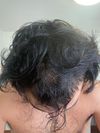
Mooseman1944 noticed hair regrowth and less shedding during the first 6 months of taking finasteride, but is now experiencing increased shedding and thinning hair. They are considering switching to dutasteride or adding minoxidil if there's no improvement by next August.
A 20-year-old experiencing crown thinning is using a topical minoxidil/finasteride treatment and is concerned about shedding. Shedding is common and temporary, lasting weeks to months, and it's advised to continue the treatment as results can take up to a year.
The user experienced hairline recession despite using topical finasteride/minoxidil and is considering whether misapplication was the cause. They are exploring options after experiencing side effects from oral finasteride, including possibly returning to the topical formulation with adjusted application methods.
Many people feel self-conscious about hair loss during haircuts, with some using treatments like finasteride and minoxidil. Others cope by cutting their own hair or finding a trusted barber to manage thinning areas.
Balding scalps have more androgen receptors, leading to increased TGF-beta, which causes blood vessel loss and hair follicle miniaturization. Blocking androgen signaling and TGF-beta may help prevent hair loss.
The user experienced hair density loss after increasing finasteride dosage from 3x to 7x a week. It was suggested that this might be a temporary adjustment issue, and adding minoxidil could help.
Lichen Planopilaris (LPP) is an autoimmune condition causing permanent hair loss and fibrosis, often misdiagnosed. Treatments include pioglitazone, topical corticosteroids, anti-inflammatory medication, and Jak inhibitors.
A 22-year-old male experiencing hair thinning has been using topical finasteride and minoxidil since September 2024, with improvement except in the frontal/middle scalp area. He seeks advice on additional treatments and has started scalp massages.
OP switched from finasteride to dutasteride due to hair loss, but after 5 months, they are experiencing diffuse thinning and scalp issues. They are considering additional treatments like RU58841 and are using minoxidil, essential oils, and keto shampoo to manage symptoms.
Hair loss discussion includes treatments like Minoxidil, Finasteride, and RU58841. Users share experiences and support, mentioning that many people face hair thinning.
The user successfully managed hair loss using Finasteride, Minoxidil, Ketoconazole shampoo, and a hair mask, experiencing significant hair growth and improved density. They attribute their success to consistency, improved nutrition, and a dedicated routine.
The conversation discusses a user's two-year experience using oral dutasteride and minoxidil for hair loss, noting initial gains and stabilization over time, with some concerns about shedding and a weak spot at the crown. The user also mentions using testosterone cypionate and reports no significant side effects, except possibly dry eyes.
A user is developing a tool to track hair density, aiming to help those using treatments like minoxidil. They seek feedback on the tool's usefulness and are considering a low-cost model to cover expenses.
The user experienced hair loss after 21 months of using oral minoxidil and finasteride and is considering switching to dutasteride. Others suggest it might be temporary and recommend staying consistent or trying additional methods like hair loss shampoo, microneedling, or checking vitamin levels.
The conversation discusses the struggle with diffuse hair thinning and the effectiveness of treatments like finasteride, minoxidil, and RU58841. Users share experiences of hair thickening and shedding stopping with these treatments, but results vary and some are skeptical.
A user claims to have reversed baldness, possibly due to telogen effluvium recovery after weight loss. Others discuss the potential success of using GHK-Cu for hair regrowth.
The user is experiencing hair loss and has been using RU58841 but is considering pyrilutamide and minoxidil, avoiding finasteride due to side effects. Another user suggests finasteride or dutasteride as essential, possibly in topical form, while dismissing saw palmetto as ineffective.
Dutasteride may not effectively stop scalp hair loss and can cause thinning of facial and body hair, including eyebrows. Users suggest considering other causes like autoimmune conditions or vitamin deficiencies and exploring treatments like finasteride or minoxidil.
The user is experiencing hair loss despite using oral dutasteride for 7 months and topical minoxidil for 3 months. They are concerned about miniaturization and question if the current minoxidil application is less effective without the previous finasteride mix.
A 24-year-old male experienced hair loss despite using minoxidil and finasteride, later switching to dutasteride, higher-dose minoxidil, iron supplements, and derma stamping, which initially improved his condition. However, after moving to a stressful environment and undergoing minor surgery, his hair loss rapidly increased, particularly on one side of his temple.
The user has tried various treatments for hair loss, including finasteride, dutasteride, RU58841, Pyrilutamide, and several topical growth factors, but continues to experience a receding hairline and thinning. Despite maintaining a healthy lifestyle, the user is unsure why these treatments are ineffective and seeks advice on the underlying cause.
Hair loss treatment with latanoprost, minoxidil, and biotin showed progress. Latanoprost, a glaucoma drug, stimulates anagen phase and increases conversion of vellus hair to terminal hair.
Inconsistent minoxidil use led to hair loss, prompting a plan to resume consistent application with derma stamping, red light therapy, and DHT blockers like clascoterone or RU58841. The user avoids finasteride and dutasteride due to past side effects.
The user is experiencing hair loss despite using dutasteride, minoxidil, and ketoconazole shampoo, and is concerned about continued shedding. Suggestions include checking for nutrient deficiencies, consulting a dermatologist, and considering other potential causes like seborrheic dermatitis or telogen effluvium.
Hair loss treatments, specifically trying Minoxidil and finasteride combined with other methods such as microneedling and diet changes. Suggestions for coping strategies have also been offered.
A 22-year-old male has been experiencing widespread hair loss for over four years, including pain and significant shedding. Treatments tried include ketoconazole shampoo, fluocinonide topical solution, biotin, ACV, and dry shampoo, but none have been effective.
Hair transplants can initially yield good results, but native hair is more reliable, and transplanted hair may still be lost over time. Early intervention with treatments like topical finasteride and minoxidil is recommended, but it's important to start with lower doses and manage expectations realistically.