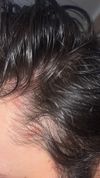
Cetirizine 10mg daily reduced hair shedding by 50% and lessened scalp itchiness. The user is considering long-term use for scalp inflammation and hair loss.
The conversation discusses using scalp antiandrogens like RU58841, pyrilutamide, or fluridil on the face to reduce sebum production, noting that clascoterone (winlevi) is an approved facial antiandrogen with underwhelming reviews.
The user is experiencing a greasy and dandruff-prone scalp from using RU58841 with glycerin and is seeking alternative carriers for seborrheic dermatitis. They are also using dutasteride 0.5mg.
After experiencing hair loss due to alopecia areata following COVID-19 vaccination and infection, the individual saw improvement with steroid treatments and Olumiant. They paused Olumiant during a second COVID-19 infection and expressed concern about potential hair loss flare-ups.
Veradermics' oral minoxidil shows promise for hair regrowth, with some users reporting significant improvements, while Pelage's PP405 results are less convincing and lack transparency. There is skepticism about both treatments' long-term effectiveness and potential side effects.
A hair restoration case involved injecting four different doses of Verteporfin into the mid scalp and using Scalp MicroPigmentation (SMP) around the extraction areas. Photos were taken and an update will be shared soon.
Carnosic acid in rosemary extract may enhance skin repair and promote hair follicle regeneration. It could be used alone or with verteporfin for scarless healing after dermal wounding.
A 20-year-old is experiencing severe diffuse thinning and shedding despite using oral minoxidil for 12 months and dutasteride for 8 months, after previously trying finasteride. They are frustrated with the lack of improvement and considering trying RU58841.
The user is using a hair loss regimen involving 2ddr applied twice daily, tretinoin weekly, and occasionally micro-needling. They report feeling increased scalp thickness and seeing some hair growth progress.
A 23-year-old male is experiencing diffuse hair loss and miniaturization, possibly due to high IGE levels after using tofacitinib. He seeks advice and has not yet consulted a dermatologist.
The user has been using finasteride, minoxidil, and a derma stamp for 3 months with significant improvement. They are now adding ketoconazole to their routine.
Loose-Message9596 has been experiencing hair loss for 3-4 years, initially due to low ferritin and vitamin D levels, and has tried treatments like vitamins, System 4, and PRP therapy. They are considering starting finasteride and minoxidil but are unsure due to their relatively low DHT level of 425.
The user has been using minoxidil and finasteride for hair loss without positive results and switched to dutasteride 1.5 months ago. They suspect seborrheic dermatitis might be affecting the effectiveness of these treatments.
PP405 is moving to late-stage trials, showing potential for hair regrowth, with 31% of male patients experiencing a 20% increase in hair density. Veradermics is developing an oral minoxidil version, and there is interest in combining treatments for better results.
After jaw surgery caused intense hair shedding and scalp itch, using pyrilutamide significantly reduced these symptoms. It's suggested to test pyrilutamide for authenticity before use, despite positive personal experience with the product from MV Supplements.
A 30-year-old male with thinning hair and an itchy, oily scalp found that hydrocortisone cream eliminated dandruff and itching and seemed to thicken his hair. He avoided minoxidil and finasteride due to potential side effects and noted that Nizoral and Head & Shoulders worsened his symptoms.
User discusses Eucapil for hair loss treatment and asks if it helps with itchy scalp. People share their experiences and results, including maintenance or slight improvement.
The user is using minoxidil, finasteride, dermarolling, and other treatments for hair regrowth, showing promising results in the temple area. Despite some skepticism, there is optimism about potential improvement.
Clascoterone in Winlevi, a topical AR antagonist, is being re-examined due to concerns about HPA axis suppression in adolescents, but it's unlikely to be banned for adult use in androgenetic alopecia (AGA). The European Medicines Agency recommended refusing Winlevi for acne vulgaris, but this may not affect Breezula's approval for AGA.
The conversation is about using valproic acid, an anti-seizure medication, as a topical treatment to promote hair growth. The original poster is seeking personal experiences from those who have tried this method.
The user reintroduced RU58841 and noticed increased shedding and visible thinning. They have also been using dutasteride and oral minoxidil for 2 years.
The conversation discusses hair loss treatments, focusing on reducing scalp itching and dandruff using natural shampoos, witch hazel, and apple cider vinegar. The user also mentions using finasteride and observing potential regrowth, though it's difficult to confirm.
A 20-year-old male experienced significant hair shedding for nearly 10 months, despite using finasteride, oral minoxidil, and ketoconazole, and is concerned about chronic telogen effluvium. He has been supplementing with vitamins and minerals but remains unsure of the cause.
The VT Reedle Shot, a skincare product using silica spicules, is discussed as a potential at-home alternative to microneedling for hair regrowth. It is suggested that different intensities may aid in hairline regrowth.
The conversation discusses using hair follicle dermal papilla exosomes for hair loss treatment. It inquires about purchasing options for this treatment.
The user switched to oral Dutasteride, added RU58841, and used Ketoconazole-enriched Minoxidil but still experiences scalp itch and hair loss after 4 months. They are advised to give Dutasteride more time, consider seeing a dermatologist, and explore other topical solutions.
Vitamin C mixed with shampoo stopped shedding and promoted hair regrowth after 1.5 years. Both the person and their wife experienced significant hair loss reduction with this method.
The user applies a topical solution containing minoxidil, finasteride, dutasteride, retinoic acid, and hydrocortisone to address scalp inflammation and is considering adding cetirizine to the mix. They are calculating the correct amount of cetirizine to add to their formula and have paused this approach to retry oral minoxidil.