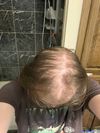
Dr. Bloxham's 9-month update on FUT scar revision with Verteporfin shows promising results. Excitement is high for FUE, which appears highly effective based on Dr. Barghouthi's findings.
Concerns about the impact of hair loss treatments like finasteride on fertility and future children. The user is worried about reduced sperm count and quality due to lowered DHT levels.
A husband experiencing hair loss is considering treatments like topical minoxidil and finasteride but is concerned about their effects on his pregnant wife and future child. Alternatives suggested include oral finasteride, which is considered safe if hands are washed after use, and exploring natural methods like oils.
The user is considering blood tests to understand their receding hairline and is exploring brewer's yeast for its biotin content. They have been using topical Minoxidil, biotin, collagen, and microneedling, but are avoiding oral Finasteride and Dutasteride.
PP405 shows initial promise for treating androgenetic alopecia, with safety confirmed in early trials, but skepticism remains due to limited data. Further trials are needed to determine its true efficacy and potential market impact.
Using a combination of micro-needling and exosome injections as a potential treatment for male pattern baldness, which could result in 50% or more regrowth.
The conversation is about whether vellus hair should be included in hair fall counts, with data showing daily hair loss. The consensus is that shedding, including vellus hair, is normal and within physiological limits.
27-year-old female experiences aggressive hair thinning and hirsutism despite normal testosterone levels. Spironolactone and 2% minoxidil were ineffective; high DHEA sulfate levels may be the cause.
The user tried various treatments for hair loss, including finasteride, vitamins, Saw Palmetto, beta sitosterol, pumpkin oil, borage oil, stinging nettle, and emu oil. They recently noticed tiny black hairs, suggesting some improvement.
Transitioning genders humorously suggested for hair regrowth, noting some transgender individuals experience this. Discusses treatments like minoxidil, finasteride, and hormone therapy, but advises against transitioning solely for hair regrowth.
The user is experiencing hair loss despite using estradiol, bicalutamide, dutasteride, and topical minoxidil. They stopped minoxidil temporarily, which worsened their condition, and are considering oral minoxidil but are concerned about side effects and cost.
Adequate nourishment and hormone replenishment helped with hair regrowth. Vegamour and Novo blends hair vitamins were also used but likely not effective alone.
The user experienced significant hair improvement over two years using finasteride, minoxidil foam, and ketoconazole, despite some initial shedding and a side effect of watery semen. They are satisfied with the results and encourage others to persist with their treatment.
A user is seeking advice on increasing graft survivability after a hair transplant, mentioning PRP, Mesotherapy, Stem Cell injections, and considering L-Arginine before starting Minoxidil. They are looking for ways to support blood flow before applying Minoxidil.
The conversation is about a user using minoxidil for 90 days and topical finasteride for 2 weeks to address hair loss, with concerns about finasteride's impact on fertility. The user is also using Nizoral shampoo and microneedling, and is advised to stay consistent despite initial shedding.
PP405 is a potential hair loss treatment that may reactivate dormant hair follicles, with Phase 3 trials expected. Some users are cautious, suggesting using finasteride in the meantime, while others are skeptical about PP405's effectiveness.
The post discusses a user's struggle with hair loss and the ineffectiveness of finasteride. Suggestions from the conversation include trying oral minoxidil and considering a 3200 graft hair transplant.
ET-02 (RS 5441) shows promising results for hair growth, performing better in humans than in mice. There is debate over the effectiveness compared to minoxidil, with some users wanting more detailed data.
A user stopped using RU58841 after discovering their girlfriend's unplanned pregnancy, expressing concern about potential harm to the baby. Others advised consulting a doctor, waiting for health scans, and considering switching to oral finasteride or natural supplements like saw palmetto.
Exosomes are being considered for hair regrowth after using finasteride and minoxidil, with skepticism about their effectiveness and high cost. Users discuss administration methods like injections and microneedling, but concerns about pricing and potential scams are prevalent.
The conversation discusses hair regrowth treatments, including stem cell exosomes, PRP, and PP405. Users question the effectiveness of the treatments and mention finasteride and minoxidil.
The user is frustrated with the lack of visible hair regrowth after 7-8 months of using finasteride and minoxidil, despite initial vellus hair growth. Others suggest patience, switching to oral minoxidil, or using additional treatments like dermastamping, microneedling, and red light therapy.
OP is considering Bicalutamide for female AGA and TE but is concerned about its side effects and effectiveness compared to Finasteride. OP is also using Minoxidil and Spironolactone but is experiencing significant shedding and is unsure if it's androgen-driven or due to Minoxidil changes.
Stem-cell hair transplants could potentially create thousands of grafts from a single donor graft, offering a solution for hair loss with DHT-resistant hair. Companies like Stemson Therapeutics and OrganTech are working on this technology, which may become available in the future, possibly reducing the cost and making it widely accessible.
PP405 is a new hair loss treatment targeting dormant hair follicles, with ongoing trials. Some users consider stopping finasteride and minoxidil to join trials, while others doubt its effectiveness.
A 26-year-old man who had a hair transplant and used minoxidil with good results is now experiencing shedding and considering finasteride. He's concerned about high progesterone and mild erectile dysfunction before starting the treatment.
Verteporfin is discussed as a potential treatment for hair regrowth, but skepticism exists about its effectiveness in regenerating extracted hair follicles. The conversation also mentions the possibility of needing a hair transplant by 2028.
User shared 15-month results using finasteride and minoxidil, showing no loss but minimal growth, considering a hair transplant. Replies suggest starting treatment earlier, continuing current treatment, or getting a transplant.