Search
for
Sort by
Community Join
240-270 / 1000+ resultscommunity Akkermansia improves testosterone-induced hair growth inhibition.
Akkermansia bacteria can improve hair growth inhibited by testosterone, and metformin may increase Akkermansia, which could help with hair loss related to aging, insulin resistance, and inflammation.
community No side effects on pyrilutamide / KX-826 so far
User TopBack56 and friends tried pyrilutamide (KX-826) for hair loss without experiencing negative side effects. They observed fine vellus hairs but no thick hair growth yet, and plan to add GT20029 to their regime after safety trials.
community Hasson & Wong: Dr Jerry Wong FUT 2877 Grafts. Failed surgery. Possible negligence and illegal behaviour.
A user who had FUT surgery for 2877 grafts with Dr Jerry Wong of Hasson & Wong that resulted in low growth and an abnormally wide scar, suggesting negligence by the doctor and possibly illegal behaviour by an unqualified technician. The post sparked discussion about seeking legal action, as well as criticism of the clinic's high cost.
community Anyone with high glucose, insulin resistance, pre-diabetes or diabetes notice any regrowth after starting treatment?
A 21-year-old male with advanced hair loss (NW7) started using finasteride and minoxidil 10 months ago but hasn't seen much progress. He is pre-diabetic with stage 1 hypertension and is seeking insights on whether treating these conditions could improve hair regrowth.
community Why are there no proper phase 3 trials for RU
RU58841 lacks FDA approval due to financial and safety concerns, including potential cardiological side effects. The company abandoned further research, and users report adverse effects like heart palpitations and gynecomastia.
community Gyno caused by finasteride?
The user is experiencing chest sensitivity and muscle ache after using topical finasteride for a month and is concerned about potential gynecomastia. They are considering asking their doctor for blood work to check estrogen levels and are questioning whether to stop using finasteride.
community Moved back in with my parents and have been noticing hair getting thicker
Improved diet, reduced alcohol consumption, and better water quality led to thicker hair and less shedding. The user also used MSM supplements, vitamin C, multivitamins, biotin shampoo, and growth oil.
community From Perfect Hair to This: 2 Years of Chronic TE + Unmasked AGA.
A 25-year-old is experiencing chronic telogen effluvium (TE) and androgenetic alopecia (AGA) after surgery, using finasteride, red light therapy, and supplements, and considering oral minoxidil despite heart concerns. They are unsure whether to start minoxidil before or after an upcoming surgery, which may trigger another hair shed.
community Just started my first vial of fluridil
Fluridil was discussed as a hair loss treatment, with some users experiencing side effects like lethargy and chest tightness. Users also mentioned other treatments like RU58841 and finasteride, with mixed opinions on their effectiveness.
community DHEA, the culprit behind DUPA ? Read this!
High DHEA levels may contribute to hair loss by increasing DHT in hair follicles, potentially explaining why finasteride is ineffective for some. Treatments like high-dose dutasteride and RU58841 are suggested, but the underlying cause, such as adrenal issues, should be investigated.
community Will these bad boys ever thicken up? I feel like they're getting there.
A user shares progress on hair thickening using finasteride, minoxidil, RU58841, and dermastamping. Another user notes slow but ongoing improvement with a similar treatment routine.
community Dutas and Minox results - mixed feelings
A user experienced significant hair growth using oral dutasteride and minoxidil but developed severe erectile dysfunction, likely exacerbated by obesity and diabetes. They plan to lose weight and possibly adjust medication to alleviate side effects.
community Dermatologist keeps stressing on diet and vitamins - are they that crucial?
The conversation is about a user experiencing increased hair loss after altering their treatment routine of oral dutasteride and topical minoxidil. The dermatologist emphasized the importance of diet and vitamins, but the user is skeptical given their healthy lifestyle.
community Thinning again after solid results
community Hair loss - The Root of the Problem
Hair loss can be influenced by nutritional deficiencies, particularly low Vitamin D and fatty liver, and improving nutrition and lifestyle can strengthen hair. Treatments suggested include regular exercise, a balanced diet, vitamin supplements, and coconut oil massages, while acknowledging that hereditary factors may also play a role.
community Does anyone take bicalutamide for fphl? If so which dose
The conversation is about a female seeking advice on using bicalutamide for female pattern hair loss (FPHL) and considering switching from pumpkin seed oil pills to a stronger treatment. She is looking for dosage information to discuss with her dermatologist.
community The Effect of Intradermal Botox on Androgenetic Alopecia and Its Possible Mechanism (Journal of the American Academy of Dermatology (2020)
Intradermal botulinum toxin (BTX) injections effectively treat androgenetic alopecia (AGA) by inhibiting TGF-β1 secretion from hair follicles. Further research and long-term follow-up are needed to confirm these findings.
community Massive shedding not stoping for more than 2 months
community Temple recession continues, 19 MtF, Monotherapy w/ confirmed low T, also taking 1.25mg Finasteride,
A 19-year-old transgender individual is experiencing worsening temple recession despite taking female hormones and 1.25mg finasteride. They are seeking advice on additional treatments to address hair loss.
community Why haven’t we seen anything about this
A double blind, placebo-controlled study that looked into the potential effectiveness of topical fluridil for treating male androgenetic alopecia, showing increased anagen to telogen ratios with no reported side effects on libido or sexual performance.
community Diffuse thinning is the worst. Nothing helps.
The user is experiencing diffuse thinning and has tried treatments like topical and oral finasteride, oral dutasteride, topical minoxidil, microneedling, melatonin, and caffeine without success. Despite using these treatments for over four years, the user reports continued hair thinning and is considering trying RU58841.
community 10 months on dutasteride. Maintaining or still losing?
community Started tretinoin, lost a bunch of new hairs - normal?
The user experienced increased hair shedding after adding tretinoin to their regimen of finasteride, minoxidil, and dermarolling, but noticed new vellus hairs appearing. They plan to restart tretinoin more gently, as some users suggest shedding indicates treatment effectiveness, while others warn it may cause severe thinning for a minority.
community Question about finasteride, frontal hairline, testosterone
The user experienced initial hair density improvement with finasteride, but later felt scalp pain and a plateau in results. They added alfatradiol for scalp inflammation and divi scalp serum to their routine, and are curious if others have similar experiences.
community Tretinoin for some men(not all) can cause non-telogen effluvium hair loss
Tretinoin can cause non-telogen hair loss in some men by inducing catagen-like changes in hair follicles and through retinoid toxicity, especially when used with minoxidil. Some users report hair loss even when using retinoids on the face, while others experience benefits when combined with treatments like finasteride and minoxidil.
community Just FYI, Here are pictures of 6 months results on Clascoterone 5%. Is it remarkable? No. But it seems likely to be FDA approved considering 1% is already available. This is a win, especially if you pair it with other treatments like Finasteride.
Clascoterone 5% shows potential for hair thickening and darkening, especially when combined with treatments like finasteride. It may be a good alternative for those who experience side effects from other treatments.
community Nutrafol Women’s Balance vs Viviscal Pro?
OP experienced thicker hair and less shedding with Nutrafol Women’s Balance but had flushing due to ingredients, and is considering switching to Viviscal Pro with saw palmetto. A user shared that Viviscal increased shedding for both him and his girlfriend, and suggested stopping Nutrafol if the hair loss is due to Telogen effluvium.
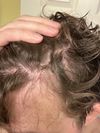
community 28m tips on gaining thickness
A 28-year-old male has been using oral finasteride and minoxidil for over a year without seeing significant results in hair thickness, particularly in the front. He is considering adding dermastamping to his routine and is exploring whether topical treatments might be more effective.
community Anybody else notice improved skin/collagen on Dutasteride
User switched from finasteride to combination dutasteride and finasteride for hair density improvement. They noticed less hair shedding and more youthful skin, with a reply suggesting less DHT could increase elastin in skin.