Search
for
Sort by
Community Join
30 / 1000+ results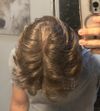
community (M24) Anything before min/fin? time to start?
The user is experiencing hair thinning and shedding despite no family history of male pattern baldness. They are considering starting treatments like Minoxidil or finasteride.
community Veradermics VDPHL01 Topline Results for Extended-Release Oral Minoxidil
Extended-release oral minoxidil (VDPHL01) shows promising results for hair growth with improved safety, achieving significant hair count increases and minimal side effects compared to placebo. The treatment is designed to maintain effective concentrations while reducing side effects, making it a safer option for those who cannot tolerate standard minoxidil.
community Very exited about Veradermics,
Veradermics is a promising new treatment for hair loss, essentially a repackaged version of Minoxidil. The user is optimistic about its potential effectiveness.
community got some vellus after a good shed on 0.1% latanoprost
Users discussed hair loss treatments, specifically 0.1% latanoprost with melatonin, caffeine, and biotin. Other treatments mentioned include minoxidil, finasteride, RU58841, and microneedling.
community How Veradermics secured a total of $220 million in series B and C financing for oral minoxidil, I will never understand.....
Veradermics' oral minoxidil shows promise for hair regrowth, with some users reporting significant improvements, while Pelage's PP405 results are less convincing and lack transparency. There is skepticism about both treatments' long-term effectiveness and potential side effects.
community Solution vehicle used by compounding pharmacy
The user is using 0.1% dutasteride, 1% minoxidil with 2% procapil and 0.005% caffeine in the morning, and 1% minoxidil with 2% procapil and 0.01% tretinoin at night. They are concerned about the solution vehicle's effectiveness in preventing systemic absorption and ensuring the products stay around the hair follicles.
community Following the recent IPO and the positive Phase 3 clinical data for VDPHL01 (extended-release oral minoxidil), what is the projected timeline for the FDA submission and the subsequent commercial availability on the market?
Veradermics' extended-release oral minoxidil is expected to be commercially available in 2027-2028, while another company, Minx, may release a similar product sooner. VDPHL01 is considered more clinically validated compared to Minx.
community M 26, had to cut my hair short for mandatory military service and I saw a lot more of my vertex than I was anticipating.
community 24yo 3 month 2.5mg oral fin + 0.5mg dut + capilar mesotherapy
A 24-year-old shares progress on hair regrowth after 3 months using 2.5mg oral minoxidil, 0.5mg dutasteride, and scalp injections of dutasteride, minoxidil, and vitamins every two weeks. They are uncertain if the improvement is due to actual regrowth or just longer hair.
community Veradermics VDPHL01 Topline Results for Extended-Release Oral Minoxidil
Veradermics is working on FDA approval for extended-release oral Minoxidil. Approval is expected around 2027.
community I’m taking Veradermics VDPHL01 - AMA
A participant using Veradermics VDPHL01, an extended-release oral minoxidil, experienced significant hair regrowth from Norwood 6 to Norwood 3V without side effects. They plan to use dutasteride after the treatment to maintain results.
community New vellus all over — just 9 days into once-daily 5% minoxidil.
The user has been using 1 mg finasteride for three months and recently started using 5% minoxidil once daily, resulting in new vellus hair growth. The user is hopeful that minoxidil will positively impact terminal hairs and is considering adding a derma stamp to the routine.
community HMI-115: What We Know So Far. HMI-115 (also known as BAY1158061) is a new pharmaceutical drug developed by a biopharmaceutical company called Bioinvent and licensed by Bayer
HMI-115 is a new drug developed by Bioinvent and licensed by Bayer, with mixed opinions on its potential effectiveness. Some users are skeptical and prefer proven treatments like Minoxidil, finasteride, and RU58841.
community Why not Travopost? More effective than min, and stackable.
Travoprost may be more effective than minoxidil for hair growth and can be used alongside it, but its effectiveness is debated due to inconsistent dosing results. Travoprost is expensive and not widely used, with alternatives like latanoprost and bimatoprost being more accessible.
community Veradermics VDPHL01: why isn’t anyone talking about it?
Veradermics' new hair loss treatment, VDPHL01, is likely a modified release oral minoxidil, which has received $75 million in funding for clinical trials. Despite skepticism about investing in a known treatment, some believe it could offer improved efficacy and reduced side effects.
community Vellus terminal microscope study
community Big Fin and Big Minox When They Hear Verteporfin Might Replace Messing With Hormones Blood Pressure and Skin
Hair loss treatments, such as minoxidil and finasteride, being replaced by verteporfin, with humorous responses.
community Vinpocetine and topical Minoxidil
A 25-year-old is using vinpocetine to enhance the absorption of topical Minoxidil for hair loss. They also use a hair tonic and supplement with Glycine, Taurine, Creatine, and Citrulline.
community Topical VPA - Anyone experiences here?
The conversation is about using topical valproic acid (VPA) for hair loss, focusing on its application method, usage frequency, and combination with other treatments like micro-needling. No specific experiences with VPA were shared.
community Topical 5% minoxidil vs compounded topical spray
A user is considering switching from regular 5% minoxidil foam to a compounded 5% minoxidil spray with added caffeine, melatonin, and tretinoin for easier application and potentially better results. Another user mentions that tretinoin can enhance minoxidil's effectiveness by converting it to its active form.
community Minoxidil night time application
Apply minoxidil at least 1-2 hours before bed to ensure it dries and doesn't transfer to the pillow. Foam dries faster than liquid, and using a satin beanie after drying can help prevent transfer.
community Verteporfin (Visudyne) group buy 🌷
User seeks participants for Verteporfin group buy. Verteporfin, FDA approved, may regenerate hair follicles and sweat glands through heavy microneedling.
community Minoxidil Alternative? | Bimatoprost & Latanoprost
Exploring alternatives to Minoxidil for hair loss, such as Bimatoprost and Latanoprost, as well as potential treatments like Finasteride and RU58841.
community Why the fuck dont my temples/ vertcle bars become more thicker?
A user is frustrated with slow and thin hair regrowth at the temples despite using Minoxidil for six months, along with dermastamping, oiling, vitamins, and exercise. They are seeking advice on why vellus hairs are not thickening.
community Formula 82M?
Formula 82M, a minoxidil and retinol liquid, improved hair texture and filled in temples with baby hairs for the user, but its high cost and lack of reviews cause concern. Another user mentioned using a similar product, 82F, which has become less effective and expensive over time.
community Lots of vellus hair 5% min + 0.1% fin(topical) and derma roller 1.0 twice in week.
The user reports significant hair regrowth using a topical solution of 5% minoxidil and 0.1% finasteride twice daily, along with derma rolling twice a week. They have not experienced shedding and are optimistic about continued hair growth.
community Has anyone tried latanoprost+microneedle?
Microneedling combined with latanoprost may convert vellus hairs to transitional or terminal hairs. The user suggests using oral minoxidil to increase vellus hair, then applying a high concentration of latanoprost with microneedling for conversion.
community People are hyped about PP405 but what about Veradermics phase 2!
Veradermics' phase 2 trial of slow-release oral minoxidil shows promising hair regrowth with minimized side effects, gaining significant attention and funding. PP405 is also noted for its potential as a side-effect-free alternative.
community Starting Bimatoprost! Hair time
The conversation is about using Bimatoprost for hair growth, with concerns about potential side effects like eye color change and fat atrophy. Users discuss combining it with other treatments like Minoxidil and Finasteride, and sourcing Bimatoprost in bulk.