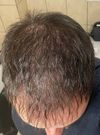
The conversation discusses using minoxidil with retinol for hair loss treatment. Users share their experiences and opinions on the effectiveness of this combination.
The post discusses the user's experience with hair loss treatment using finasteride, clobetasol propionate, and ketoconazole shampoo. The conversation warns about the potential side effects of clobetasol, a powerful topical steroid, and emphasizes its short-term usage.
The user is considering liposomal minoxidil due to non-response and side effects from other treatments. They are exploring tretinoin with topical minoxidil as an alternative.
The user reports taking high dosage oral minoxidil (10mg/day) for hair growth, which causes facial bloating. They tried using the diuretic furosemide to reduce bloating, but it was ineffective.
Minoxidil, derma roller, and collagen tablets showed good results after 4 months. Users suggest adding finasteride or dutasteride to maintain results, despite concerns about potential side effects.
User discusses using topical Minoxidil twice daily for 4 months, then switching to once daily with oral Dutasteride and Minoxidil. They also mention microneedling monthly and are unsure if oral Minoxidil is better than topical.
The conversation discusses hair regrowth using 5mg oral Minoxidil, 1.25mg Finasteride, weekly dermarolling, and hormone replacement therapy (HRT) with estrogen and testosterone blockers. The user reports positive results and attributes significant improvement to HRT.
The conversation is about a user making a homemade topical dutasteride solution to use alongside testosterone replacement therapy (TRT) and oral dutasteride. The user aims to reduce DHT locally at the testosterone injection site and on the scalp.
Inflammation on the scalp can hinder hair regrowth and the effectiveness of treatments. The user is using ketoconazole shampoo, Selsun Blue, finasteride, and oral minoxidil.
The user resumed taking 5mg oral minoxidil and 0.5mg dutasteride daily, with vitamins, and noticed hair regrowth. They switched from finasteride to dutasteride due to side effects and prefer oral minoxidil over topical for convenience and effectiveness.
The conversation discusses whether to wait for Breezula while using topical minoxidil to avoid side effects from finasteride. It mentions Breezula's potential release in a year and its cost and long-term use considerations.
The user has been experiencing aggressive hair loss despite using finasteride, minoxidil, dutasteride, ketoconazole, and derma rolling. Suggestions include continuing current treatments, considering RU58841, checking for deficiencies, and possibly trying collagen supplements or oral minoxidil.
The conversation is about adjusting the dosage of topical Finasteride to avoid side effects like chest pain and breast swelling. The user is considering reducing the concentration to 0.1% or trying microdosing with 0.01-0.025% for lower systemic effects.
The conversation discusses Fevipiprant, an asthma drug that may block CRTH2 and potentially stop male pattern baldness (MPB) without inhibiting DHT. It also mentions the use of finasteride and dutasteride for hair loss.
The user is considering minoxidil, clascoterone, and fluridil for hair loss, avoiding finasteride and RU58841. They are also contemplating a hair transplant and exploring the resilience of transplanted hair without finasteride.
A woman with androgenic alopecia has been using birth control, spironolactone, finasteride, and oral minoxidil for hair loss. She sought to change her medications to dutasteride and bicalutamide, but her new dermatologist refused to prescribe them for off-label use.
The user has been using a topical combination of finasteride, minoxidil, and dermastamping for three months to address hair loss. They are considering adding tretinoin and are discussing the effectiveness of topical versus oral treatments.
The user experienced side effects from finasteride and Nutrafol, opting for non-hormonal treatments like minoxidil, exercise, and a healthy lifestyle. Others discussed using Dutasteride, Biotin, and minoxidil with varying success and side effects.
The user experienced hair regrowth with finasteride and minoxidil but faced libido issues, leading them to try alternatives like novamaine and a low-dose finasteride/minoxidil solution, which still caused side effects. They are considering reducing the solution's volume, stopping finasteride, or using minoxidil alone, while others suggest alternatives like dutasteride or clascoterone.
The conversation discusses concerns that Anagenic's version of GT20029 might not be as effective or safe as Kintor's, with comparisons to issues faced by pyrilutamide. The chemical structure of the drug has been published.
The user experiences scalp inflammation, especially when oily, despite using treatments like dutasteride, oral minoxidil, RU58841, and nizoral. They recently started cetirizine and are considering benzoyl peroxide wash for relief.
There is no reliable ranking for the effectiveness of topical anti-androgens like Fluridil, RU58841, and Pyrilutamide, with limited studies available. Some users suggest Pyrilutamide may be promising based on ongoing trials, while Fluridil combined with finasteride has shown positive results for some individuals.
Topical spironolactone is discussed as a hair loss treatment, with concerns about its effectiveness and side effects compared to finasteride and minoxidil. Users mention its unpleasant smell, potential systemic absorption, and suggest alternatives like pyrilutamide and alfatradiol.
A user discusses their doctor's recommendation of vitamins, biotin, collagen, shampoos, and 2.5mg minoxidil for hair loss. Replies suggest minoxidil is useful, and finasteride should be added for male pattern baldness.
A product called HairMDL includes Minoxidil, Dutasteride, Latanoprost, caffeine, Tretinoin, and Triamcinolone. Users are curious about its effectiveness and safety, particularly regarding the topical steroid Triamcinolone.
The conversation discusses the safety and use of ketoconazole shampoo for hair loss, with mentions of zinc pyrithione and selenium sulfide. Users debate the safety of these ingredients, particularly zinc pyrithione, and share opinions on regulatory differences between Europe and the US.
The user is considering switching to topical finasteride or pyrilutamide to stabilize hair loss before a hair transplant, currently using oral minoxidil and finasteride. Suggestions include sticking to the current regimen as it is already potent, and caution against using pyrilutamide from unreliable sources.