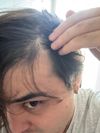
The conversation discusses hair loss treatments, specifically Minoxidil, finasteride, and RU58841. It also mentions observations about the Amla page on Examine.
The conversation discusses the frustration over the unavailability of 2.5mg dutasteride soft gels, with some users suggesting higher doses for better scalp DHT suppression. Concerns about side effects and the necessity of DHT are debated, with some users advocating for alternative treatments like RU58841 and oral minoxidil.
An 18-year-old is experiencing positive hair regrowth results using 2.5mg minoxidil, 0.5mg finasteride daily, and dermarolling twice a week. They are satisfied with the progress and hope for continued improvement.
A user gained 10-12 kg after starting finasteride but found their estrogen levels to be within the normal range. They are concerned about potential gynecomastia but are reassured by their lab results.
The conversation is about someone's hair growth progress after using dutasteride and oral minoxidil for eight months, with users commenting on the increased hair density and volume. Some users are skeptical, but the original poster insists there is a significant improvement in hair density.
User started oral finasteride 0.33mg daily and later made a topical solution with cetirizine and stemoxydine. They experienced hair growth progress after 8-9 months and discussed factors affecting their results.
The user noticed new dark hairs growing in previously bald areas after using oral finasteride and minoxidil for a month. They are pleased with the progress and find it interesting, even though they are content with a shaved head.
The conversation discusses hair loss treatments, specifically the use of finasteride and dutasteride. Users share experiences of shedding and varying effectiveness, with some suggesting adding minoxidil or a topical anti-androgen for better results.
A 31-year-old is happy with hair regrowth and thickening after using 0.5 mg dutasteride daily and 5% topical minoxidil. Initial results appeared in six months, with continued improvement over time.
A Spanish dermatologist suggests sulforaphane for androgenetic alopecia (AGA) due to its potential to remove DHT metabolites, though high dosages are needed. A topical formulation might be possible.
The efficacy of low doses of finasteride to reduce scalp DHT, and whether studies showing a 61% reduction are reflected in actual results. Replies discussed hair growth as an unintended consequence of minoxidil and finasteride use, as well as self-selective bias, potential side effects, and that studies measure effectiveness by hair count changes rather than DHT inhibition.
The conversation discusses the safety, tolerability, and efficacy of oral Setipiprant tablets for treating androgenetic alopecia compared to finasteride. It mentions the high cost of Setipiprant on the black market and the trial's end date in September 2017.
A 21-year-old is experiencing hair loss and has been using finasteride, minoxidil, and recently added dutasteride to their treatment. They have seen some progress and are considering a hair transplant if needed, but are not aiming for full recovery.
The conversation is a satirical discussion about a baby with hair loss using adult hair loss treatments like finasteride, minoxidil, and ketoconazole, as well as dermarolling, scalp massages, and plans for PRP sessions. Suggestions include various other treatments and humorous advice, reflecting the satire of the situation.
The hair transplant has a straight, unnatural-looking hairline that many find unappealing. The person is not using finasteride or minoxidil, which may affect future hair retention.
User shared their 14-month progress using topical Dutasteride at 0.1% for hair loss, with significant improvement and no side effects. Others discussed concerns about fertility and questioned the authenticity of the results.
Concerns about finasteride's side effects on neurosteroids and brain health, with skepticism towards Kevin Mann's advice. Users discuss using finasteride, minoxidil, and RU58841 for hair loss, with mixed opinions on their safety and effectiveness.
The user is sharing their experience with using 0.5mg dutasteride, 2.5mg oral minoxidil, and hair dye for 45 days. Another user encourages them to continue as it is still too early to see significant improvement.
The user experienced positive hair growth results using oral minoxidil and finasteride initially, then switched to dutasteride and higher-dose minoxidil. They plan to try topical minoxidil foam to improve the crown area and reported increased libido with dutasteride.
The user reports success in treating hair loss using finasteride, minoxidil, Nizoral, vitamin D3, biotin, and dermarolling. They noticed improved hair growth, especially after addressing a severe vitamin D deficiency and changing their minoxidil regimen.
The user experienced significant hair regrowth after 6 months using a regimen of 1mg Finasteride daily, 5% Minoxidil foam twice daily, Nizoral shampoo twice a week, and Moroccanoil Scalp Balance shampoo and conditioner. The user reported no side effects from Finasteride and noted a change in hair texture during treatment.
The user experienced increased self-confidence and interest from women after using 1.25mg finasteride and twice-daily minoxidil foam for six months, despite minor side effects like forgetfulness and slight gynecomastia. The user also noted no additional hair growth elsewhere except for using minoxidil on their mustache.
A 42-year-old shares progress using finasteride and dutasteride for 9 months, with occasional minoxidil use, noticing results after a month. The user applied minoxidil consistently for 3 months, then sporadically once a week.
The conversation is about finding a trustworthy and affordable source for RU58841 in Europe, with a comparison between Anagenic and Actifolic. The user seeks experiences from others in the EU to avoid receiving water instead of the product.
User shared 4-month progress on hair loss treatment using 0.25mg finasteride daily and topical minoxidil daily, noting cognitive decline possibly linked to finasteride. Users discussed side effects, alternative treatments, and shared similar experiences.
A 21-year-old male experienced significant hair regrowth over a year using dutasteride, minoxidil, and ketoconazole shampoo. He noted improvements despite irregular application and mentioned that his hair is now thicker, with a previously bald spot completely gone.
Significant hair regrowth was achieved using EssenGen 6-Plus with 6% minoxidil and 0.05% finasteride, along with Nizoral shampoo, over 12 weeks. No side effects were experienced, highlighting the benefits of a low dose.
PP405 significantly improves hair density, outperforming finasteride, with 31% of users seeing over 20% improvement in four weeks. Concerns exist about its availability, cost, and long-term effects.
A person experienced hair regrowth after reducing testosterone levels and using saw palmetto tincture and Alpecin shampoo. Other users suggested treatments like Nizoral shampoo, Aldactone, and supplements for hair loss.
The conversation discusses concerns about Scube3's effectiveness and potential cancer link. It questions whether Scube3 can regrow hair and how well it works according to researchers.