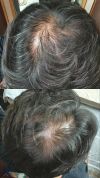
User noticed balding 3 years ago and started using finasteride 11 months ago. Recently tried Toppik hair fibers, which improved appearance and boosted confidence.
A 27-year-old male experienced hair loss and dermatitis, which improved with tea tree oil and neem extract. He is considering using a 2% Ketoconazole solution for further treatment.
A 34-year-old female is experiencing hair thinning after stopping birth control pills and a damaging hair treatment. She has normal bloodwork and a normal trichogram but is considering trying MSM or Saw Palmetto for her hair loss.
Copper peptides, specifically GHK-Cu, are discussed as a potential addition to hair loss treatments, possibly working synergistically with Minoxidil to convert vellus hair into terminal hair. The effectiveness and credibility of copper peptides are questioned due to the lack of widespread discussion and potential conflict of interest from the product's creator.
Minoxidil and finasteride are the primary treatments for hair regrowth, but they must be used continuously to maintain results. Alternatives like dermarolling and lifestyle changes are suggested, but their effectiveness varies.
A female user's six-month progress with only minoxidil and ketoconazole, including their experiences before and after using the treatments. They also discussed the differences between male and female hair loss and suggested that meds may offer more progress, though some results can be had without them.
The conversation discusses using a mixture of 4% peppermint oil in jojoba oil to reduce flaking and dandruff caused by 5% Minoxidil lotion. The user reports significant improvement after one application of the oil mixture.
A user reported hairline regrowth after two weeks on a treatment including finasteride, peppermint and rosemary oils, emu oil, magnesium oil spray, apple cider vinegar, and dermarolling, while avoiding shampoos and conditioners. They believe DHT contributes to hair loss but also suggest follicle fibrosis is an issue.
Applying oils like coconut, jojoba, and castor to hair, with methods including mixing oils and using them overnight or in a spray bottle for scalp and hair health. Users share their specific oil ratios and application techniques to avoid excessive thickness and maintain hair health.
Sodium Laureth Sulfate (SLS) in shampoos and its potential impact on thinning hair. The user follows a regimen of shampoo, keto shampoo, and conditioner, seeking suggestions for better products.
The conversation reassures a woman concerned about thinning hair on her crown, suggesting her hair appears normal and not thinning. Some users recommend prenatal vitamins for hair health, while others attribute the appearance to contrast between dark hair and a pale scalp.
The post discusses using Carnitine Tartrate, Potassium Chloride, and Niacin to reduce hair shedding, with the user experiencing significant improvement. The user also suggests considering a ketogenic/paleo diet for those with insulin resistance-related hair loss.
The user is experiencing chronic folliculitis with scalp sores and is concerned about a receding hairline. They have tried various treatments including antibiotics, Nizoral 2% shampoo, and lifestyle changes, but are seeking further advice.
The user experienced severe dandruff and hair loss, trying various treatments including oils, vitamins, and minoxidil. They found success by simply dampening their scalp with water twice a day, which improved their hair's appearance and eliminated psoriasis.
A user experienced significant hair regrowth using Lipogaine, alongside supplements, coffee, green tea, onion oil, rosemary, and Nizoral shampoo, after Propecia caused side effects. Another user reported no progress with Lipogaine after two months, noting inconsistent application.
A 28-year-old male reported significant hair regrowth using 5mg minoxidil and 0.5mg dutasteride over five months, with occasional ketoconazole use. Users discussed side effects like stuffy nose and low libido, and shared experiences with different hair loss treatments.
The user is experiencing worsening hair loss despite using 0.5mg dutasteride, 2.5mg minoxidil, and Nizoral. They are seeking advice and reassurance from others who have faced similar issues.
The user switched from finasteride to dutasteride and is using minoxidil and RU58841 for hair loss treatment. They are satisfied with the progress and considering a hair transplant, despite some initial shedding after the medication change.
The user has been using minoxidil foam for 6 months but is concerned about the lack of normal hair growth. Suggestions include adding finasteride, oral minoxidil, and possibly dutasteride, along with microneedling for better results.
The user is using topical finasteride, minoxidil, nizoral shampoo, and microneedling for hair regrowth but hasn't seen results after 2-3 weeks. They added tretinoin to their routine and are advised to wait a few months for potential changes.
Finasteride and minoxidil can cause significant initial hair shedding, but regrowth typically follows after a few months. Shedding is not a regular occurrence but may happen to strengthen hair follicles.
A 24-year-old male with crown thinning and an oily scalp is seeking advice on shampoo recommendations and whether to restart minoxidil or try a hair growth serum. He is concerned about daily shampooing and managing greasy hair.
A 28-year-old male is experiencing temple regrowth but crown thinning while using 5mg minoxidil and 0.5mg dutasteride. The shedding phase is seen as a positive sign of treatment effectiveness, with expectations of noticeable improvements around 6 to 12 months.
A dermatologist checked for hereditary hair loss using blood tests and plans to perform a trichogram. The user had slightly low Vitamin D3 levels, and the trichogram may help confirm androgenetic alopecia.
The user has been using topical finasteride and minoxidil for 5 years, with recent use of a liposomal formulation, but sees no significant improvement. They are considering switching to oral treatments due to continued hair loss and thinning.
The user reported subtle hair regrowth by focusing on scalp health and lifestyle changes, using Nizoral shampoo and methods to reduce inflammation and cortisol, without using finasteride, minoxidil, or other common treatments. Opinions in the conversation varied, with some skeptical of the results and others acknowledging the potential benefits of addressing scalp health and inflammation.
A 24-year-old male shares his two-month progress on hair regrowth using 0.5mg Dutasteride, 2.5mg Minoxidil, 10mg Biotin, and Ketoconazole shampoo, noting significant crown improvement. Users discuss the effectiveness of oral Minoxidil, with some expressing skepticism about photo angles and the necessity of Biotin unless deficient.
A 38-year-old male with stress-induced Telogen Effluvium is seeking advice on using oral finasteride and minoxidil, as well as vitamin regimens, for hair loss. He is considering these treatments after a dermatologist ruled out male pattern baldness and prescribed ketoconazole shampoo.
A 29-year-old male started using finasteride and minoxidil in September, gradually increasing the dosage, and is pleased with the progress, especially in the hairline and temple areas. He also uses keto shampoo for dandruff but plans to consult a trichologist due to ongoing scalp issues.