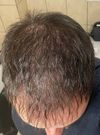
Mixing Dutasteride with MCT oil may improve absorption due to its fat-soluble nature. Users suggest taking it with whole milk or using oil-based capsules for better effectiveness.
Verteporfin is being discussed for its potential to regrow hair and heal scars, possibly aiding hair transplants or replacing them. Some users are skeptical about its effectiveness, while others suggest combining it with microneedling for better results.
A user reported thickening their hairline using a nightly mixture of castor oil, peppermint oil, rosemary oil, and sandalore, without using minoxidil due to side effects. They also continued using alfatriodol for DHT blocking and saw modest improvements after 6 months.
The user shared progress after two months using a topical formulation containing Dutasteride 0.25%, Minoxidil 5%, Cetirizine 1%, Melatonin 0.5%, Caffeine 2%, and Latanoprost 0.005%. The focus is on hair loss treatment results.
A user is seeing good results with RU58841 for hair loss, noting reduced shedding and thicker hair. They plan to use pumpkin seed oil as a solvent to avoid water content, which they believe reduces the effectiveness of anti-androgens.
Vitamin E is suggested as beneficial for hair follicles. Some users question the dosage and effectiveness, while others share positive experiences with vitamins.
A user discusses using topical dutasteride 0.025% once a week for hair maintenance, alongside fortified minoxidil, RU58841, and Reviv Hair Serum. They seek feedback on the effectiveness of this regimen.
A user discusses their rapidly receding hairline and a prescribed topical solution containing 7% Minoxidil, 0.1% Finasteride, and 3% biotinoyl tripeptide. The solution is a custom compound from their dermatologist, costing $50 for a one-month supply.
The user experienced hair regrowth using 0.5mg oral finasteride and the iRestore laser cap every other day, with reduced shedding. They also take collagen peptides and Nutrafol vitamins, though they are unsure of the latter's effectiveness.
The conversation discusses a transgender individual's successful hair loss treatment over 1.5 years using 2.5mg oral minoxidil, 5mg finasteride, and 8mg weekly injectable estradiol valerate. Some users debate the appropriateness of this approach within the group's goals, while others support the individualized treatment and its additional benefits for transgender individuals.
The user is exploring alternatives to finasteride and dutasteride due to concerns about side effects, and is using rosemary and jojoba oil, ketoconazole, minoxidil, microneedling, multi-peptide serum, saw palmetto, and stinging nettle for hair loss. They are also considering CB 03 01 and spironolactone.
A user experienced increased pimples and cysts after two years on dutasteride, possibly due to hormonal changes. Suggestions included seeing an endocrinologist, using supplements like boron and DIM, adjusting diet, and reducing body fat to manage side effects.
The post and conversation discuss KX-826 (pyrilutamide) for hair loss treatment, with positive remarks about its advertising and authenticity in China. The user changed their perspective after further research and seeing genuine advertising.
The conversation discusses using herbal oils, scalp massage, and dietary changes for hair loss prevention, with some success in regrowing baby hairs. Treatments mentioned include peppermint oil, cinnamon oil, castor oil, and RU58841.
The conversation discusses various hair loss treatments, including Breezula, KX826, and PP405, with mixed opinions on their effectiveness compared to finasteride and minoxidil. Some users express skepticism about the new treatments, while others remain hopeful about future developments.
The user is starting a hair loss treatment using a mix of coconut oil and rosemary oil, combined with microneedling. They plan to post results in 6 months.
A user was prescribed betamethasone dipropionate spray for a receding hairline, which caused skin peeling and depigmentation. They stopped using it and are considering alternatives like BPC-157/TB-500 for healing.
Hair loss treatment with latanoprost, minoxidil, and biotin showed progress. Latanoprost, a glaucoma drug, stimulates anagen phase and increases conversion of vellus hair to terminal hair.
Mixing RU58841 with cetosomal minoxidil is discussed due to scalp irritation from ethanol PG vehicles. A mixture of the two turned bright pink when left to dry.
A user named "tresslessinseattle" receiving a mysterious package of Eucapil hair loss treatment, which they are considering in combination with Minoxidil and Finasteride treatments to boost the regrowth they have been seeing.
Switching from liquid to foam minoxidil led to hair loss for OP, possibly due to a second shedding cycle. OP experienced allergic reactions to propylene glycol in the liquid form, causing dandruff and itchiness, which improved after switching to foam.
PP405 from Everychem is likely fake and potentially harmful, with concerns about its stability and the risk of using the wrong MPC inhibitor, which could damage hair follicles. The real PP405 was studied under strict conditions, and DIY attempts are discouraged due to unknown formulation and quality control.
The user uses finasteride, ketoconazole shampoo, and derma stamping for hair loss. They consider rosemary and castor oil as alternatives to minoxidil due to fewer side effects.
The conversation discusses using a blend of coconut, argan, and rosemary oils for hair growth, along with microneedling and supplements like biotin and collagen. The user is hesitant to use Minoxidil or finasteride and is exploring natural alternatives for thinning hair.
The conversation is about using Sandalore for hair loss and whether to mix it with Morr-F, alcohol, or a scalp oil. Users discuss the effectiveness of different carriers like propylene glycol and hemp oil for better absorption.
Topical finasteride concentrations are likely much higher than necessary for effective follicular DHT suppression, with current standards being 100-1000 times above the theoretical minimum. Lower concentrations (0.001-0.0025%) might still work locally while minimizing systemic exposure.
The user is seeking help with using Ell-Cranell for hair loss treatment. They are unsure about the correct application method and dosage. They also inquire about combining microneedling with topical alfatradiol and question a study that referred to alfatradiol as a hair growth inhibitor in male mice.