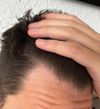
Hair loss is linked to cellular physiology and the IGF-1 to TGF-B1 ratio, not just androgen sensitivity. The theory lacks evidence, while finasteride and minoxidil are effective treatments.
The conversation is about hair regrowth, with the original poster using natural oils and supplements like pumpkin seed, saw palmetto, and zinc, while considering pharmaceutical options like minoxidil, finasteride, and dutasteride. Most users suggest using finasteride or dutasteride for effective results, as natural remedies are seen as ineffective.
Creatine is humorously blamed for hair loss, with users sharing exaggerated and satirical experiences. Some users report no hair loss with creatine, while others mention using treatments like minoxidil and finasteride to manage hair loss.
The user started oral finasteride and minoxidil, along with topical minoxidil, and saw encouraging hair regrowth results after two months without side effects. Some users reported side effects like depression and low sex drive from finasteride, while others shared positive experiences with varying dosages.
The user is using dutasteride and minoxidil foam for hair regrowth, applying minoxidil once daily due to side effects from the liquid form. They plan to increase dutasteride dosage and possibly apply minoxidil twice daily, while also using ciclopirox olamine shampoo and sulfur soap.
The user experienced significant hair regrowth after three months of using topical minoxidil 5% and 1mg oral finasteride, along with addressing vitamin D and iron deficiencies. Some users expressed skepticism about the rapid results, while others congratulated the user on their progress.
The conversation discusses using Dutasteride, Finasteride, and Minoxidil for hair loss treatment. The user plans to gradually increase Dutasteride dosage to 2.5mg if no side effects occur, while others suggest combining it with Minoxidil and microneedling for better results.
The conversation humorously critiques the lack of common sense in discussions about hair loss treatments like finasteride, minoxidil, and biotin, while also highlighting the repetitive nature of advice in the community. It suggests that joke posts keep the community engaging, despite some users taking absurd claims seriously.
PP405 is considered a promising hair loss treatment, potentially replacing minoxidil but not finasteride. Users are hopeful for future treatments like GT20029 and VDPHL01, while remaining cautious about effectiveness and side effects.
The user experienced significant hair regrowth using 1mg oral finasteride, DIM, and beetroot powder, while also focusing on gut health and reducing alcohol intake. Other users discussed the importance of iodine, fermented foods, and maintaining a balanced diet for overall health and hair improvement.
The conversation discusses creating a 0.01% topical dutasteride solution mixed with minoxidil for hair loss treatment, with concerns about absorption and effectiveness. Some users suggest that dutasteride needs specific formulation for better absorption, while others recommend oral use for practicality.
The user has been using topical 5% minoxidil for six months with minimal results and is worried about greasy hair and potential side effects of adding finasteride. Others suggest combining minoxidil with finasteride for better results, while discussing potential side effects like erectile dysfunction.
The user is considering adding Pyrilutamide or Alfatradiol as a topical treatment for hair loss after oral Finasteride and Dutasteride became less effective. Other users suggest Pyrilutamide for its safety profile, while one user shares positive experiences with RU58841 for reducing scalp itch and improving hairline.
A 32-year-old male is considering options to soften a dense transplanted hairline after experiencing accelerated hair loss and intolerance to finasteride and dutasteride, while using minoxidil. He is exploring partial electrolysis or laser treatments to achieve a natural look with a short buzz cut, avoiding a second transplant or scalp micropigmentation.
Dutasteride can regrow hair lost up to 10 years ago for some, especially when combined with minoxidil, but results vary widely. Some users report significant regrowth, while others see no change or only maintain existing hair.
OP is using 5% minoxidil and a foligain supplement for hair loss, with blood test results showing high cortisol levels. OP is considering starting finasteride, while another user shares their experience with finasteride and hair loss challenges due to malabsorption issues.
Copper peptides, specifically GHK-Cu, are being considered for hair regrowth, though skepticism exists due to questionable product sources. Users suggest finding reputable sources for potential benefits, while acknowledging traditional treatments like Minoxidil and Finasteride.
The user is experiencing significant hair loss and is considering treatments like minoxidil, finasteride, and possibly a hair transplant. They are advised to consult a dermatologist and consider oral minoxidil and dutasteride, while being aware of potential side effects and the need for ongoing treatment.
A user is considering using homemade hair sprays with ingredients like fenugreek seeds, rosemary, and lavender to promote hair growth, alongside topical minoxidil. Other users suggest that while these sprays may improve hair health, they are not as effective as minoxidil and finasteride for regrowing hair, and recommend using proven treatments like finasteride for better results.
Veradermics' oral minoxidil shows promise for hair regrowth, with some users reporting significant improvements, while Pelage's PP405 results are less convincing and lack transparency. There is skepticism about both treatments' long-term effectiveness and potential side effects.
Dutasteride is more effective than finasteride for hair loss, with optimal dosing at 0.5mg once or twice a week to minimize side effects. Topical application may further reduce side effects while effectively lowering scalp DHT.
A user discusses a hair loss treatment combining minoxidil and tretinoin, noting it may enhance absorption. Some users express interest and share positive experiences, while others question its effectiveness without medical evidence.
The conversation discusses the use of topical minoxidil for hair loss, with the original poster sharing positive results after three months of use without finasteride. Many users suggest adding finasteride to maintain gains, while others share their experiences and concerns about side effects and application methods.
The conversation discusses the effectiveness of natural remedies like scalp massages and oils for hair loss, with some users advocating for proven treatments like minoxidil and finasteride. The original poster prefers natural methods, while others argue that pharmaceuticals are more effective in combating hair loss.
The conversation discusses the potential long-term effects of stopping finasteride after extended use, with differing opinions on the existence and prevalence of post-finasteride syndrome (PFS). Some users report persistent side effects, while others argue that such effects are rare or unrelated to the medication.
Alfatradiol is considered safe but less effective than finasteride for hair loss. One user reported subtle regrowth using alfatradiol with finasteride and minoxidil, while another found alfatradiol ineffective.
A user shared progress pictures showing significant hair regrowth after 3.5 months of using 5% minoxidil twice a day. Some users expressed skepticism, suggesting a possible hair transplant, while others shared similar positive experiences with minoxidil, sometimes combined with biotin or other treatments.
PP405 and ABS-201 are promising treatments for male pattern baldness. PP405 shows rapid hair growth in human trials, while ABS-201 shows significant regrowth in animal studies but is still in early human trials.
The conversation discusses the potential updates on the pp405 trial for hair loss, with completion expected by December 2025. Participants express skepticism about new treatments, suggesting continued use of finasteride, while others hope for innovative solutions beyond current medications.
Dutasteride and finasteride are not effective for everyone in treating hair loss, with some users experiencing worsening conditions. Many are hopeful for new treatments like PP405, while others consider hair transplants or alternative medications.