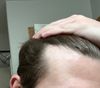
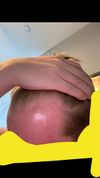
User tried cheap hair fibers from Amazon, significantly improved appearance of thinning hair. Fixing spray recommended to prevent fibers from blowing off.
Hair loss treatments, with users discussing their experiences with both RU58841 and Pyrilutamide, noting that the latter has only recently become available but may yield better results in the long term.
A user's experience with using oral finasteride and topical minoxidil for hair loss over the course of one year, including their starting point (NW2) and resulting progress. The replies from other users have been encouraging.
A 24-year-old man saw hair loss improvement after 5 months using 1 mg finasteride daily, 5% minoxidil nightly, weekly microneedling with a Dr. Pen A6 at 1.5mm, daily biotin (at least 10,000 mcg), and using a shampoo for thinning hair every other day. He experienced no side effects and confirmed his health with bloodwork.
A user's experience with dealing with hair loss, and the advice that was shared by other users to cope with it. Suggested treatments included shaving their head, using medications such as finasteride, minoxidil, and dutasteride, as well as dermarolling.
A user shared a homemade hair loss treatment combining Minoxidil with caffeine, melatonin, biotin, and olive oil, claiming improved hair regrowth compared to Minoxidil alone. They provided their recipe and cautioned users to try it at their own risk.
The effectiveness of Dutasteride compared to Finasteride in treating hair loss, with evidence given such as studies and experiences, as well as discussion around whether one should switch from Finasteride to Dutasteride. There is also a discussion on post-Dutasteride syndrome.
Deoxyribose sugar gel may stimulate hair regrowth similarly to minoxidil by enhancing blood supply and follicle activity. Human trials are necessary, and current products have mixed results.
The user experienced significant hair regrowth over 8 months using finasteride, minoxidil, and a custom topical mix including progesterone, cortisone, and alpha 5 estradiol. They reported no side effects and noticed improvement around the third month.
A 19-year-old is struggling with hair loss despite using minoxidil and finasteride, feeling depressed and lacking confidence. Suggestions include trying dutasteride, topical treatments, hair transplants, or accepting baldness.
John Cazale's hairline showed strong recession at the temples but maintained solid volume and density, sparking discussion on different hair loss patterns and the importance of overall hair density. Treatments like Minoxidil and Spironolactone were mentioned as potential factors in maintaining hair, though genetics and styling were also considered significant.
A 48-year-old male experienced hair regrowth after using oral finasteride for 3 years, despite stopping due to side effects like depression and low energy. He achieved a fuller look with styling techniques and reported using organic shampoo and herbal treatments.
The user has been using Him's chewable finasteride (1.2mg) and minoxidil (3mg) for six months and has seen some hair regrowth but is considering switching to dutasteride. Others advise patience, suggesting that significant results often take 12 to 18 months, and recommend sticking with the current treatment longer before making changes.
Successful hair regrowth after six months using finasteride and topical minoxidil, with minimal side effects like anxiety. Finasteride was the main treatment, and minoxidil supported regrowth.
The conversation discusses using 0.5mg Dutasteride once a week for hair loss, with suggestions to increase frequency for better results. The user plans to reassess the need for a hair transplant in six months and is concerned about potential side effects like gynecomastia.
The conversation discusses skepticism about new hair loss treatments, with many users expressing doubt about their effectiveness compared to existing treatments like minoxidil and finasteride. Some users mention natural oils like olive and macadamia oil, but overall, there's a consensus that these are unlikely to be game changers.
PP405 is a new hair loss treatment advancing quickly in trials, generating excitement and skepticism about its effectiveness and marketing claims. Some see it as a potential alternative to minoxidil and finasteride, but concerns about long-term effects and the need for DHT blockers persist.
A sugar gel is claimed to spark hair regrowth, but users express skepticism, noting that minoxidil and finasteride remain the most effective treatments. Many users joke about frequent "breakthroughs" that work on rats but not humans, and some mention the potential of PP405 as a future treatment.
Switching from dutasteride to finasteride and back led to significant hair shedding, despite continued use of oral minoxidil. The user is hopeful for hair regrowth after resuming dutasteride.
The user plans to start hair loss treatment with minoxidil, finasteride, and microneedling, considering oral minoxidil to avoid affecting their cat. They are concerned about potential shedding and the impact of vaping on hair loss.
The user has been using minoxidil, finasteride, and microneedling for two years, resulting in significant hair regrowth and plans for a 4000 graft hair transplant. The treatments have strengthened the donor area, making a hair transplant feasible.
Finasteride and Dutasteride will remain accessible in the EU despite objections from France and Belgium. Users discuss the ease of obtaining these medications in different countries and express relief and support for the EU's decision.
The conversation is about hair loss treatments, focusing on minoxidil and finasteride, with suggestions for microneedling and dermarolling to improve hair thickness. The original poster has used minoxidil for four years and finasteride for over a year but is exploring additional options for better results.
A breakthrough in hair follicle cultivation using induced pluripotent stem cells (iPSCs) has been achieved, producing large hair follicles suitable for transplantation. Clinical trials for this hair multiplication technology are planned in partnership with Yinguan Biotechnology.
KX-826, Breezula, PP405, and Stemson are potential future treatments for hair loss, with varying timelines and mechanisms like blocking DHT and stem cell activation. Users express skepticism about the timeline and mention current options like hair transplants and minoxidil.
A 19-year-old seeking advice on hair loss treatment is considering options like Minoxidil, finasteride, and RU58841. They are looking for guidance to potentially revive their hair.
Han Bio plans to start Phase 1 clinical trials for a hair growth treatment in 2027 after successful results in mice. Many users express skepticism about the effectiveness of treatments that work on mice but not on humans, and discuss existing treatments like finasteride and minoxidil.
A 17-year-old improved his hairline using minoxidil and derma stamping, planning to start finasteride at 18. He received advice on dosing and potential side effects to maintain results.
MCL-1 is important for hair follicle stem cell survival, but its impact on human hair regrowth is unclear. Minoxidil and finasteride are the main treatments, with doubts about new discoveries leading to effective human solutions soon.
The user has been using minoxidil for a year and started microneedling recently, but is unsure about hair regrowth and is considering starting finasteride despite concerns about side effects. Other users suggest that combining minoxidil with a DHT blocker like finasteride is necessary for better results, as minoxidil alone may not be effective long-term.