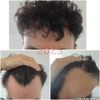
Scientists discovered a new T cell treatment that could regrow hair. Users are skeptical but hopeful, with some relying on finasteride and minoxidil in the meantime.
New hair loss treatments PP405 and VDPHL01 are discussed with skepticism and hope, alongside existing treatments like minoxidil and finasteride. Users express frustration over limited progress since the 1980s but remain cautiously optimistic.
A human trial involving verteporfin for hair regeneration, with the results showing some regrowth of 1-2 hairs in an area where a follicular unit was extracted. The conversation also suggested that future studies should involve higher doses and more frequent injections.
A 21 year old who has been taking various treatments for hair loss such as dutasteride, RU58841, minoxidil and finasteride with no results. Other users share their experiences of dealing with hair loss at an early age and offer advice on how to cope.
The user is experiencing significant hair regrowth after three months using 5% minoxidil, natural remedies, and dermarolling, and plans to start finasteride soon. Other users discuss the importance of combining minoxidil with finasteride to prevent hair loss and maintain progress.
The conversation is about a user obtaining a compounded treatment for hair loss, including 0.1% latanoprost, 0.2% melatonin, and 1% cetirizine. The user also uses 2.5 mg dutasteride, 5 mg minoxidil, and RU58841 daily, and is at Norwood 2.
GT20029 and KX826 are promising hair loss treatments, with GT20029 increasing hair count and KX826 showing significant results. KX826 may be a good alternative for those who can't use finasteride or dutasteride, though results vary.
Kintor Pharma has started a Phase II trial in China for GT20029, a potential new treatment for hair loss. Participants are discussing the significance, potential release dates, and comparing it to other treatments and technologies like stem cell hair transplants and SAMIRNA.
PP405 is a promising experimental topical treatment for alopecia that reactivates dormant hair follicles by targeting cellular energy, with large-scale trials planned for 2026. While it shows potential, it cannot regenerate permanently destroyed follicles, making hair transplants the only guaranteed solution for advanced baldness currently.
MaximusDurkimus shares experience with 0.25mg Finasteride, Minoxidil-induced lupus, and less than 10mg RU58841 for hair loss. Plans to try 0.025% topical Finasteride with 5% Stemoxydine and possibly Tretinoin, Fluridil, or CB-03-01 in the future.
The conversation discusses the effectiveness of finasteride and microneedling for treating hair loss. The linked article is seen as an advertisement for these treatments.
The conversation is about creating a higher concentration of the newly FDA-approved hair loss treatment, Clascoterone (Winlevi), through compounding pharmacies and possibly organizing group purchases. Some users are unfamiliar with Winlevi and are asking for an explanation of the drug.
The user experienced significant hair regrowth using a regimen of minoxidil 5% twice daily, finasteride 1 mg daily, microneedling, ketoconazole 2% twice a week, and occasional castor and coconut oil, along with daily scalp massages. They are optimistic about reversing their Norwood 5/6 hair loss.
The user shared their experience with hair regrowth using a natural approach, including a good diet, multivitamins, pumpkin seed oil, and scalp massages, without using minoxidil or finasteride. They emphasize this method for those with stabilized hair loss around Norwood 1.5 - 2, noting satisfactory progress over a year.
The conversation discusses hair loss treatments, specifically mentioning Minoxidil, finasteride, and RU58841, and highlights hair multiplication research from Koehler Lab at Harvard. Users express optimism about future advancements.
The conversation is about hair regrowth using micro-needling, RU58841, oral and topical minoxidil, ketoconazole shampoo, and dutasteride. Users suggest that noticeable results take longer than two weeks, though one user mentions seeing baby hairs.
Redensyl improved hair thickness slightly with no side effects, but no regrowth. Minoxidil provided significant regrowth but caused facial side effects like puffiness.
Tressless GPT is now free and accessible for hair loss advice. Treatments discussed include Minoxidil, finasteride, RU58841, dutasteride mesotherapy, topical melatonin, microneedling, and rapamycin.
Hair regrowth treatments, including stem cell injections, are discussed, with skepticism about their effectiveness compared to Minoxidil and finasteride. Derma stamping is mentioned as effective when used with Minoxidil, finasteride, and dutasteride.
Stem cell hair transplants use stem cells from fat tissue to reactivate inactive hair follicles, but results are inconsistent and not widely shared. Traditional treatments like finasteride and minoxidil often show better results.
A 28-year-old male with a family history of baldness is deciding whether to start finasteride now or wait for visible hair changes. He is considering starting finasteride immediately to proactively address potential hair loss.
PP405 is progressing rapidly through trials, with mixed opinions on its potential effectiveness. Current treatments like minoxidil and finasteride are still widely discussed, with some users reporting positive results from new formulations.
Latanoprost is discussed as a potential hair loss treatment, noted for its synergy with minoxidil and 5-AR inhibitors, but concerns include its effectiveness on scalp hair, cost, and potential skin darkening. Some users express interest in trying latanoprost or bimatoprost despite limited real-world evidence.
Amplifica is testing a compound called AMP-303 for hair loss, but it's not Scube3 or osteopontin. The timing for the results from the clinical trial is unknown.
The user experienced significant hair loss due to health issues and is now using finasteride and minoxidil for nearly 3 months. They are hopeful about tiny hairs/dots indicating regrowth and are considering a hair transplant later in the year.
The conversation discusses using tretinoin as an additional treatment for hair loss alongside minoxidil, with plans to test its effectiveness by applying it to only one side of the scalp. The user intends to start this experiment after using minoxidil for a year.
The conversation is about hair regrowth progress using a combination of treatments: dutasteride, minoxidil, RU58841, ketoconazole, and monthly microneedling. The user reports that microneedling and topical minoxidil had the most impact on their hairline.
A 49-year-old is documenting their hair regrowth journey using tretinoin cream, minoxidil foam, and finasteride. They report thicker hair and improved confidence, though progress feels slow and mentally challenging.
Setipiprant and Fevipiprant are questioned for their effectiveness in hair maintenance, with skepticism due to lack of convincing results beyond vellus hair growth. The user is satisfied with Minoxidil and Finasteride but is curious about the potential of DP2 inhibitors.
Estrogen injections significantly improved hair growth, particularly on the crown, after stopping finasteride. Monotherapy with estrogen led to hairline improvement, but also caused sterility and potential feminization effects.