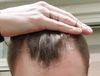
The user achieved thicker hair using finasteride and minoxidil tablets daily, along with derma rolling twice a week. No side effects were reported, and noticeable improvements were seen after switching from topical to oral treatments.
17M approaching Norwood 2, using topical minoxidil and considering finasteride, oral minoxidil, and pyrilutamide. Plans to study dermatology and possibly get a hair transplant at 25 if treatments don't work.
Hair fibers impressively cover bald spots, boosting confidence. User started big 3 treatment (0.5mg fin, 1 time minoxidil 5% topical, ketoconazole 2%) for regrowth.
Topical 2-deoxy-D-ribose (2dDR) regrows hair in mice almost as well as 2% Minoxidil. However, 2dDR may contribute to oxidative stress and hair loss due to the formation of advanced glycation end products (AGEs).
Minoxidil may age skin by slowing collagen synthesis, but using collagen peptides and a basic skincare routine might counteract this. Foam minoxidil could reduce systemic absorption and avoid alcohol-related side effects.
User uses Costco brand Minoxidil as a hair product for styling and hold. Others agree that foam version is better for styling and less greasy than liquid.
Norwood 7 hair loss is often excluded from trials to ensure treatments appear more effective and to reduce costs. Some believe treatments effective for Norwood 5 could work on Norwood 7, but companies prioritize market readiness.
Minoxidil, PRP, low-level light therapy, stem cell therapy, mesotherapy, Acell, and microneedling are discussed as treatments for thickening fine hairs in NW5 hair loss sufferers. A hair transplant may be necessary for significant improvement.
The post and conversation are about skepticism towards a new hair loss treatment containing 2-deoxy-D-ribose, copper peptides, and exosomes, with concerns about the legitimacy of the product and its website. The treatment's effectiveness and authenticity are questioned due to lack of testing and transparency.
Formula 82M, a minoxidil and retinol liquid, improved hair texture and filled in temples with baby hairs for the user, but its high cost and lack of reviews cause concern. Another user mentioned using a similar product, 82F, which has become less effective and expensive over time.
A user is treating their advanced hair loss with a regimen including topical finasteride, minoxidil, hydrocortisone, stem cell serum, peptide serum, multivitamins, he shou wu tea, derma pen, argan oil, and a derma roller. Replies suggest it's too early to judge progress and recommend staying consistent, with one suggesting oral minoxidil as an additional option.
A potential non-invasive topical treatment targeting the WNT Signaling Pathway for hair regeneration is being researched, with positive results on human hair follicle cells. Current effective treatments for hair loss include Minoxidil, finasteride, and hair transplantation.
Hair fibers can effectively cover thinning hair when used with minoxidil and hairspray but require daily application and can be inconvenient in certain conditions. Some users prefer treatments like finasteride, dutasteride, microneedling, or wigs due to the maintenance and limitations of hair fibers.
PP405 is seen as a potential breakthrough for converting vellus hairs to terminal hairs, with users expressing both hope and skepticism. It is compared to treatments like minoxidil and finasteride, with discussions on side effects and marketing concerns.
Low oxytocin levels in hair are linked to reduced empathy and may affect hair growth. Cinnamic acid can promote hair growth by activating oxytocin receptors.
Finasteride improved hair density and changed hair texture from wavy to curly for the user. The user took 1mg of oral finasteride daily without using minoxidil.
The conversation humorously discusses two resilient hair strands that resist DHT, with mentions of minoxidil and finasteride as ineffective treatments. Users joke about cloning the hairs and the mystery of baldness.
Rhamnose may promote hair growth and pigmentation, suggesting it as a potential hair loss treatment. The conversation discusses its potential alongside known treatments like Minoxidil, finasteride, and RU58841.
The user shared progress pictures after 2 months of using Minoxidil 5%, Forcapil, and dermarolling 1.5mm. They experienced initial shedding but noticed slow hair regrowth.
User experienced hair loss from Norwood 3.5 to Norwood 5 with diffuse thinning after using a hair system for 2 years. Tried Redensyl, Capixyl, Bicapil, Biotin, multivitamins, Fin, and Min without significant improvement, seeking advice for hair recovery.
Osteopontin, a protein involved in hair growth on moles, may help with hair loss. However, it is also linked to Alzheimer's, cancer, and bone development, so caution is advised.
The conversation discusses hair loss treatments, specifically mentioning Minoxidil, finasteride, and RU58841, and highlights hair multiplication research from Koehler Lab at Harvard. Users express optimism about future advancements.
OP shared a 7-year hair density progress update using Minoxidil, Finasteride, and dermarolling. Creatine use was discussed, with mixed opinions on its impact on hair loss.
Exosomes combined with fractional picosecond laser treatment were effective in treating androgenetic alopecia and promoting repigmentation in white hair patches. The role of exosomes in hair repigmentation, particularly in conditions like poliosis, is not well-studied.
Finasteride changed the user's hair texture from wavy to curly, reverting after stopping. Minoxidil was more effective for temple hair regrowth than finasteride.
A user recommends a biotin collagen shampoo for making hair appear thicker and feeling nice. Another user mentions using a similar product with argan oil from Walmart.
The conversation is about a user trying hair fibers to cover hair loss while waiting for Rogaine (Minoxidil) to work. Some suggest using Finasteride or other treatments for better results, while others criticize the appearance of the fibers.
The user is experiencing a strange hair loss pattern despite using dutasteride for 3 years and minoxidil with tretinoin for 1.5 years. They recently added microneedling and are considering a scalp biopsy to understand the cause.
A South Korean company, Therazyne, has developed a promising hair loss treatment using a WNT chain surrogate that binds to Frizzled 7, with human follicle testing expected soon. Current treatments like minoxidil and finasteride are not seen as cures, and while optimism exists for future solutions like PP405, approval processes are lengthy.