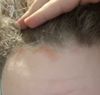
Dr. Bloxham's 9-month update on FUT scar revision with Verteporfin shows promising results. Excitement is high for FUE, which appears highly effective based on Dr. Barghouthi's findings.
The conversation discusses the potential cost of hair transplants if verteporfin allows for an unlimited donor area, suggesting that prices could vary based on the number of grafts needed. The user speculates that costs could be calculated per graft or a set amount for a specific number of grafts.
A gel of keratin microspheres promotes hair follicle growth, showing similar effectiveness to minoxidil in mice. The treatment activates hair growth pathways and reduces inflammation, with potential applications in drug delivery for hair-related disorders.
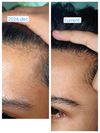
A user shared a 25-day progress picture showing significant hairline restoration attributed to microneedling, in addition to using minoxidil and finasteride for 6 months. Other users discussed needle length, frequency, and whether the effects of microneedling are permanent.
The conversation discusses the potential of long-chain unsaturated fatty acids, like oleic and linoleic acid, as an additional treatment for hair loss, which may inhibit the enzyme responsible for converting testosterone to DHT and promote hair growth. Users humorously suggest using oils topically and discuss other hair loss treatments, but the main focus is on the science behind fatty acids and their role in hair health.
The conversation discusses a new hair growth treatment that showed a 14 hairs/cm2 increase in a trial, with mixed opinions on its effectiveness and potential cost. Some users are hopeful about combining it with existing treatments like oral minoxidil for better results.
Doctors are testing verteporfin topically for healing and potential regeneration after transplants. The user is asking how it is formulated for topical use, such as if it's mixed with a carrier gel.
The conversation is about using Verteporfin with microneedling as a potential hair loss treatment that may regenerate hair follicles with minimal scarring. There are concerns about the optimal dosage and the DHT sensitivity of the new follicles.
Verteporfin might be a potential cure for hair loss and could heal scars, which may lead to natural-looking results when combined with hairline lowering surgery. One person suggests waiting to see if verteporfin actually works as claimed.
The conversation discusses the potential of verteporfin in treating hair loss, with some users reporting positive results and speculating that it could lead to a cure for baldness. Others are skeptical, and there's a debate on the effectiveness of verteporfin for regrowing hair and reducing transplant scars.
The conversation discusses the potential of Verteporfin, an FDA-approved drug, for hair loss treatment, particularly in combination with microneedling or PRP. Users express hope and curiosity about its application, while some remain cautious due to the need for more extensive testing.
The post discusses the confusion about the optimal microneedling depth and frequency for hair growth, and when to apply treatments like minoxidil. A reply suggests the best method is using a 1.25mm depth every 7 days with a specific device, holding it for 10 seconds to stimulate hair growth.
The conversation discusses the use of Verteporfin in hair loss treatment. It suggests that Verteporfin could potentially regenerate hair follicles instead of forming scars, providing an unlimited donor supply for hair transplants.
Dr. Bloxham's trial is testing verteporfin on hair transplant patients to see if it can improve hair regrowth in treated areas. People are discussing the potential for follicle regeneration, expected results timeline, and concerns about side effects like cancer.
The user is asking about the difference between a dermaroller and a dermastamp for hair loss treatment, noting that the dermaroller tangles and pulls out hair. They are seeking advice on which tool is better for long hair.
Follica's preferred microneedling protocol for hair growth, which includes needle depth, frequency and movement parameters as well as the use of topical treatments such as minoxidil and finasteride.
The conversation discusses the effectiveness of finasteride and microneedling for treating hair loss. The linked article is seen as an advertisement for these treatments.
A 27-year-old male is experiencing hair loss and dandruff, despite trying various treatments like cortisone, diflucan, and natural remedies. He is considering shaving his head and is seeking advice on the "Big 3" treatment, which includes Minoxidil, finasteride, and RU58841.
A 20-year-old is experiencing worsening hair thinning despite using finasteride for 3 weeks and minoxidil for about a year, though inconsistently. They are seeking advice on how to proceed with their hair loss treatment.
The user has been using oral finasteride and topical minoxidil for 2 years, initially seeing regrowth but now experiencing thinning again. They are considering adding low-dose dutasteride or oral minoxidil to their regimen to address the issue without side effects.
The user has been using finasteride every other day for two years with limited regrowth and is considering switching to daily use or adding minoxidil. They are unsure if changing the dosage or adding minoxidil would be more effective.
A 38-year-old man using minoxidil, tretinoin, and microneedling for hair loss is considering adding finasteride to his regimen. He is concerned about potential effects on beard growth but seeks advice on whether to add finasteride now or wait.
After stopping oral finasteride, shedding is common, and some regrowth may occur, but hair loss might continue. Alternatives like minoxidil, ketoconazole, or microneedling can be considered if finasteride side effects are problematic.
KX-826 is being considered as a potential alternative to finasteride for hair loss, but it is not expected to be more effective. Combining KX-826 with finasteride and minoxidil may provide better results than using it alone.
The user has been using oral finasteride and minoxidil for over a year with little success in hair regrowth and is considering switching to dutasteride and increasing the minoxidil dose. Other users shared mixed experiences with these treatments, suggesting consulting a doctor before making changes.
The user has been on finasteride for 8 months and is experiencing significant hair shedding, with concerns about hair density and visible scalp. Other users suggest that shedding is normal and that finasteride is likely working, with potential improvements over time; adding minoxidil could help but may initially increase shedding.
Low doses of dutasteride are as effective as higher doses for hair regrowth, with fewer side effects. Users find success taking it 2-3 times a week instead of daily.
The user started using minoxidil foam daily after two years on finasteride and is managing seborrheic dermatitis with antifungal shampoo. They seek advice on moisturizing products that won't worsen their condition, with suggestions including gentle shampoos and light ceramide serums.