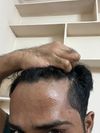
The user started dutasteride and oral minoxidil but saw no improvement in crown hair regrowth. Users suggest increasing the minoxidil dose and seeking a second opinion.
Minoxidil's effectiveness varies due to genetic differences in the SULT1A1 enzyme, affecting how well it converts to its active form, minoxidil sulfate. Hyper-responders may experience rapid hair growth and increased side effects, such as pericardial effusion, even at low doses.
A user, 42 M, NW 5-6, used oral Dutasteride, Minoxidil, RU58841 topical, micro needling, Nizoral shampoo, saw palmetto gummies, vitamin D gummies, and scalp massages for 2 months. They noticed many small light hairs on previously bald areas and are questioning if these will darken or remain vellus hairs.
Finasteride and dutasteride may not significantly impact meibomian gland function since these glands do not rely on DHT. Some users report dry eyes and other side effects from finasteride, but these may be influenced by other factors or medications.
OP shared progress pictures after 7 months of using a topical solution with 0.25% finasteride and 5% minoxidil, prescribed by a dermatologist. OP experienced mild shedding initially and noticed significant growth by the third month.
The trichologist avoids recommending Minoxidil, focusing instead on changing medications monthly for seborrheic dermatitis, resulting in only slight improvement in hair quality and loss. The user is considering starting Minoxidil independently due to slow progress and personal distress.
A 24-year-old experiencing severe hair thinning has been using minoxidil for 2 years but is still shedding hair. A doctor recommended plasma treatment over a DHT blocker for better and healthier results.
KX-826 is undergoing Phase III trials in China as a potential treatment for male pattern baldness, with some users considering it as an alternative or addition to finasteride and dutasteride. Opinions on its effectiveness vary, with some users reporting positive results and others finding it expensive and ineffective.
A user shared progress pictures after 6 months of using a topical treatment with 6% Minoxidil and 0.3% Finasteride, showing improved hair density. Other users encouraged the progress and suggested adding a derma stamp for better results.
A user shared progress pictures using 5mg oral minoxidil and 100mg spironolactone, noting increased body hair and faster nail growth. Another user humorously suggested a new sub for people with similar experiences.
A user shared a six-month update on hair improvement using Pyrilutamide and Minoxidil, noting significant hair regrowth and strength. Some participants questioned the legitimacy of the results and the source of Pyrilutamide.
The conversation discusses the progress of Clascoterone (Breezula) for hair loss treatment, noting that COVID-19 delayed female trials by three months but Phase III trials for males are proceeding with a Special Protocol Assessment filed with the FDA. Users express hope for Breezula as an alternative to existing treatments like finasteride and minoxidil, despite concerns about its potential high cost.
User is experiencing hair thinning and sebum overproduction after starting finasteride and a hair growth supplement containing biotin, iron, zinc, and calcium. They suspect the finasteride might be fake but have noticed a side effect of watery semen.
The post discusses a hair loss treatment regimen using saw palmetto, pumpkin seed oil extract, EGCG (green tea) extract, grape seed oil extract, rosemary oil extract, and Zix. The user plans to use these DHT-blockers and 5AR inhibitors for six months and report the results.
The user reports that using topical Dutasteride has stopped their hair loss, and they are curious about potential side effects and regrowth. They also mention having scalp psoriasis and past SSRI use affecting libido.
The user experienced better hair thickening results with a combination pill of oral minoxidil (3mg) and finasteride (1mg) compared to previous treatments with topical minoxidil and finasteride alone. They reported no significant side effects and expressed regret for not starting this treatment earlier.
A 32-year-old male with diffuse thinning and seborrheic dermatitis has been using finasteride for 8 months without improvement. He is considering COQ10 + PQQ supplements for scalp inflammation and hair loss.
The user has been using topical finasteride, Latanoprost, and other treatments for hair loss but hasn't seen progress and is considering increasing the finasteride dosage or switching to dutasteride. They cannot use minoxidil due to heart issues and are seeking advice on other options.
The user saw hair improvement with minoxidil, finasteride, and a red light cap, noting better results after adding finasteride and stressing routine consistency.
The user experienced temple recession, shedding, and acne while on 0.5mg dutasteride, 1.25mg finasteride every other day, and 5mg oral minoxidil daily. They are considering switching treatments due to worsening symptoms and are contemplating using a topical anti-androgen like RU58841.
User shared 2-month progress using 6% minoxidil, seeing some regrowth. Others encouraged consistency and noted significant results typically appear around months 3-6.
The user has been using finasteride, minoxidil, and a derma stamp for 3 months with significant improvement. They are now adding ketoconazole to their routine.
A user with mild psoriasis on the scalp is using finasteride, topical minoxidil, and dermarolling for hair loss but plans to stop minoxidil on the crown due to psoriasis aggravation. Suggestions include switching to a lipid-based minoxidil, using Ketoconazole shampoo, or trying oral minoxidil.
The user experienced significant hair thickening after switching from three years of topical Minoxidil and keto shampoo to three months of topical finasteride and derma stamping. They also noted that they're using less than the recommended amount of finasteride, but still seeing great results.
A user shared their experience with scalp micropigmentation (SMP) after one year. They discussed using Minoxidil, finasteride, and RU58841 as treatments for hair loss.
The phase 3 trial results for Pyrilutamide showed no significant difference from the control treatment in increasing hair count, leading to the company halting its development. Users discussed their disappointment and skepticism about hair loss treatments, with some mentioning other treatments like Minoxidil, Finasteride, and RU58841.
The conversation discusses hair loss treatments, mentioning minoxidil, finasteride, RU58841, VDPHL, GT20029, and follicle cloning as potential solutions. It also reveals that the discussion about PP405 was an April Fool's joke.
My hairline, I am only 23.
This conversation is about a user's experience with treatments for androgenic alopecia, including finasteride, dutasteride, RU, minoxidil, progesterone, melatonin, LLLT, oral minoxidil, and Pyrilutamide. They have tried many treatments over the course of two years without seeing much success, and they are considering getting a hair system as a last resort.
A 19-year-old is experiencing hair regrowth using 0.5mg dutasteride, topical minoxidil at night, topical redensyl in the morning, and weekly dermarolling. They have been on the treatment for a month and plan to share monthly updates over the next two years.
A user shared six months of progress using topical Minoxidil and 1mg oral Finasteride for hair loss. The user defended the authenticity of their photos, attributing skin color changes to seasonal differences and wearing caps.