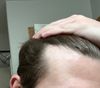
A user's two month update on their hair loss journey and the treatments they are trying, which include exosome injections, minoxidil, finasteride, and RU58841.
The user started using Minoxidil and Dutasteride in December 2025 for hair loss. They have noticed improvements according to friends and family but are seeking additional tips to enhance results.
A human trial of verteporfin, a drug that can inhibit wound healing by scarring and promote regeneration of original tissue and hair follicles to provide an unlimited source for hair transplants; people discussed the potential of this drug and how it could be rolled out in mainstream with more doctors getting on board.
The user plans to use 1% Koshine826, 0.1% Alfatradiol, Minoxidil with Tretinoin, microneedling, and Stemoxydine for hair loss treatment. They expect significant recovery with this regimen.
The conversation discusses why CB-03-01, a potential hair loss treatment, isn't widely discussed despite evidence of its effectiveness and safety. Some users mention other treatments like melatonin, procianidin b2, and RU58841, debating their effectiveness and safety.
The conversation discusses a new 0.3% tretinoin topical launched by MinoxidilMax for mixing with other solutions, with some users expressing concern about potential skin irritation compared to lower concentrations. MinoxidilMax has also released other products like topical Dutasteride and RU58841.
PP405 is a new hair growth stimulant different from Minoxidil, currently in phase 2 trials. Users discuss its potential, safety concerns, and the long wait before it might be available.
The post discusses the potential of GT20029 in treating hair loss, questioning if it will replace finasteride or be used alongside existing treatments. A reply indicates that its role is still uncertain.
Hair loss treatments discussed include Minoxidil, Finasteride, and RU58841. A user asks about alfatradiol's availability, public perception, and usage in Germany.
The conversation is about the potential dangers of taking oral minoxidil and grapefruit juice together. Some users express concern about dangerous drug interactions, while others argue that grapefruit juice may inhibit the metabolism of finasteride. The conclusion is that grapefruit juice may make finasteride less effective, but it won't affect minoxidil.
The user noticed increased hair fullness after using a minoxidil and finasteride oral capsule but is unsure if the 1.25 mg minoxidil dose is sufficient. They are considering switching to a higher dose and are waiting for a dermatologist's advice.
Combining Minoxidil with peptide serums like Redensyl, Procapil, and Capixyl is more effective for hair growth than using Minoxidil alone, increasing hair density and thickness. However, some users are skeptical about the effectiveness of peptides, suggesting other ingredients or factors might contribute to the results.
A 19-year-old male switched from finasteride and minoxidil to dutasteride due to continued hair thinning and is experiencing increased nipple sensitivity and a small lump, raising concerns about gynecomastia. Suggestions include slowing the transition, checking hormone levels, and considering an aromatase inhibitor.
The user shared progress pictures showing hair regrowth after 9 months using 1mg oral finasteride, topical Minoxidil, and Stemoxydine. They experienced a recent shedding at the hairline but are seeing new hair growth.
DHT causes hair loss by driving cells into senescence, and a polyphenol in black chokeberry may reverse this. A product using this theory is being considered for use alongside finasteride, minoxidil, and microneedling.
Switching from liquid to foam Minoxidil to avoid scalp irritation, with a method to melt the foam for easier application. Users discuss alternatives and personal experiences with Minoxidil, including issues with propylene glycol and different application methods.
RU58841 powder from a lab supplier was tested at a free drug testing service. The discussion includes using Minoxidil and finasteride for hair loss treatment.
A user shared their experience with scalp micropigmentation (SMP) after one year. They discussed using Minoxidil, finasteride, and RU58841 as treatments for hair loss.
A user shared their 9-month progress using RU58841 at 2% daily for hair regrowth, initially starting at 5% but reducing the dose due to early signs of gynecomastia, which has since mostly resolved. They achieved their goal of regrowing hair at the temples and hairline.
Stemson raised $15M for hair cloning, with hopes it becomes a reality in 10-20 years. Users are hopeful and discuss using Minoxidil and finasteride in the meantime.
Hair loss discussion mentions HMI-115 efficacy in 3 months after Phase II study. Users discuss treatment effectiveness and mention massive regrowth in previously bald areas.
The conversation discusses alternatives to 5AR inhibitors for hair loss treatment, suggesting options like minoxidil, KX-826, pyrilutimide, microneedling, and topical bicalutamide. Concerns about side effects and the effectiveness of these treatments are also highlighted.
A 23-year-old male is experiencing diffuse hair loss and miniaturization, possibly due to high IGE levels after using tofacitinib. He seeks advice and has not yet consulted a dermatologist.
A 20-year-old stopped oral minoxidil (3mg) for a month due to health concerns and lack of significant results, while continuing topical minoxidil (7%) with tretinoin and finasteride (1mg). They experienced placebo side effects and are considering resuming oral minoxidil, seeking advice on potential setbacks.
The conversation is about someone experiencing hair regrowth using Minoxidil and Dutasteride, along with other treatments. They report their hairline is improving and their forehead appears smaller.
Pelage Pharmaceutical raised $120 million to continue research on PP405, a promising hair loss treatment that showed a 20% increase in hair density in 31% of men during a Phase 2a trial. The treatment was well-tolerated, with no systemic absorption, and Phase 3 trials are planned for 2026.
The user has been using a daily capsule containing 1mg finasteride and 2.5mg minoxidil for 11 months, with noticeable regrowth on the crown but minimal improvement on the hairline. They experienced no significant side effects and plan to continue the treatment long-term.
Clascoterone is being discussed for hair loss, but its current acne formulation may not be suitable for scalp use due to potential skin irritation and lower dosage compared to Breezula. Users mention other treatments like finasteride, minoxidil, and pyrilutamide, with some expressing skepticism about clascoterone's effectiveness for hair loss.