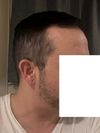
A user's successful hair transplant, with some people questioning the donor area regrowth, and others speculating that hair fibre may have been used to help fill in areas.
There is an inconsistency between the molecular weight and formula listed on EveryChem's product page and the analytical PDFs for 3HP and PP30, suggesting a possible error in the product description. Concerns are raised about EveryChem's business practices and lack of transparency in testing and manufacturing.
Han Bio plans to start clinical trials for a new hair multiplication technology this year, which could significantly reduce the cost and time of hair transplantation. The technology uses a single hair strand to cultivate enough cells for 30,000 hair strands.
Gizzela is unsure about the dosage and frequency of copper peptides and asks if they can be used with Stemoxydine. They seek advice on applying these treatments together.
A 40-year-old shared their positive experience with a second hair transplant at HDC Cyprus, involving 4148 grafts and costing around 9,000 euros. They used oral minoxidil, Dutasteride, biotin, and vitamins to aid recovery and were pleased with the results.
A user is considering adding PRP and mesotherapy to their hair loss treatment and is deciding between two options: Promoitalia, which contains Phosphatidic acid, Riboflavin, and Superoxide dismutase, and the more expensive Melsmon, a human placenta derivative. They seek advice on which option to choose based on effectiveness and scientific backing.
The conversation discusses hair loss treatments, specifically Regenera stem cells and exosomes from 'Cellgenic' umbilical cord donors. The user has been using topical minoxidil 5% and 0.001% estradiol for a year without seeing effects, and another user mentions the importance of microneedling.
People are discussing their experiences with kx-826 (pyrilutamide) for hair loss, using concentrations of 0.5% and 0.9%. They are sharing personal results and progress with this treatment.
The user is pleased with their hair transplant results after six months and seeks feedback. The conversation is positive, with others affirming the success of the procedure.
The conversation discusses the potential of a new hair loss treatment, GT20029, which targets androgen receptors in the scalp and is in phase 1 trials in China. Users express hope that this treatment will be more effective than current options like Minoxidil and Finasteride.
The GT20029 tincture, a topical androgen receptor degrader, showed significant hair growth and good safety in a China Phase II trial for male androgenetic alopecia (AGA), with the 1% dose twice weekly identified as optimal. The company plans to initiate Phase III trials in China and Phase II in the U.S., and the treatment also shows promise for acne.
The discussion is about using ASCEplus HRLB exosomes for hair loss treatment, which combines 10 billion exosomes with growth factors, nutrients, biotin, and copper tripeptide. The treatment is expensive and typically administered via scalp injections, but in Europe, it's done with microneedling.
Chris's hair transplant looks better, but the hairline is criticized for being too straight and unnatural. Some recommend using finasteride and minoxidil for maintenance.
The user is considering using CB or clascoterone for hair loss, potentially as an alternative to RU. They're also contemplating asking a dermatologist for topical clascoterone cream to apply to their temple.
OP noticed fuller and thicker hair after almost 4 months of using GHK-Cu, a copper-binding peptide, through subcutaneous injections. Some users were skeptical, questioning the authenticity and potential commercial intent behind the post.
GHK-Cu peptide injections are discussed for hair growth, but users report mixed results and suggest focusing on DHT management first. Some users combine GHK-Cu with treatments like Minoxidil and Dutasteride, but emphasize its benefits for skin rather than hair.
The conversation discusses interest in peptides for hair loss, specifically mentioning ahkCU and ghkCU. A user is considering adding ghkCU to their treatment regimen.
KX-826 (Pyrilutamide) being tested in the US for hair loss treatment and that they have found enough people to participate in phase II clinical trials. Other treatments discussed are Minoxidil, finasteride, and RU58841.
The conversation discusses the failure of Phase 3 trials for the hair loss treatment KX-826, with no significant difference found between the drug and placebo. Some users express disappointment and skepticism, while others discuss alternative treatments like Minoxidil, finasteride, and RU58841.
Channing Tatum's hair loss and whether he accepted baldness or had a hair transplant. Users share experiences with finasteride and hair transplants, and discuss the importance of hair maintenance with age.
The conversation discusses promising hair cloning research seeking commercialization partners. Cultured hairs formed with pigment, indicating positive progress.
The user shared their bloodwork results showing DHT at 17 ng/dl and testosterone at 287 ng/dl, with a slight Vitamin D deficiency. They are seeking opinions on these levels and have an upcoming dermatologist appointment.
A user is seeking advice on mixing GHK-cu/AHK-cu with minoxidil for hair loss treatment. They are asking for recommendations on the correct mixing ratios and any experiences with copper peptides.
The conversation discusses the potential of a new hair loss treatment, GT20029, which may prevent hair loss by destroying androgen receptors on the scalp. Users express hope for the treatment's success and speculate on its usage routine, effectiveness, and possible side effects.
The conversation discusses the removal of Breezula phase II 12-month results by Cassiopea and the search for the original data. Concerns were raised about potential negative long-term effects on hair growth, such as androgen receptor upregulation.
User doing PRP with exosomes for hair loss, sees possible regrowth after two treatments. Another user suggests providing before and after pictures for better assessment.
KY19382 is discussed as a potential treatment for creating new hair follicles and possibly curing hair loss. The conversation seeks user experiences and sourcing information for KY19382.
Exosome treatment for hair loss, derived from umbilical cord stem cells, is being considered as an option before a hair transplant. Users discuss the need for ongoing maintenance and share experiences with different exosome sources, including plant-derived options.
The conversation discusses organizing group buys and tracking progress for Kx-826 Pyrilutamide, a hair loss treatment. Participants express optimism about upcoming results and concerns about self-reporting bias.