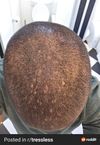
User shares new hair growth stack including oral minox, daily rolling with minox application, niacin, and Dutasteride. Excited about progress and plans to update in two months.
Minoxidil use may cause changes in hair texture, with some users experiencing straighter hair and others noticing darker hair. Users are uncertain if these changes are permanent or temporary.
The user is experiencing new hair growth after using oral dutasteride, topical minoxidil, and microneedling, but is concerned about black dots on the hairline, which might be clogged pores or dormant follicles. The user previously used a topical minoxidil/finasteride spray and had good results, despite a shedding phase after switching treatments.
Rhamnose may promote hair growth and pigmentation, suggesting it as a potential hair loss treatment. The conversation discusses its potential alongside known treatments like Minoxidil, finasteride, and RU58841.
Inflammation plays a significant role in hair follicle miniaturization and androgenetic alopecia, with treatments like ketoconazole shampoo, minoxidil, and finasteride being used to address it. Users discuss the benefits of anti-inflammatory treatments and peptides like KPV, alongside traditional hair loss treatments, to improve scalp health and hair quality.
User experienced hair growth after 11 months using 15% Minoxidil, topical and oral Finasteride, and Ketoconazole Shampoo. Hair remained full even while using steroids and SARMs.
Hair regrowth treatments are effective in mice but not yet available for humans. The discussion humorously highlights frustration over this disparity and mentions a project to genetically modify elephants to resemble mammoths.
Hair follicles can potentially produce more hair strands with treatments like Minoxidil and finasteride. Notable improvements in hair density are possible, but achieving multiple strands per follicle is uncertain.
The conversation is about a person struggling with inconsistent hair styling due to thinning hair, despite being on hair loss medications. They find that ketoconazole 2% shampoo helps, but conditioning makes their hair look worse; others suggest staying consistent with treatment and using hair fibers for events.
People often notice and analyze others' hairlines due to their own insecurities about hair loss. Treatments mentioned include finasteride, minoxidil, dutasteride, and red light therapy.
User noticed black dots along the hairline and temples, questioning if it's regrowth. They are using a regimen including Dutasteride, oral and topical Minoxidil, and a compounded topical treatment.
User discusses a 98-year-old man with amazing hair and a better hairline than someone 80 years younger. Conversation includes various treatments like Minoxidil, Finasteride, and genetics as factors for hair quality.
Sodium dodecyl sulfate, oleic acid, and palmitoleic acid may promote hair growth, but their safety and effectiveness for humans are uncertain. Users consider trying these treatments cautiously, exploring alternatives like ostrich oil and microneedling.
A 23-year-old is experiencing hair that is thick at the ends but thin at the roots despite using minoxidil and finasteride for 10 months. They are concerned about whether this is normal or a sign of miniaturization and seek advice on reversing or improving the condition.
A 24-year-old male experienced unexpected hair growth and improved skin and nails after adding daily vegetable juices, including carrot, spinach, celery, and beet, to his diet. He is not using any other treatments like minoxidil, finasteride, or RU58841.
User discovered hair fibers, tried Toppik but concerned about ingredients. Considering Boldify (cotton-based, cheaper) and Surethik (keratin-based) as better options.
User tried cheap hair fibers from Amazon, significantly improved appearance of thinning hair. Fixing spray recommended to prevent fibers from blowing off.
The user noticed small circular hairless spots after a buzz cut and has been using finasteride, dutasteride, and oral minoxidil for hair loss. They are experiencing continuous shedding and thinning, and it is suggested they consult a dermatologist for a scalp examination and possible biopsy to determine if it's alopecia areata or androgenetic alopecia.
A user noticed baby hairs after combing out locs and has been applying castor, rosemary, and peppermint oil daily. They are curious about progress, sharing photos from different stages.
The user is using minoxidil and finasteride to treat hair loss and is concerned about shedding and potential aggressive hair loss. They noticed some regrowth in trichoscopy pictures but are unsure about real-life changes.
Hair follicles often go dormant rather than die, and treatments like minoxidil can help revive them. Scalp health and stimulation, such as massages and using products like sulphur soap, are also important for hair regrowth.
A user struggles with male pattern baldness and a persistent tingling itch on their crown, trying various treatments like aloe vera, tea tree oil, and Nizoral without success. Another user suggests the itch might be psychosomatic, linked to worrying about hair loss.
The user is considering buzzing their long hair to better assess the effects of finasteride, which they have been using for over two months, and is concerned about maintaining their unique appearance. They are also curious if dyeing short hair could cause any issues.
Ozzy had great hair despite a rough lifestyle, likely due to genetics. Discussions included the effects of drugs on hair, with some users mentioning treatments like Minoxidil and finasteride.
Treatments for hair loss, such as minoxidil, finasteride, and RU58841; humorous posts about hair loss; and the choice to stop using treatments in exchange for a different look.
User noticed new baby hairs on temples after 1.5 months of minoxidil and 1 month of finasteride. They use a topical combo, derma stamp, rosemary oil, scalp massages, and keto shampoo.
The conversation is about a female experiencing hair loss and seeking advice on why it's difficult to regrow hair. Specific treatments like Minoxidil, finasteride, or RU58841 are not mentioned.
Increased Malassezia and Cutibacterium in the scalp microbiome are linked to higher sebum production and inflammation in androgenetic alopecia (AGA). Treatments include ciclopirox shampoo, benzoyl peroxide shampoo, clobetasol propionate, calcipotriol, minoxidil, finasteride, and dutasteride.
A man with thick, white hair is admired for his genetics, leading to discussions about hair loss and the preference for white hair over balding. Some speculate about the use of treatments like finasteride.