Search
forLearn
5 / 801 resultslearn SCUBE3
a signaling molecule from dermal papilla cells being actively researched
learn Tripeptide-1
learn DECAPEPTIDE-28
learn multipeptides
Research
5 / 174 results
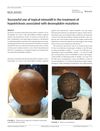
research Successful use of topical minoxidil in the treatment of hypotrichosis associated with desmoplakin mutations
Topical minoxidil helped an 8-year-old boy with a genetic hair disorder grow hair.
research Heterozygous Arrhythmogenic Cardiomyopathy-desmoplakin Mutation Carriers Exhibit a Subclinical Cutaneous Phenotype with Cell Membrane Disruption and Lack of Intercellular Adhesion
Carriers of a specific gene mutation have subtle skin changes without visible symptoms.
research Novel compound heterozygous mutations in thedesmoplakingene cause hair shaft abnormalities and culminate in lethal cardiomyopathy
Mutations in the desmoplakin gene can cause hair problems and deadly heart disease.
research PA05 A rare case of cardiocutaneous syndrome in a young child
A child with skin and tooth symptoms was found to have a genetic mutation causing cardiocutaneous syndrome, leading to heart problems.
research A Scandinavian case of skin fragility, alopecia and cardiomyopathy caused byDSPmutations
A child with skin and heart issues had rare genetic mutations affecting skin and heart cell cohesion.
Community Join
5 / 1000+ resultscommunity Proof DHT is not the main cause of hair loss. TRPS1 Gene and Protein might be. PP405 won’t work. AMP-303 might!
Hair loss may be linked to the TRPS1 gene and protein, not just DHT. Amplifica's AMP-303 targets mesenchymal stem cells and shows promise in treating hair loss, unlike Pelage's PP405.
community Shiseido filed for this patent in May 2019. Let's get some big brain discussion on this.
The conversation discusses a patent filed by Shiseido for cloning Dermal Papilla (DP) cells to treat hair loss. The method involves using viral vectors to maintain the cells' growth-inducing properties, differing from Replicel's approach with Dermal Sheath Cup (DSC) cells.
community The story of RU58841/PSK3841
RU58841, an anti-androgenic compound, showed early promise for treating alopecia but faced challenges after its patent in 1997. Despite advancing to Phase II trials, safety concerns and financial struggles led Aventis to abandon its development. Proskelia, which later merged into ProStrakan, couldn't prioritize the drug, leading to its eventual stagnation and failure to reach the market.
community DUPA / APHK discussion ( Diffuse unpatterned alopecia / Acquired Progressive Hair Kinkering )
The user discusses their experience with diffuse unpatterned alopecia and acquired progressive hair kinkering, noting improvements with treatments including biotin, pantothenic acid, finasteride, ketoconazole, and zinc pyrithione shampoo. They report thicker, healthier hair and improved scalp condition, attributing success mainly to biotin, pantothenic acid, and finasteride.
community Study: Dutasteride Mesotherapy Accelerates Hair Loss in Female Patients with Metabolic Syndrome
Dutasteride mesotherapy in women with metabolic syndrome accelerated hair loss after initial regrowth, while women without metabolic syndrome saw continuous regrowth. The user with mild insulin resistance is hesitant to try topical dutasteride and seeks experiences from others with insulin resistance.