Search
forLearn
5 / 801 resultslearn Acetyl Tyrosine
learn acetyl methionine
learn Aminobutyric Acid
learn APISCALP™
Research
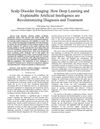
5 / 121 resultsresearch Scalp Disorder Imaging: How Deep Learning and Explainable Artificial Intelligence are Revolutionizing Diagnosis and Treatment
Deep learning and explainable AI are improving scalp disorder diagnosis, but challenges in transparency and data quality remain.
research PEDL-XAI: A Hybrid Probabilistic Ensemble Deep Learning Approach for Hair Disorder Diagnosis
The study introduces an Explainable Artificial Intelligence (XAI)-based system for diagnosing hair disorders, addressing the limitations of conventional methods that often overlook the complex interplay of factors like genetics and stress. Utilizing the Flask web framework, the system employs various machine learning algorithms and introduces a novel hybrid Probabilistic Ensemble Deep Learning (PEDL) model, which combines a Probabilistic Neural Network with a Sparse Representation Classifier. This model achieves a high accuracy of 0.9950, surpassing traditional approaches. The integration of XAI techniques allows for transparent predictions, identifying key factors, assessing risks, and providing personalized recommendations for hair loss evaluation, treatment, and hormonal impact analysis.
research Leveraging deep neural networks to uncover unprecedented levels of precision in the diagnosis of hair and scalp disorders
A new AI model diagnoses hair and scalp disorders with 92% accuracy, better than previous models.
research Past, present, and future of global research on artificial intelligence applications in dermatology: A bibliometric analysis
AI in dermatology is growing rapidly, showing promise in diagnosing skin conditions as accurately as dermatologists.
research Harnessing Microbiome, Bacterial Extracellular Vesicle, and Artificial Intelligence for Polycystic Ovary Syndrome Diagnosis and Management
Microbiome analysis, BEVs, and AI can improve PCOS diagnosis and treatment.
Community Join
5 / 1000+ resultscommunity By how much percent does nizoral 2% shampoo reduces scalp dht?
Ketoconazole shampoo may reduce scalp DHT by around 10% but is not effective enough to stop hair loss on its own. For better results, finasteride, minoxidil, and lifestyle changes are recommended.
community Just had this wild thought come into my head.
The conversation is about the debate over the existence of Post-Finasteride Syndrome (PFS) and its symptoms, with some users skeptical about PFS and others discussing side effects like erectile dysfunction and gynecomastia from hair loss treatments like finasteride. Specific treatments mentioned include finasteride, viagra, and a joke about using a popsicle stick for erectile support.
community So it turns out Post Finasteride Syndrome was never real?
Post Finasteride Syndrome (PFS) is debated, with some users reporting severe side effects from finasteride, while others believe these effects are rare or psychosomatic. Treatments discussed include finasteride, minoxidil, and RU58841.
community Why does MPB only affect the scalp
Male pattern baldness (MPB) may be influenced by androgen receptors in scalp hair follicles and potentially poor blood flow. Transplanted hair is not immune to DHT, and factors like inflammation and scalp tension might also contribute to hair loss.
community Binding affinity does not equal potency for anti androgens? Comparing pyrilutimide to cb-03-01
Pyrilutimide and CB-03-01, two treatments for hair loss, have similar clinical trial results despite different binding affinities to androgen receptors. Factors other than binding affinity, like the time a drug stays bound to the receptor, may influence their effectiveness.