39 citations
,
July 2015 in “British Journal of Dermatology”
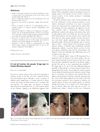
The pseudo 'fringe sign' can also appear in frontal fibrosing alopecia, not just in traction alopecia, showing that this condition may be more common than thought.
A quercetin-encapsulated and polydopamine-integrated nanosystem (PDA@QLipo) shows promise for treating androgenetic alopecia by reshaping the perifollicular microenvironment, outperforming minoxidil in hair regeneration. The nanosystem promotes cell proliferation, hair follicle renewal, and recovery by scavenging reactive oxygen species and enhancing neovascularity.
The user is experiencing significant hair thinning and scalp discomfort after two years on finasteride and is considering switching to dutasteride. Another person suggests that scalp inflammation might be the cause and recommends a YouTube channel for more information.
The user experienced significant hair loss after 9 months of using 0.5mg dutasteride and oral minoxidil, possibly due to alopecia areata. It is advised to consult a doctor for accurate diagnosis and treatment, as dutasteride and finasteride may not be effective.
Testosterone within the normal range does not significantly contribute to male pattern baldness (MPB); DHT is the main factor that can be controlled. Genetics play a crucial role in hair loss, and treatments like finasteride and dutasteride, which block DHT, can help despite potentially raising testosterone levels.
A 29-year-old male experienced significant hair regrowth over 8 months using a protocol of oral Minoxidil, Dutasteride, Pyrithione Zinc Shampoo, and peptides GHK-CU, BPC-157, and TB-500. The treatment led to improved scalp coverage, reduced hair loss, and thicker hair, although results may vary for others.