
Search
forLearn
5 / 801 resultslearn Tripeptide-1
learn Biotinoyl tripeptide 1
learn oligopeptide-71
learn Tricopper peptides
Research
5 / 49 results
research Deletion analysis of AGD1 reveals domains crucial for its plasma membrane recruitment and function in root hair polarity
AGD1's PH domain is essential for its role in root hair growth and polarity.
research Characterization and isolation of stem cell-enriched human hair follicle bulge cells
Researchers successfully isolated and identified key markers of stem cell-enriched human hair follicle bulge cells.
research PLCD1 and Pilar Cysts
The research linked PLCD1 gene variants to the development of trichilemmal cysts.
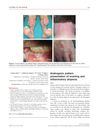
research Androgenic pattern presentation of scarring and inflammatory alopecia
Many people diagnosed with androgenic alopecia might actually have hidden scarring or inflammation.

research AGD1, a class 1 ARF‐GAP, acts in common signaling pathways with phosphoinositide metabolism and the actin cytoskeleton in controlling Arabidopsis root hair polarity
AGD1 is important for root hair development in Arabidopsis, working with phosphoinositide signaling and the actin cytoskeleton.
Community Join
5 / 1000+ resultscommunity Proof DHT is not the main cause of hair loss. TRPS1 Gene and Protein might be. PP405 won’t work. AMP-303 might!
Hair loss may be linked to the TRPS1 gene and protein, not just DHT. Amplifica's AMP-303 targets mesenchymal stem cells and shows promise in treating hair loss, unlike Pelage's PP405.
community Pelage Recruiting Now for Phase 2
Pelage is recruiting for phase 2 trials, showing promise for treating bald regions. The discussion highlights its potential effectiveness based on its mechanism of action.
community PTD-DBM Update: Q&A With Dr. Kang-Yell Choi
PTD-DBM is being explored for hair regrowth by targeting CXXC5, with clinical trials expected after pre-clinical studies. Users express anticipation and skepticism about its effectiveness.
community The story of RU58841/PSK3841
RU58841, an anti-androgenic compound, showed early promise for treating alopecia but faced challenges after its patent in 1997. Despite advancing to Phase II trials, safety concerns and financial struggles led Aventis to abandon its development. Proskelia, which later merged into ProStrakan, couldn't prioritize the drug, leading to its eventual stagnation and failure to reach the market.
community Pelage Pharmaceuticals with an absolute stunner of a molecule
PP405 is a promising new treatment for hair loss. It performs three actions in one, potentially offering a cure.