1 citations
,
October 2021 in “The journal of investigative dermatology/Journal of investigative dermatology” Removing HIF-P4H-2 from certain skin cells in mice causes hair loss on the body but not the head.
86 citations
,
June 1998 in “Journal of Investigative Dermatology” The hairless gene mutation causes baldness by disrupting hair follicle structure.
 25 citations
,
November 2018 in “Cell reports”
25 citations
,
November 2018 in “Cell reports” The study concluded that specific proteins are necessary to maintain the structure that holds epithelial cells tightly together.
69 citations
,
May 2002 in “Journal of Investigative Dermatology” Congenital atrichia with papular lesions is often misdiagnosed, and new diagnostic criteria can improve accuracy.
6 citations
,
June 2016 in “Journal of cellular biochemistry” The Hr protein binds to DNA, interacts with p53, and affects cell cycle genes.
 12 citations
,
February 1998 in “Gene”
12 citations
,
February 1998 in “Gene” The B2 genes are crucial for hair growth in rats.
56 citations
,
September 2014 in “Molecular Endocrinology” Vitamin D receptor is essential for hair growth signaling.
 March 2021 in “bioRxiv (Cold Spring Harbor Laboratory)”
 Removing a specific gene in certain skin cells causes hair loss on the body by disrupting normal hair development.
January 1983 in “Elsevier eBooks” Masculinization in affected individuals occurs gradually after puberty due to hormone changes.
 1 citations
,
May 2019 in “Journal of pediatric endocrinology & metabolism/Journal of pediatric endocrinology and metabolism”
1 citations
,
May 2019 in “Journal of pediatric endocrinology & metabolism/Journal of pediatric endocrinology and metabolism” Intravenous calcium therapy is a safe and effective treatment for a rare type of rickets.
 July 2022 in “The journal of investigative dermatology/Journal of investigative dermatology”
 Scientists created a detailed map of gene activity in different parts of human hair follicles.
99 citations
,
September 2004 in “Development” Proper hedgehog signaling is crucial for maintaining healthy skin stem cells.
 2 citations
,
July 2011 in “AFRICAN JOURNAL OF BIOTECHNOLOGY”
2 citations
,
July 2011 in “AFRICAN JOURNAL OF BIOTECHNOLOGY” Seven genetic variations in sheep's DSG4 gene are linked and affect wool traits.
 15 citations
,
December 2014 in “PLoS ONE”
15 citations
,
December 2014 in “PLoS ONE” A mutation in the iRhom2 gene causes hairless mice due to abnormal hair follicle development.
37 citations
,
August 1999 in “Journal of Investigative Dermatology” A specific gene mutation causes complete hair loss without other health issues.
July 2021 in “British Journal of Dermatology” The boy's genetic diagnosis of ectodermal dysplasia helped improve management and counseling for him and his sister.
November 2025 in “Indian Journal of Dermatology” Early diagnosis and multidisciplinary care are crucial for improving the quality of life in patients with ectodermal dysplasia.
 96 citations
,
June 2017 in “Nature Communications”
96 citations
,
June 2017 in “Nature Communications” A WNT10A gene mutation leads to ectodermal dysplasia by disrupting cell growth and differentiation.
 January 2025 in “Turkish Journal of Cerebrovascular Diseases”
 CARASIL can cause different symptoms even with the same genetic mutation.
 October 2023 in “Case reports in dermatological medicine”
 A Jordanian family with Clouston syndrome has a common GJB6 gene mutation.
October 2020 in “The American Journal of Gastroenterology” Early diagnosis and treatment of hereditary hemochromatosis can prevent serious complications.
A specific gene change in APCDD1 increases the risk of hair loss.
 5 citations
,
February 2019 in “PloS one”
5 citations
,
February 2019 in “PloS one” Bald thigh syndrome in sighthounds is caused by structural defects in hair shafts due to downregulated genes and proteins.
232 citations
,
January 2002 in “Mechanisms of development” Different enzymes are active in different parts of developing mouse organs.
3 citations
,
September 2022 in “European Journal of Dermatology” Gene sequencing is crucial for diagnosing Junctional epidermolysis bullosa.
 April 2023 in “The journal of investigative dermatology/Journal of investigative dermatology”
 SETDB1 is essential for controlling DNA methylation, silencing retrotransposons, and maintaining skin cell health, with its absence leading to skin inflammation and hair loss.
 1 citations
,
August 2011 in “Dermatology Reports”
1 citations
,
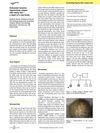
August 2011 in “Dermatology Reports” Two siblings were found to have a genetic condition causing progressive hair loss and woolly hair, which may often be misdiagnosed.
April 2019 in “Journal of the Endocrine Society” A young patient with unusual insulin resistance and high testosterone levels had a rare INSR gene mutation.
January 1990 in “Advances in forensic haemogenetics” Human hair protein patterns are inherited genetically.
 May 2026 in “Research Square”
 The polyG fragment in Hoxc13 protein helps evolve mammalian skin and hair by enhancing gene interactions.