 November 2022 in “Journal of the Endocrine Society”
 Estrogen deficiency can reduce the enzyme activity needed to activate vitamin D.
 December 2024 in “Journal of Clinical Research in Pediatric Endocrinology”
 21-hydroxylase deficiency causes hormone imbalances leading to various symptoms, and diagnosis involves clinical and genetic tests.
 45 citations
,
August 2010 in “Hormone Molecular Biology and Clinical Investigation”
45 citations
,
August 2010 in “Hormone Molecular Biology and Clinical Investigation” Type 3 5α-reductase is more common and finasteride and dutasteride strongly inhibit it.
 41 citations
,
March 1998 in “Archives of Dermatological Research”
41 citations
,
March 1998 in “Archives of Dermatological Research” The enzyme that changes testosterone to a stronger form is mostly found in the part of the hair follicle called the dermal papilla.
18 citations
,
June 2001 in “Journal of Investigative Dermatology” Adding a specific gene to skin cells can help treat skin disorders like psoriasis.
11 citations
,
October 2002 in “The Journal of Clinical Endocrinology & Metabolism” Enzyme activities do not cause early pubic hair in these girls.
13 citations
,
January 1997 in “Biochemical Pharmacology” Human liver enzyme DHEA ST helps process minoxidil.
22 citations
,
April 1972 in “Journal of Steroid Biochemistry” Beard hair follicles convert testosterone to 5α-dihydrotestosterone most intensively.
 11 citations
,
May 1996 in “The Journal of clinical endocrinology and metabolism/Journal of clinical endocrinology & metabolism”
11 citations
,
May 1996 in “The Journal of clinical endocrinology and metabolism/Journal of clinical endocrinology & metabolism” The main enzyme found in pubic skin that could be targeted to treat excessive hair growth is 5 alpha-R2.
115 citations
,
March 2001 in “Baillière's best practice and research in clinical endocrinology and metabolism/Baillière's best practice & research. Clinical endocrinology & metabolism” Key enzymes control androgen levels, affecting hormone activity and potential treatments.
January 2002 in “HAL (Le Centre pour la Communication Scientifique Directe)” The enzyme system in hair follicles is similar to the liver's and is inhibited by certain substances.
 May 2021 in “Journal of the Endocrine Society”
 A woman's hair loss and other symptoms were due to a rare hormone deficiency treatable with steroids.
38 citations
,
May 1971 in “Clinical genetics” A specific metabolite, not a receptor protein, triggers the production of certain kidney enzymes, but this process is disrupted in mice with a mutation causing testicular feminization.
94 citations
,
August 2002 in “Experimental Dermatology” 17α-estradiol boosts aromatase activity in female hair follicles, potentially helping with hair loss.
4 citations
,
October 2024 in “Heliyon” CYP154C7 enzyme can effectively modify steroids and is promising for commercial use.
56 citations
,
November 2007 in “Molecular and cellular endocrinology” Two enzymes regulate androgen receptor activity, affecting treatments for androgen insufficiency and benign prostatic hyperplasia.
 50 citations
,
February 2013 in “Annals of Clinical Biochemistry”
50 citations
,
February 2013 in “Annals of Clinical Biochemistry” Understanding how DHT works is important for diagnosing and treating hormone-related disorders.
119 citations
,
August 2010 in “Journal of Investigative Dermatology” Increased 11β-HSD1 activity in skin may contribute to aging and could be targeted to reduce aging effects.
 12 citations
,
February 1997 in “British Journal of Dermatology”
12 citations
,
February 1997 in “British Journal of Dermatology” The enzyme type 1 5α-reductase is more active in the hair follicle's lower part than in the skin's outer layer.
 25 citations
,
June 2014 in “Journal of Endocrinology/Journal of endocrinology”
25 citations
,
June 2014 in “Journal of Endocrinology/Journal of endocrinology” Human sebaceous glands contain enzymes that affect androgen production and may influence sebum production and acne.
 63 citations
,
November 1999 in “British journal of dermatology/British journal of dermatology, Supplement”
63 citations
,
November 1999 in “British journal of dermatology/British journal of dermatology, Supplement” Hair sensitivity to androgens is partly controlled by specific enzyme expressions in different hair areas.
 4 citations
,
December 2012 in “Arquivos Brasileiros De Endocrinologia E Metabologia”
4 citations
,
December 2012 in “Arquivos Brasileiros De Endocrinologia E Metabologia” A postmenopausal woman's masculine symptoms improved after surgery for a hormone-producing ovarian tumor.
64 citations
,
June 1995 in “Steroids” Inhibitors of the enzyme 5 alpha-reductase could potentially treat disorders like prostate cancer and baldness.
 7 citations
,
December 2014 in “Gynecological Endocrinology”
7 citations
,
December 2014 in “Gynecological Endocrinology” LC-MS/MS is more reliable than immunoassays for diagnosing 21-hydroxylase deficiency.
 101 citations
,
April 1994 in “Baillière's clinical endocrinology and metabolism”
101 citations
,
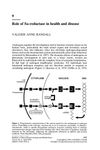
April 1994 in “Baillière's clinical endocrinology and metabolism” 5α-reductase is essential for male sexual development and its inhibitors have potential in treating various conditions related to hormone action.
 45 citations
,
September 1998 in “Journal of Investigative Dermatology”
45 citations
,
September 1998 in “Journal of Investigative Dermatology” The enzyme 17β-HSD type 2 mainly performs oxidation in human sebaceous glands, which may help protect against acne.
 7 citations
,
June 1989 in “Steroids”
7 citations
,
June 1989 in “Steroids” Researchers successfully made new compounds for hormone level tests, but one attempt led to an unexpected product, correcting a past error.
9 citations
,
April 2016 in “Clinical Endocrinology” Scalp hair 17-OHP and androstenedione levels can help monitor treatment in CAH patients.
January 1983 in “Elsevier eBooks” Masculinization in affected individuals occurs gradually after puberty due to hormone changes.
January 2014 in “edoc (University of Basel)” Anabolic steroids and inflammation can disrupt androgen metabolism, potentially causing health issues.