10 citations
,
October 2018 in “JDDG Journal der Deutschen Dermatologischen Gesellschaft” Most skin conditions in Down syndrome are benign and involve dry or thickened skin.
 July 2021 in “Clinical case reports and studies”
 Topical diphencyprone effectively treated a 9-year-old boy's alopecia areata with fewer side effects.
16 citations
,
January 2023 in “Regenerative Biomaterials” The scaffold with polydopamine and bioactive glass effectively promotes bone regeneration.
 4 citations
,
September 2024 in “BMC Cancer”
4 citations
,
September 2024 in “BMC Cancer” Adding dutasteride to therapy may improve treatment for advanced salivary duct cancer.
 5 citations
,
June 2012 in “The journal of investigative dermatology/Journal of investigative dermatology”
5 citations
,
June 2012 in “The journal of investigative dermatology/Journal of investigative dermatology” Putting thymidine dinucleotide on newborn mice's skin can delay and reduce skin cancer.
 December 2019 in “Fayoum University Medical Journal”
 People with Alopecia areata have higher levels of prostaglandin D2 in their blood and tissues.
July 2024 in “Journal of Investigative Dermatology” Squaric acid dibutylester helps hair growth by increasing certain immune cells in the skin.
 2 citations
,
February 2023 in “Transgenic Research”
2 citations
,
February 2023 in “Transgenic Research” The E2 protein affects gene activity in hair follicles of mice.
89 citations
,
March 1996 in “Proceedings of the National Academy of Sciences” CD18-deficient mice developed psoriasis-like skin disease, useful for studying inflammatory skin disorders.
 4 citations
,
July 2020 in “Biochemical and Biophysical Research Communications”
4 citations
,
July 2020 in “Biochemical and Biophysical Research Communications” A protein called ectodysplasin-A2 increases a hair growth inhibitor in balding cells, which could be a target for hair loss treatment.
EDM is better for isolating and growing human foreskin fibroblasts, and PPP helps repair UVB damage.
 October 2021 in “Dermatology reports”
 The care model improved timely diagnosis and treatment for psoriasis and psoriatic arthritis.
 1 citations
,
February 2022 in “Clinical and Experimental Health Sciences”
1 citations
,
February 2022 in “Clinical and Experimental Health Sciences” Dexpanthenol may help treat epilepsy and depression.
 12 citations
,
January 2016 in “Journal of Orofacial Orthopedics / Fortschritte der Kieferorthopädie”
12 citations
,
January 2016 in “Journal of Orofacial Orthopedics / Fortschritte der Kieferorthopädie” Researchers found a new mutation in the EDA gene that likely causes missing teeth and mild skin symptoms in one family.
May 2025 in “Hormone Research in Paediatrics” Persistent hyperparathyroidism doesn't stop rickets healing or phosphate level normalization in VDDR2A.
5 citations
,
July 2017 in “International journal of endocrinology and metabolism/International journal of endocrinology and metabolism.” Two siblings with a genetic mutation had a form of rickets that doesn't respond to vitamin D.
 81 citations
,
July 2008 in “The Journal of Clinical Endocrinology and Metabolism”
81 citations
,
July 2008 in “The Journal of Clinical Endocrinology and Metabolism” Certain mutations in the H6PD gene cause Cortisone Reductase Deficiency by affecting hormone production.
 11 citations
,
August 2010 in “Developmental neurobiology”
11 citations
,
August 2010 in “Developmental neurobiology” Ptprq has multiple forms that change during inner ear development.
July 2025 in “Journal of Investigative Dermatology”  30 citations
,
June 2016 in “Journal of Human Genetics”
30 citations
,
June 2016 in “Journal of Human Genetics” Researchers found genetic mutations causing hypohidrotic ectodermal dysplasia in 88% of studied patients and identified new mutations and genetic variations affecting the disease.
July 2025 in “Journal of Investigative Dermatology” TRIV-509 quickly improves skin barrier and cell health in atopic dermatitis.
37 citations
,
October 2006 in “Archives of Biochemistry and Biophysics” A unique gene mutation causes vitamin D-resistant rickets without causing hair loss.
22 citations
,
May 2017 in “Journal of dermatological treatment” BD 1/4 dilution is the best for treating localized alopecia areata in adults.
11 citations
,
November 2023 in “Skin Research and Technology” A 2 mm needle is effective and precise for skin injections.
 6 citations
,
August 1989 in “European journal of pediatrics”
6 citations
,
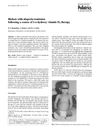
August 1989 in “European journal of pediatrics” Child with rickets improved with a specific vitamin D therapy, but alopecia did not change.
17 citations
,
August 2024 in “International Journal of Biological Macromolecules” The hydrogel dressings speed up healing and reduce scarring.
1 citations
,
December 2019 in “Canadian journal of ophthalmology” A girl with type 1 diabetes developed a serious eye condition very early, suggesting the need for earlier eye checks and that early treatment can work well.
DHEA inhibits growth in both mouse and human melanoma cells but works differently in each.
 2 citations
,
March 2015 in “Hepatitis Monthly”
2 citations
,
March 2015 in “Hepatitis Monthly” A woman's hair loss during Hepatitis C treatment with PEG-INF-a-2a and Ribavirin was reversible after stopping the medication.
10 citations
,
June 2019 in “Dermatologic therapy” DPCP alone is more effective and safer for treating chronic extensive alopecia areata than combining it with anthralin.