35 citations
,
December 2014 in “Lasers in surgery and medicine” Red light promotes hair growth by directly stimulating hair cells and improving cell communication.
 2 citations
,
July 2004 in “Proceedings of SPIE, the International Society for Optical Engineering/Proceedings of SPIE”
2 citations
,
July 2004 in “Proceedings of SPIE, the International Society for Optical Engineering/Proceedings of SPIE” Near-infrared laser therapy with Indocyanine Green dye improves acne by reducing inflammation without side effects.
 13 citations
,
April 2016 in “Journal of Dermatology”
13 citations
,
April 2016 in “Journal of Dermatology” 308-nm excimer light therapy helped over a third of treatment-resistant alopecia universalis patients regrow most of their hair.
September 1998 in “Journal of the European Academy of Dermatology and Venereology” 10 citations
,
September 2022 in “Journal of Biophotonics” Blue light therapy is safe for skin and may protect against UV radiation.
 August 2025 in “Photodermatology Photoimmunology & Photomedicine”
 LED therapy is a promising, non-invasive skin treatment, but needs standardization and personalization.
 70 citations
,
April 2017 in “Lasers in surgery and medicine”
70 citations
,
April 2017 in “Lasers in surgery and medicine” Blue light promotes hair growth by interacting with specific receptors in hair follicles.
 February 2009 in “Journal of The American Academy of Dermatology”
 Fractional infrared technology is effective and safe for treating cervical laxity.
 June 2020 in “The journal of investigative dermatology/Journal of investigative dermatology”
 Pulsed red light boosts collagen and energy in cells faster than continuous red light.
85 citations
,
November 2004 in “Journal of the American Academy of Dermatology” The 308-nm excimer laser helps hair regrowth in some alopecia areata cases but not all.
 January 2015 in “Przegla̧d dermatologiczny”
 308 nm excimer light therapy may help hair regrowth in alopecia areata with delayed results and no serious side effects.
 40 citations
,
October 2009 in “Journal of Biomedical Nanotechnology”
40 citations
,
October 2009 in “Journal of Biomedical Nanotechnology” Pyrene excimer nucleic acid probes are promising for detecting biomolecules accurately with potential for biological research and drug screening.
 January 2024 in “Journal of Cosmetic Dermatology”
 The 1565 nm non-ablative fractional laser is more effective and satisfying than 5% minoxidil for treating hair loss.
 9 citations
,
August 2017 in “Photochemistry and Photobiology”
9 citations
,
August 2017 in “Photochemistry and Photobiology” Red light at 627 nm can safely trigger IL-4 release in skin cells, potentially helping treat inflammatory skin conditions.
May 2024 in “International Journal of Cosmetic Science” A new method using near-infrared light can effectively detect and analyze internal hair damage.
5 citations
,
May 2001 in “Proceedings of SPIE, the International Society for Optical Engineering/Proceedings of SPIE” The DWLSM provides detailed imaging of hair shafts and follicles with high accuracy.
7 citations
,
August 2024 in “Skin Research and Technology” The study's findings are unreliable due to retraction.
April 2020 in “The Aesthetics” LED-LLLT helps heal wounds, reduce pain, and regrow hair using specific light wavelengths.
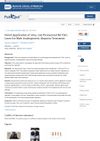
A new laser treatment may help regrow hair in men with pattern baldness and has minimal side effects.
20 citations
,
November 2014 in “JAMA dermatology” The 810-nm diode laser improves skin texture in keratosis pilaris but not redness.
 4 citations
,
March 2019 in “Journal of Pure and Applied Microbiology”
4 citations
,
March 2019 in “Journal of Pure and Applied Microbiology” A 940nm laser effectively reduces inflammation in rat joints.
39 citations
,
June 1999 in “Seminars in cutaneous medicine and surgery” Optical hair removal devices showed potential for long-term hair removal in 1999.
 July 2023 in “Journal of lasers in medical sciences”
 Red laser therapy helped regrow hair in an alopecia areata patient within 21 days.
 24 citations
,
May 2017 in “Journal of Cosmetic and Laser Therapy”
24 citations
,
May 2017 in “Journal of Cosmetic and Laser Therapy” The laser scanner device was more effective at increasing hair density than the laser hat in treating androgenic alopecia.
 1 citations
,
September 2023 in “Meditsinskiy sovet = Medical Council”
1 citations
,
September 2023 in “Meditsinskiy sovet = Medical Council” Combining NB-UVB 311 nm therapy with standard treatment improves hair regrowth in children with alopecia areata and atopic dermatitis.
 117 citations
,
September 2013 in “Lasers in Surgery and Medicine”
117 citations
,
September 2013 in “Lasers in Surgery and Medicine” Red light therapy at 655 nm significantly improved hair growth in men with hair loss.
 February 2025 in “Cosmetics”
 Blue light therapy is promising for skin and hair conditions but needs more research for widespread use.
26 citations
,
November 2019 in “Medical Science Monitor” LED light therapy boosts bone cell growth and function.
 108 citations
,
December 2003 in “Lasers in surgery and medicine”
108 citations
,
December 2003 in “Lasers in surgery and medicine” ICG-enhanced NIR laser therapy may be a promising acne treatment with improvement and no side effects.
1 citations
,
January 2016 in “Journal of Advanced Plastic Surgery Research” The laser treatment effectively reduced hair growth in women with hirsutism, with temporary side effects.