Ribonucleotide excision repair is crucial to prevent skin cancer.
136 citations
,
March 1998 in “Oncogene” Overexpression of E2F1 can lead to skin tumors and disrupt hair growth.
 8 citations
,
April 2009 in “International journal of oncology”
8 citations
,
April 2009 in “International journal of oncology” Hair follicle cells resist turning into skin cells.
Keratinocytes can reverse the effects of the GNAQ oncogene, inhibiting melanoma cell growth.
 August 1994 in “Journal of dermatological science”
 Different substances affect hair and skin cell growth in various ways, with some promoting and others inhibiting cell proliferation.
April 2012 in “Cancer Research” Bone marrow-derived cells can lead to skin inflammation and tumors in mice.
 120 citations
,
August 2008 in “The journal of investigative dermatology/Journal of investigative dermatology”
120 citations
,
August 2008 in “The journal of investigative dermatology/Journal of investigative dermatology” Cytokeratin 19 and cytokeratin 15 are key markers for monitoring the quality and self-renewing potential of engineered skin.
3 citations
,
July 2017 in “Journal of Investigative Dermatology” SSEA-4 can distinguish between eccrine and apocrine sweat gland ducts.
January 2007 in “Queen Mary Research Online (Queen Mary University of London)” GLI and EGF signalling affect Basal Cell Carcinoma development and could be therapeutic targets.
August 2017 in “Academic Commons (Stony Brook University)” Acer1 is essential for skin health and affects hair growth and skin cancer risk.
 August 2025 in “Journal of IMAB - Annual Proceeding (Scientific Papers)”
 The A-T advancement flap is a safe and effective method for scalp reconstruction after basal cell carcinoma removal.
August 1993 in “Journal of Dermatological Science”  2 citations
,
October 2017 in “Revista Da Associacao Medica Brasileira”
2 citations
,
October 2017 in “Revista Da Associacao Medica Brasileira” Removing p16INK4a from skin cells can lead to faster and more clumped growth, which might help with hair growth.
 8 citations
,
November 2020 in “Nature Communications”
8 citations
,
November 2020 in “Nature Communications” Adult stem cells with Tp63 can form hair and skin cells when placed in new skin, showing they have hidden abilities for skin repair.
January 1990 in “The Nishinihon Journal of Dermatology” Follicular structures help differentiate keratoacanthoma from squamous cell carcinoma.
 April 2023 in “The journal of investigative dermatology/Journal of investigative dermatology”
 The protein p21 is more abundant in normal skin cells than in melanoma cells and may help protect against melanoma, with UVB light affecting its levels.
 133 citations
,
May 2016 in “Cell Host & Microbe”
133 citations
,
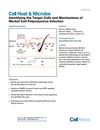
May 2016 in “Cell Host & Microbe” Human dermal fibroblasts are the main cells targeted by a virus that can cause a deadly skin cancer, and a certain inhibitor can effectively block this infection.
 16 citations
,
December 2006 in “International Journal of Dermatology”
16 citations
,
December 2006 in “International Journal of Dermatology” A woman died from cancer that spread from a long-standing cyst on her abdomen.
July 2025 in “Journal of Investigative Dermatology” Complex basal cell carcinomas need personalized treatment due to unique genetic mutations.
 2 citations
,
November 2003 in “Humana Press eBooks”
2 citations
,
November 2003 in “Humana Press eBooks” Hair follicle cells can help heal wounds and study skin diseases.
24 citations
,
January 1989 Human papilla cells from hair follicles show unique growth behaviors but don't induce hair growth in vitro.
Loss of the p53 gene alone causes tumors, and losing both p53 and Rb genes speeds up aggressive skin cancer.
September 2020 in “Oral surgery, oral medicine, oral pathology and oral radiology” The report shows that a rare benign tumor was successfully removed from inside the mouth to avoid scarring on the face.
 1 citations
,
September 2011 in “UHOD : Uluslararası hematoloji - onkoloji dergisi”
1 citations
,
September 2011 in “UHOD : Uluslararası hematoloji - onkoloji dergisi” Looking at tissue characteristics isn't reliable for telling apart basal cell carcinoma from certain benign skin tumors.
 August 2010 in “Journal of Investigative Dermatology”
 New hair regrowth model introduced, imiquimod kills skin cancer cells, T-cadherin loss makes skin cancer more invasive, no strong link between PTCH1 gene and skin cancer after transplant, and male teens more likely to have hereditary hair loss.
September 2023 in “Journal of the American Academy of Dermatology” 21 citations
,
April 2000 in “Journal of Cutaneous Pathology” The hamartoma is an abnormal hair growth with limited development in the upper hair follicle.
9 citations
,
December 1991 in “Annals of the New York Academy of Sciences”  April 2016 in “Journal of Investigative Dermatology”
 Removing alkaline phosphatase from human skin cells hinders the creation of new hair follicles.
30 citations
,
March 1996 in “British Journal of Dermatology”