1 citations
,
January 2022 in “Dermatology Research and Practice” Higher CD70 and CD27 gene expression in alopecia areata lesions predicts disease severity and activity.
 7 citations
,
February 2010 in “British Journal of Dermatology”
7 citations
,
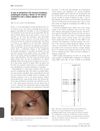
February 2010 in “British Journal of Dermatology” A woman with a rare autoimmune disorder had a blister on her eye and unique immune reaction, which was effectively treated with medication.
19 citations
,
February 2013 in “Archives of Dermatological Research”  November 2023 in “Journal of cosmetic dermatology”
 The 595-nm pulsed dye laser effectively reduces symptoms of EFFC with minimal side effects.
5 citations
,
May 2022 in “Lara D. Veeken” A rare genetic condition can mimic symptoms of other diseases, making diagnosis challenging.
High CCL11 levels may indicate poor response to baricitinib in severe alopecia areata.
 April 2017 in “Journal of Investigative Dermatology”
 Researchers improved a method to study individual cells in newborn mouse skin and found a way to assess the severity of a skin condition in humans.
 December 2020 in “Galen Medical Journal”
 People with Alopecia Areata and Androgenic Alopecia have more mast cells in their scalp than healthy individuals, especially those with Alopecia Areata.
 April 2019 in “Journal of Investigative Dermatology”
 Surgery and antifungal medication are effective for treating Merkel cell carcinoma with fungal infection.
 3 citations
,
March 2010 in “Dermatologica Sinica”
3 citations
,
March 2010 in “Dermatologica Sinica” A Taiwanese patient had hair loss and skin bumps without the usual gene mutation, suggesting other genetic factors might be involved.
July 2026 in “The Journal of Immunology” Prior infections reduced alopecia areata development in mice.
 June 2025 in “Current Issues in Molecular Biology”
 Meloside A may help protect hair cells from damage linked to hair loss.
January 2014 in “Institutional Repositories DataBase (IRDB)” Fibroblast spheres can form stem cells, but marker distribution needs more study.
June 2022 in “Journal of Cosmetic Dermatology” Acanthus ebracteatus extract may help prevent hair loss.
 April 2025 in “Frontiers in Immunology”
 Tofacitinib effectively regrows hair in alopecia areata but may need continuous use.
 28 citations
,
July 2007 in “Development”
28 citations
,
July 2007 in “Development” TAF4 is important for skin cell growth and helps prevent skin cancer in mice.
 20 citations
,
November 2019 in “Current Opinion in Systems Biology”
20 citations
,
November 2019 in “Current Opinion in Systems Biology” The document concludes that computational models are useful for understanding immune responses and could improve cancer immunotherapy.
Tofacitinib significantly improved symptoms in a patient with overlapping autoimmune disorders.
May 2005 in “Cancer Research” Melanoma cells lose their ability to form tumors when placed in a zebrafish embryo environment.
12 citations
,
June 2020 in “Lupus” Early treatment with the right dose of stem cells can reduce lupus symptoms.
6 citations
,
January 2000 in “The Journal of Trace Elements in Experimental Medicine” Zinc supplements effectively treat acrodermatitis enteropathica.
 28 citations
,
April 2009 in “Annals of laboratory medicine”
28 citations
,
April 2009 in “Annals of laboratory medicine” The dense fine speckled pattern in ANA tests is common in autoimmune diseases, challenging previous beliefs that it was unrelated.
August 2024 in “JAAD Case Reports” Upadacitinib successfully regrew hair in a child with alopecia universalis and specific genetic mutations.
 11 citations
,
January 2020 in “Dermatologica Sinica”
11 citations
,
January 2020 in “Dermatologica Sinica” Tofacitinib helps regrow hair in severe alopecia patients, but more research is needed.
April 2018 in “Plastic & Reconstructive Surgery Global Open” LGR6+ stem cells may improve bone healing.
5 citations
,
October 2021 in “Journal of the American Academy of Dermatology” PRAME helps distinguish between benign and malignant skin cells in most cases.
12 citations
,
November 2007 in “Journal of Investigative Dermatology” CD200 is not a reliable marker for identifying stem cells in all skin types.
September 2024 in “Dokumentenrepositorium der RUB (Ruhr University Bochum)” Higher monocyte counts predict less effective adalimumab treatment in hidradenitis suppurativa patients.
 2 citations
,
March 2019 in “Plastic and Reconstructive Surgery”
2 citations
,
March 2019 in “Plastic and Reconstructive Surgery” The letter suggests that a modified fat processing technique may increase regenerative cells but calls for more trials to confirm its effectiveness for skin and hair treatments.
 57 citations
,
November 2006 in “International Journal of Cancer”
57 citations
,
November 2006 in “International Journal of Cancer” A49T gene variant linked to higher prostate cancer risk, lower hormone levels, and slightly reduced balding risk.