 December 2025 in “Clinical Cosmetic and Investigational Dermatology”
 A rare lupus case on the chin was successfully treated with steroids and immunomodulators after accurate diagnosis using advanced imaging techniques.
 July 2025 in “Journal of Research in Pharmacy”
 Combining Virgin Coconut Oil and Nigella Sativa Oil speeds up healing in diabetic wounds.
 September 2024 in “IP Indian Journal of Clinical and Experimental Dermatology”
 The best method for high platelet yield is centrifuging at 1300 rpm then 1600 rpm.
 August 2024 in “UPI Journal of Pharmaceutical Medical and Health Sciences”
 PRP shows promise in musculoskeletal rehabilitation but needs standardized reporting for better outcomes.
 March 2024 in “Journal of Experimental & Biomedical Sciences/Biomedical Science Letters”
 BCC can protect heart cells from damage caused by oxidative stress.
 January 2024 in “Dermatology Review”
 Combining PRP with hydroquinone is more effective for treating melasma than using hydroquinone alone.
 January 2023 in “Advances in pharmacology and clinical trials”
 Human hair is a significant sample for various tests in clinical, nutritional, archaeological, and forensic studies.
 January 2023 in “Journal of orthopedics & bone disorders”
 Platelet-rich plasma may not be very effective for bone healing and hair growth due to a substance it contains that blocks these processes.
 May 2022 in “Gastroenterology”
 Targeting NETs may help reduce fibrosis in Crohn's disease.
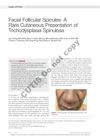
Trichodysplasia spinulosa can occur after a heart transplant due to immunosuppressive drugs.
 August 2021 in “Journal of emerging technologies and innovative research”
 PRP combined with Ayurvedic medicine may effectively treat hair loss.
 May 2021 in “GSC Advanced Research and Reviews”
 Hair color is influenced by genetics and can indicate certain health conditions.
 February 2021 in “IP Indian journal of clinical and experimental dermatology”
 A rare non-cancerous tumor that grows like hair was found in an unusual spot, the vulva.
 September 2020 in “Medicina Moderna - Modern Medicine”
 A simple, cost-effective method to prepare high-quality PRP is suitable for smaller medical institutions.

Cornification is the process where living skin cells die to create a protective barrier, and problems with it can cause skin diseases.

New treatments for hair loss show promise, including plasma, stem cells, and hair-stimulating complexes, but more research is needed to fully understand them.

Skin stem cells are crucial for maintaining and repairing skin, with potential for treating skin disorders and improving wound healing.
 July 2016 in “Australasian Journal of Dermatology”
 The journal covered various dermatology topics, including treatments, disease management, and research findings.
 August 2015 in “Free Radical Biology and Medicine”
 The document concludes that the discussed biological mechanisms and potential therapies are not related to hair loss or hair growth.
 March 2015 in “Plastic and reconstructive surgery”
 Human skin has multiple layers and functions, with key roles in protection, temperature control, and appearance.
 November 2013 in “John Wiley & Sons, Ltd eBooks”
 The document concludes that accurate diagnosis of male and female gonadal disorders is crucial for effective treatment and better patient outcomes.
 November 2011 in “Informa Healthcare eBooks”
 Environmental, chemical, mechanical, and personal health factors can all damage hair and contribute to hair loss or changes in hair quality.
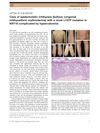 October 2011 in “Journal of dermatology”
 A man with a rare skin condition and a new gene mutation developed high calcium levels due to his treatment.
 May 2009 in “The American Journal of Dermatopathology”
 Mast cells play a significant role in hair loss conditions like male pattern hair loss and alopecia areata.

Surgical repigmentation can permanently restore color to white hair in vitiligo patients.
 January 2001 in “Biomedical Research”
 THH and PAD type III appear together early in hair growth, but deiminated THH appears later, suggesting another factor is involved.
 January 1989 in “Clinical and Experimental Dermatology”
 The symposium concluded that hair growth involves complex processes, including the hair follicle life cycle, the role of the dermal papilla, hair strength, pigmentation, and the impact of diseases and treatments like minoxidil on hair and skin.
 February 1956 in “Bulletin of Experimental Biology and Medicine”
 Glycogen levels in mouse skin drop after injury but increase during healing, returning to normal within a month.
 August 1993 in “Journal of Dermatological Science”
 Testosterone metabolism in balding scalp cells may not be the main cause of hair loss.
 363 citations
,
March 2017 in “Nature Communications”
363 citations
,
March 2017 in “Nature Communications” Stem cells help heal wounds by rapidly dividing and migrating to the wound edge.