 1 citations
,
November 2018 in “bioRxiv (Cold Spring Harbor Laboratory)”
1 citations
,
November 2018 in “bioRxiv (Cold Spring Harbor Laboratory)” Signals from skin cells controlled by Rac proteins help turn certain precursor cells into white fat cells.
 1 citations
,
May 2018 in “Journal of Evolution of medical and Dental Sciences”
1 citations
,
May 2018 in “Journal of Evolution of medical and Dental Sciences” Platelet Rich Plasma (PRP) injections can effectively reduce hair loss and improve hair growth in both men and women suffering from androgenic alopecia.
 1 citations
,
January 2011 in “International Journal of Trichology”
1 citations
,
January 2011 in “International Journal of Trichology” Hair follicle stem cells have significant potential for treating various disorders.
 May 2026 in “Signal Transduction and Targeted Therapy”
 BMP signaling is essential for forming skin structures called rete ridges, aiding skin thickness and regeneration.
 March 2026 in “Revista Ibero-Americana de Humanidades, Ciências e Educação”
 Exosome and PRP therapies show promise for treating hair loss but need more research for standardization and safety.
 March 2026 in “Trends in Sciences”
 PRF and CGF are becoming more popular than PRP in regenerative medicine due to their simplicity and lack of additives.
 March 2026 in “Frontiers in Pharmacology”
 Exprecell™ is as effective as traditional methods but produces more f-PRF and is simpler to use.
 January 2026 in “Forum Dermatologicum”
 Platelet-rich plasma helps improve skin and hair conditions.
 January 2026 in “International Journal of All Research Education & Scientific Methods”
 Alopecia is caused by various factors, and new treatments like gene editing and regenerative medicine offer hope for personalized hair regrowth solutions.
 January 2026 in “Archives of Internal Medicine Research”
 PRP, exosomes, and physical therapies show promise for hair and tissue repair, but need more research for optimization.
 December 2025 in “Eastern Ukrainian Medical Journal”
 Standardized protocols are crucial for effective use of platelet-rich plasma and fibrin in tissue regeneration.
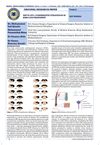 November 2025 in “PARIPEX-INDIAN JOURNAL OF RESEARCH”
 GFC is more effective than PRP for treating hair loss.
 August 2025 in “Research Square (Research Square)”
 High TNF-α levels may increase hair loss risk after PRP therapy.
 August 2025 in “Benha Medical Journal”
 PRP therapy improves hair growth safely in androgenetic alopecia but needs standardized methods.
Combining PRP and microneedling effectively improves hair growth and patient satisfaction for hair loss.
 March 2024 in “Journal of Experimental & Biomedical Sciences/Biomedical Science Letters”
 BCC can protect heart cells from damage caused by oxidative stress.
 March 2024 in “Majallah-i taḥqīqāt-i ̒ulūm-i pizishkī-i Zāhidān/Majallah-i taḥqīqāt-i ̒ulūm-i pizishkī-i Zāhidān./Zahedan journal of researches in medical sciences”
 Microneedling with PRP effectively reduces facial pigmentation with minimal side effects.
 February 2024 in “Curēus”
 Regional nerve blocks are better than ring blocks for pain relief during PRP hair treatment.
 January 2024 in “Dermatology Review”
 Combining PRP with hydroquinone is more effective for treating melasma than using hydroquinone alone.
 September 2023 in “International Journal of Science and Research (IJSR)”
 PRP and PRF can effectively heal chronic wounds.
 January 2023 in “Nanomedicine & nanotechnology open access”
 Microneedling is a promising, simple, and cost-effective treatment for hair loss that works well with other therapies.
 May 2022 in “Acta scientific dental sciences”
 Platelet concentrates are useful for tissue repair in medicine and dentistry, with L-PRF showing promising results in various treatments.
 November 2021 in “International Journal for Research in Applied Science and Engineering Technology”
 Lyophilized platelet-rich plasma is beneficial and effective for various medical treatments, including tissue regeneration and hair regrowth.
Platelet-rich plasma is a promising and cost-effective treatment for hair and skin issues in older adults in India.
 January 2020 in “Majalah Kedokteran Gigi Indonesia”
 Freeze-drying collagen-activated PRP increases TGF-β1 levels, enhancing tissue regeneration potential.
 January 2019 in “Georg Thieme Verlag eBooks”
 Platelet-Rich Plasma (PRP) therapy can effectively treat various hair loss conditions, improve hair count, thickness, and density, and potentially speed up results when combined with surgical techniques.
 July 2018 in “Elsevier eBooks”
 New hair loss treatments show promise, but more research is needed to confirm their effectiveness.
 April 2018 in “Journal of Investigative Dermatology”
 The conclusion is that the cornea has two types of stem cells, with Lrig1+ cells being key for renewal in aging corneas, independent of CD44.
 April 2018 in “Journal of Investigative Dermatology”
 A new treatment using AGED to modulate PPAR-γ shows promise for treating scarring hair loss by protecting and repairing hair follicle cells.
 April 2018 in “Journal of Investigative Dermatology”
 Macrophages are more involved in Lichen planopilaris than in Frontal fibrosing alopecia.