 January 2025 in “TURKDERM”
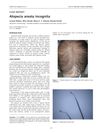
 Alopecia areata incognito in children can be effectively treated with triamcinolone acetonide and supplements, leading to full hair regrowth.
 34 citations
,
February 2012 in “Journal of Cutaneous Pathology”
34 citations
,
February 2012 in “Journal of Cutaneous Pathology” The research found specific signs to diagnose alopecia areata incognito and noted patients generally regrow hair after steroid treatment.
 15 citations
,
May 2016 in “Archives of Dermatological Research”
15 citations
,
May 2016 in “Archives of Dermatological Research” ULBP3 could be a marker for diagnosing alopecia areata incognita and may be linked to its cause and development.
 60 citations
,
October 2009 in “Dermatology”
60 citations
,
October 2009 in “Dermatology” Alopecia areata may appear differently depending on the individual's type of hair loss and scalp condition.
 10 citations
,
August 2011 in “Clinics”
10 citations
,
August 2011 in “Clinics” The author clarified that Alopecia Areata Incognita (AAI) and diffuse Alopecia Areata (AA) are different conditions and the case discussed was actually AA, not AAI.
 29 citations
,
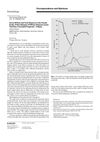
January 2003 in “Dermatology”
29 citations
,
January 2003 in “Dermatology” The condition called 'acute diffuse and total alopecia of the female scalp' is actually a known condition named alopecia areata incognita.
 2 citations
,
July 2017 in “Skin appendage disorders”
2 citations
,
July 2017 in “Skin appendage disorders” Alfredo Rebora suggests a simpler classification for hair loss and a new test for easier diagnosis.
The paper concludes that the patchiness of alopecia areata is likely due to when the immune attack happens in the hair growth cycle.
 1 citations
,
July 2018 in “Elsevier eBooks”
1 citations
,
July 2018 in “Elsevier eBooks” Alopecia Areata is an autoimmune hair loss condition, with various treatments showing mixed effectiveness and no guaranteed cure.
 2 citations
,
March 2018 in “The Journal of Dermatology”
2 citations
,
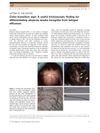
March 2018 in “The Journal of Dermatology” The "color-transition sign" helps tell apart alopecia areata incognita from telogen effluvium by looking at hair color changes.
 January 2012 in “Yearbook of Dermatology and Dermatologic Surgery”
 The study concluded that a 'Swiss cheese' pattern in hair follicles is a useful sign for diagnosing alopecia areata.
 March 2017 in “The American Journal of Cosmetic Surgery”
 Transplanted hair follicles can resist hair loss from an autoimmune condition better than natural hair.
 19 citations
,
February 2016 in “Journal of The American Academy of Dermatology”
19 citations
,
February 2016 in “Journal of The American Academy of Dermatology” CD3+ T-cell presence is a reliable marker to tell apart alopecia areata from pattern hair loss.
 56 citations
,
November 2010 in “Pigment Cell & Melanoma Research”
56 citations
,
November 2010 in “Pigment Cell & Melanoma Research” Brain hormones significantly affect hair color and could potentially be used to prevent or reverse grey hair.
 1 citations
,
March 2022 in “Berkala Ilmu Kesehatan Kulit dan Kelamin/Berkala ilmu kesehatan kulit dan kelamin (Periodical of dermatology and venerology)”
1 citations
,
March 2022 in “Berkala Ilmu Kesehatan Kulit dan Kelamin/Berkala ilmu kesehatan kulit dan kelamin (Periodical of dermatology and venerology)” Trichoscopy helps diagnose and monitor the treatment of fungal scalp infections in children.
 1 citations
,
October 2024 in “Dermatology Practical & Conceptual”
1 citations
,
October 2024 in “Dermatology Practical & Conceptual” Reflectance confocal microscopy is a promising non-invasive tool for diagnosing alopecia areata incognita.
 31 citations
,
October 2010 in “Journal of the European Academy of Dermatology and Venereology”
31 citations
,
October 2010 in “Journal of the European Academy of Dermatology and Venereology” Some people with heavy hair shedding might actually have a hidden form of alopecia, which can be identified by specific hair changes.
 19 citations
,
January 2011 in “Clinics”
19 citations
,
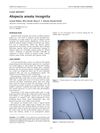
January 2011 in “Clinics” A young woman with a rare hair loss condition improved with steroid and biotin treatment.
 December 2007 in “CRC Press eBooks”
 Alopecia areata incognita causes widespread hair loss without patches and needs a scalp biopsy for diagnosis.
 148 citations
,
December 2018 in “Journal of autoimmunity”
148 citations
,
December 2018 in “Journal of autoimmunity” Alopecia areata is an autoimmune disease causing patchy hair loss, often with other autoimmune disorders, but its exact causes are unknown.
 February 2025 in “Dermatology and Therapy”
 Alopecia areata incognita causes sudden hair loss but usually improves with topical steroids.
 35 citations
,
November 2010 in “Journal of Cutaneous Pathology”
35 citations
,
November 2010 in “Journal of Cutaneous Pathology” Dilated follicular infundibula and increased catagen/telogen follicles are key indicators for diagnosing alopecia areata.
 April 2012 in “Informa Healthcare eBooks”
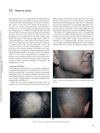
 Alopecia areata is a common autoimmune condition causing varying hair loss, diagnosed by specific patterns of inflammation around hair follicles, with several treatment options available.

Non-invasive methods can effectively diagnose and manage alopecia areata.
 November 2025 in “Turkish Journal of Dermatology”
 Both baricitinib and tofacitinib effectively reduce alopecia areata severity, with tofacitinib showing more improvement over longer use.
 3 citations
,
January 2018 in “Dermatology”
3 citations
,
January 2018 in “Dermatology” Scalp biopsies help tell apart androgenetic alopecia and alopecia areata.
 1 citations
,
October 2013 in “Expert Review of Dermatology”
1 citations
,
October 2013 in “Expert Review of Dermatology” Diagnosing alopecia areata is challenging and requires careful examination and various tests to distinguish it from other hair loss types.
 102 citations
,
December 2017 in “The journal of investigative dermatology. Symposium proceedings/The Journal of investigative dermatology symposium proceedings”
102 citations
,
December 2017 in “The journal of investigative dermatology. Symposium proceedings/The Journal of investigative dermatology symposium proceedings” Restoring hair bulb immune privilege is crucial for managing alopecia areata.
 43 citations
,
June 2018 in “Clinics in dermatology”
43 citations
,
June 2018 in “Clinics in dermatology” People with atopic dermatitis are more likely to develop other skin conditions due to shared genetics and immune pathways.
 23 citations
,
September 2019 in “Dermatology practical & conceptual”
23 citations
,
September 2019 in “Dermatology practical & conceptual” The study concluded that AAI and DAA are forms of the same disease, with different symptoms in men and women, and that corticosteroid treatment is effective.